


How Walrus Lets You Stake Safely While Keeping Your Crypto
Staking is a key part of blockchain networks that use proof of stake. It helps secure the network, validate transactions and earn rewards. Most staking systems require you to send your tokens into a contract or platform that controls them. This creates risk because your funds are no longer fully yours. Walrus takes a different approach by using self-custodied, object-based staking. This means your tokens never leave your wallet but still participate in network security
When you stake WAL on Walrus, your tokens are turned into a staking object. This object contains all the rules for your stake like how much you staked when the epoch starts and ends how rewards are calculated and the conditions for penalties or slashing. The important thing is that you still own the object and the original tokens remain in your wallet. Walrus never takes custody of your funds. This lowers the chance of attacks or hacks compared to pooled or escrow-based staking systems
Because staking objects remain in your control, you can also use them in different ways. Developers can build extra features on top of these objects like delegation layers that let you assign your stake to others automated rebalancing tools analytics dashboards governance functions or even secondary markets for staking positions. This turns staking from a fixed lock-up into a flexible tool that can do more than just earn rewards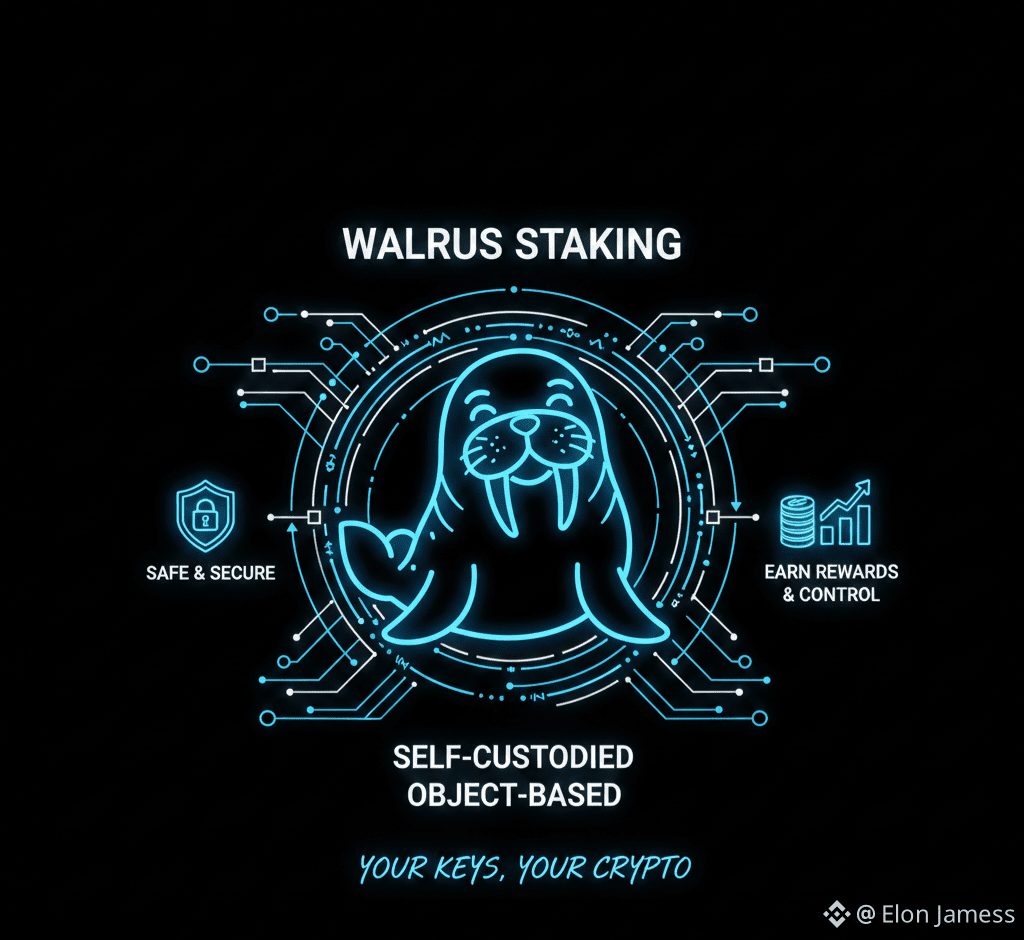
Even though you keep your tokens Walrus can still enforce rules like rewards and penalties. Everything is applied through the staking object based on epoch transitions and encoded rules. If a node misbehaves the object loses value through slashing but your wallet is never touched. This keeps both accountability and user sovereignty intact
This model reduces systemic risk because there is no central pool of funds to target. Even if part of the protocol fails or is attacked your tokens are safe in your wallet. In contrast centralized or pooled staking systems concentrate risk in a single place making them attractive to hackers. Walrus avoids that by design
Staking objects also enable deeper integration with the ecosystem. You can track your stake, see rewards in real time, participate in governance, or create new financial products on top of them. This kind of composability makes staking not just a way to earn passive income but a building block for more complex applications
Many exchanges offer staking but they take custody of your funds and you have to trust them with your private keys. That makes them convenient but risky. With Walrus you keep full control while still contributing to network security. You also get more flexibility because your stake is represented as an on-chain object that can be extended or used in other ways by developers
The approach also supports future innovations like liquid staking where staking objects could be represented by tokens that you can trade or use elsewhere while still earning rewards. Walrus’s design allows for safe experimentation without compromising the safety of user funds
By combining self-custody, object-oriented design and strict economic rules Walrus creates a staking system that is secure, flexible and future proof. Users remain in control their assets are protected and the network remains strong. It is a simple idea with powerful consequences that aligns with the principles of decentralization
Walrus proves staking can be both safe and useful. It keeps your funds in your wallet enforces rules fairly and allows developers to build new tools and products on top of it. It is a model that reduces risk increases transparency and gives users real ownership while supporting innovation in the decentralized storage ecosystem. This is the future of staking where you are never forced to give up control but can still earn rewards and help secure the network

