


Staking has become one of the main ways people participate in blockchain networks and earn rewards while helping secure the system. But many staking methods today require users to give up control of their tokens. Your funds are often locked in a contract or held by a network or exchange. This creates risk because if something goes wrong with the contract or the platform your tokens could be lost or stuck. Walrus takes a completely different approach that keeps your tokens in your wallet at all times and lets you stake without giving up ownership
Walrus uses a self‑custodied staking system based on objects. When you stake WAL, your tokens are not sent into a contract controlled by the network. Instead, the tokens are wrapped into a staking object that contains all the rules for that stake. This object knows the amount of tokens staked, the start and end of the staking periods, eligibility for rewards, and conditions for penalties. The most important part is that the staking object stays in your wallet. You keep ownership of your tokens and Walrus never holds your funds. This small design choice makes a huge difference for safety because it removes a single target for hackers and reduces systemic risk
Even if part of the Walrus protocol were compromised your funds are not sitting in one pool that someone could attack. Each wallet keeps its own staking objects and nothing moves out of the user’s control. This approach also allows the protocol to enforce rules for rewards, penalties, or unstaking without holding private keys. Slashing and other penalties only affect the value of the staking object and do not require touching the original tokens. This means the system stays accountable while users retain full control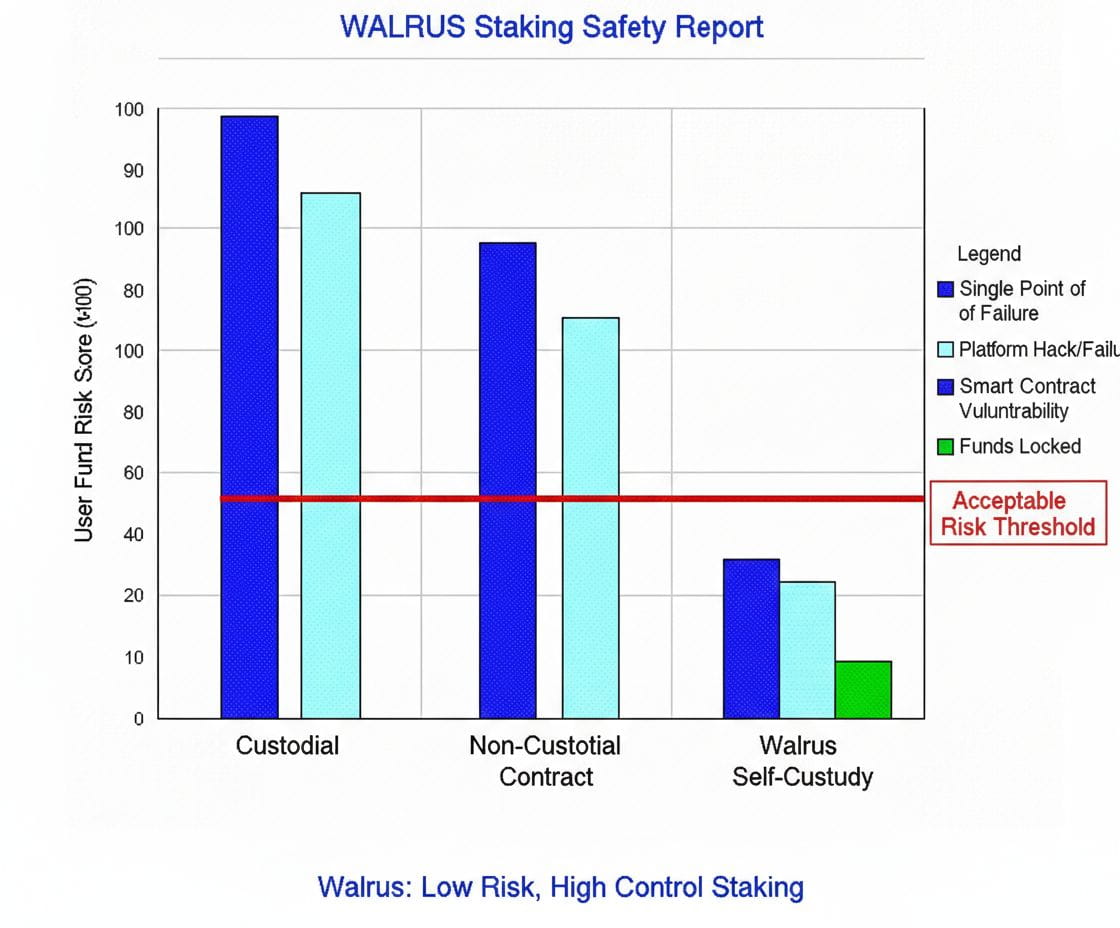
Another benefit of using staking objects is composability. Because each stake is an object on the blockchain developers can build tools and features around them. You could have delegation layers where others stake on your behalf, automated rebalancing of your positions, analytics tools to track performance, governance extensions, or even secondary markets where staking rights can be traded or used in other ways. Staking becomes flexible instead of a rigid lockup, giving developers more freedom to innovate
The design also ensures that rewards and penalties are applied fairly and deterministically. Each staking object follows strict rules set by the protocol. Epoch transitions define when rewards are earned or penalties are applied and all of this happens automatically without ever touching your principal. Users earn rewards and are subject to penalties only for the periods they actively participate in securing the network. This makes the system predictable and transparent for everyone
Compared to traditional custodial staking models where exchanges or contracts hold your tokens Walrus offers a safer alternative. Custodial staking creates a single point of failure where funds can be lost if the platform fails or gets hacked. Even non‑custodial contracts that hold staked tokens outside the user wallet still expose funds to some risk. With Walrus every stake stays in the user wallet and only the staking object interacts with the protocol. This reduces attack surfaces and ensures users remain in control at all times
Walrus also supports advanced features like liquid staking without compromising self‑custody. Staking objects can be used as building blocks for other financial tools or applications. This lets users unlock value from their stake while continuing to earn rewards. For example staking objects could be used to issue liquid tokens that can be traded or deployed in DeFi applications. The underlying stake continues to earn rewards and penalties are tracked accurately
The combination of self‑custody, object oriented design, and strict economic rules makes Walrus staking both safe and extensible. Users do not have to give up their tokens yet they can participate fully in network security. Developers have a framework to build extra layers and tools on top of staking. The system is designed to be future‑proof, transparent, and flexible while keeping user funds secure
Walrus demonstrates that staking does not have to mean surrendering control. By keeping funds in the wallet, using staking objects, and applying deterministic rules for rewards and penalties the network delivers a system that is trustworthy and innovative. Users benefit from reduced risk, developers benefit from composability, and the network benefits from robust security and accountability. For anyone looking to stake tokens while keeping full control of their funds Walrus offers a model that feels both simple and powerful

