

Crypto has spent years optimizing for flexibility, composability, and experimentation. Yet the most widely used on-chain product today is still simple: stablecoins. USDT alone settles enormous value every single day, but the infrastructure supporting these transfers often feels misaligned with real payment needs. Plasma exists because of this gap.
Plasma is an EVM-compatible Layer 1 blockchain designed specifically around stablecoin payments. Instead of adding payment features on top of a general-purpose system, Plasma begins with the assumption that stablecoins are the primary workload. That assumption shapes every technical decision, from consensus to fee mechanics.
At the core of the network is PlasmaBFT, a consensus mechanism based on Fast HotStuff. Traditional Byzantine Fault Tolerant systems tend to slow down as validator communication increases. PlasmaBFT improves on this by parallelizing block proposal, voting, and confirmation steps rather than executing them sequentially. This reduces coordination overhead and allows transactions to reach finality in seconds. For payment systems, this matters more than raw transactions per second. Merchants, remittance services, and financial applications need certainty — once a payment is confirmed, it must be final.
Plasma separates consensus and execution cleanly. While PlasmaBFT handles sequencing and finality, the execution layer runs on Reth, a Rust-based Ethereum client. This gives Plasma full EVM compatibility. Developers can deploy Solidity smart contracts, reuse Ethereum tooling, and integrate existing libraries without rewriting their applications. From a developer perspective, Plasma feels familiar, but the underlying settlement properties are tuned for payments rather than DeFi experimentation alone.
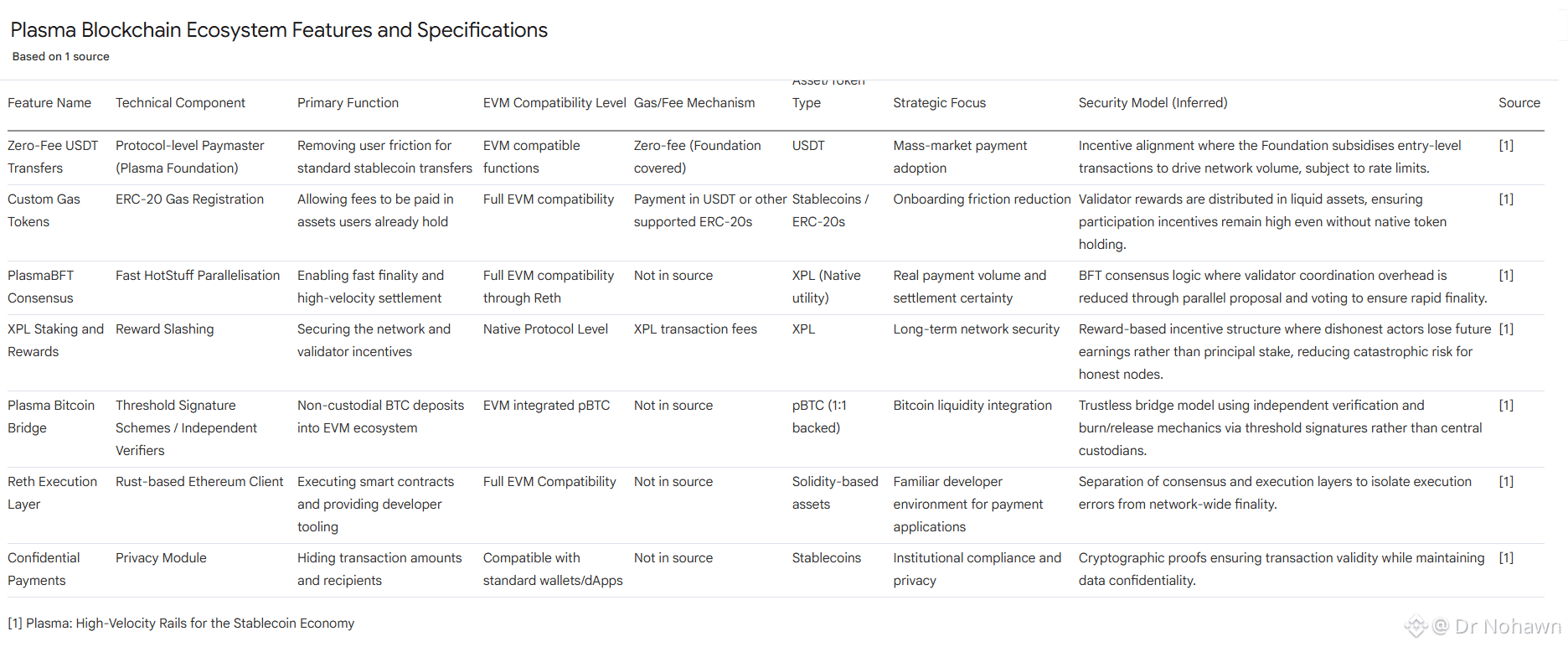
The most visible result of this design philosophy is zero-fee USDT transfers. Plasma introduces a protocol-level paymaster maintained by the Plasma Foundation. This paymaster covers gas costs for standard USDT transfer functions, subject to basic eligibility checks and rate limits. Users can send USDT without worrying about gas prices, wallet balances, or failed transactions due to insufficient fees. This mirrors how payments work in traditional systems: the user focuses on sending value, not on infrastructure mechanics.
For transactions beyond basic transfers, Plasma still requires fees to maintain network security and validator incentives. This is where custom gas tokens become important. Plasma allows applications to register ERC-20 tokens, including stablecoins, as valid gas payment assets. Users can pay fees directly in USDT or other supported tokens instead of holding XPL purely for gas. This reduces onboarding friction and aligns the network with how users already manage their assets.
Privacy is another area Plasma is actively exploring. Through its Confidential Payments module, the network aims to support stablecoin transfers where sensitive details like amounts and recipients can be hidden, while remaining compatible with existing wallets and decentralized applications. Although still under research, this reflects an understanding that large-scale payment infrastructure must eventually support confidentiality alongside compliance.
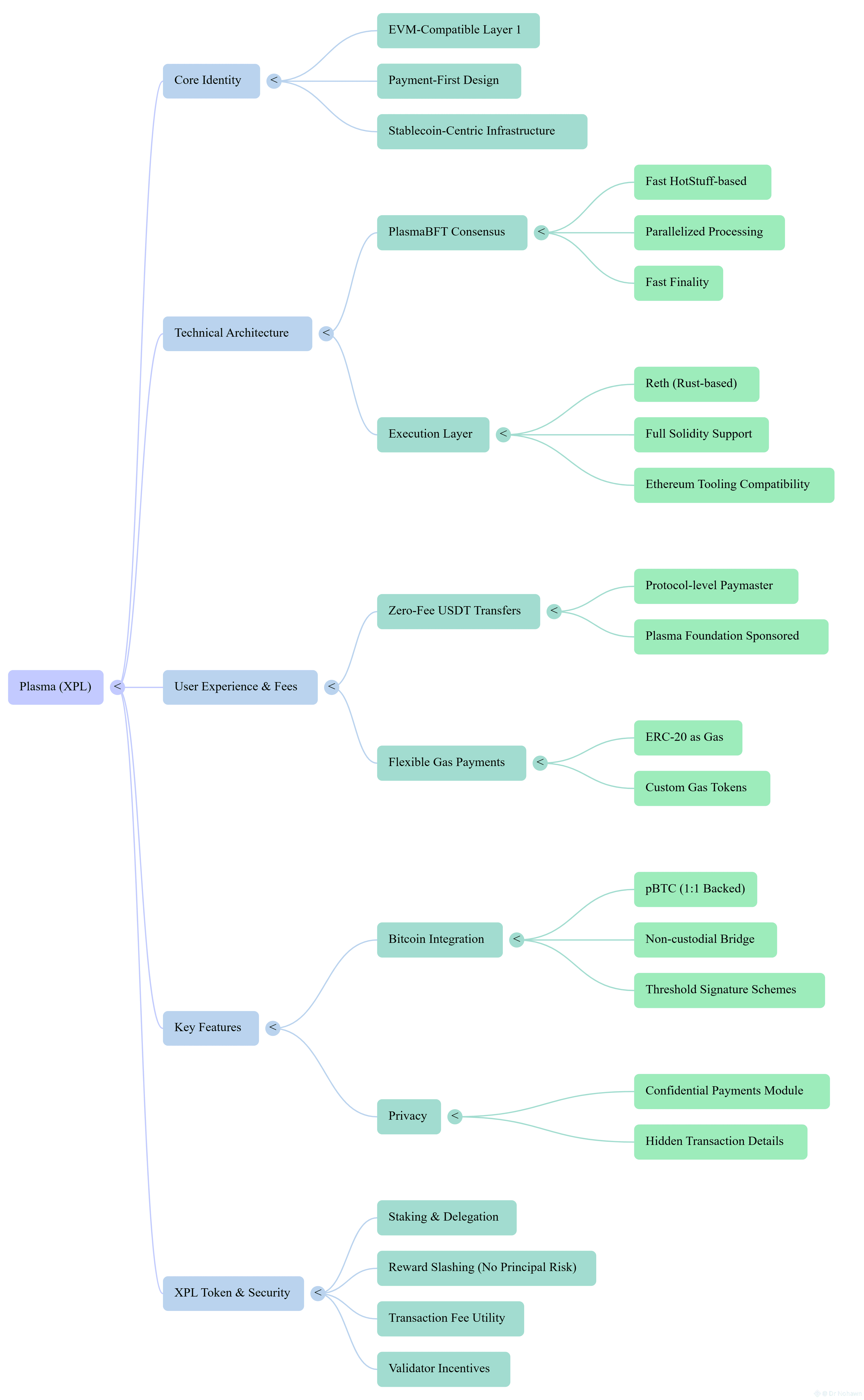
Plasma also integrates Bitcoin in a way that avoids common trade-offs. The Plasma Bitcoin bridge allows BTC to be deposited into the network without custodians or traditional wrapped assets. Independent verifiers confirm deposits and mint pBTC, which is backed 1:1 by Bitcoin. pBTC can then be used inside smart contracts, as collateral, or moved across chains using omnichain standards. When users withdraw, pBTC is burned and BTC is released using threshold signature schemes. This design brings Bitcoin liquidity into the EVM ecosystem without compromising on decentralization assumptions.
The XPL token secures this entire system. XPL is used for transaction fees where applicable, staking by validators, and reward distribution. Plasma applies reward slashing rather than stake slashing, meaning validators who behave dishonestly lose future rewards instead of their principal stake. This reduces catastrophic risk while maintaining strong incentives for honest participation. XPL holders will also be able to delegate their tokens, allowing broader participation in network security.
Plasma’s appearance in Binance HODLer Airdrops highlights its positioning as infrastructure meant for long-term usage rather than short-term speculation. Its focus is clear: make stablecoin payments fast, predictable, and easy to use at scale.
In a market crowded with chains promising to do everything, Plasma’s specialization stands out. By treating stablecoins as foundational infrastructure and designing around their real-world usage patterns, Plasma offers a settlement layer that prioritizes reliability over novelty. That focus may ultimately be what gives it staying power.


