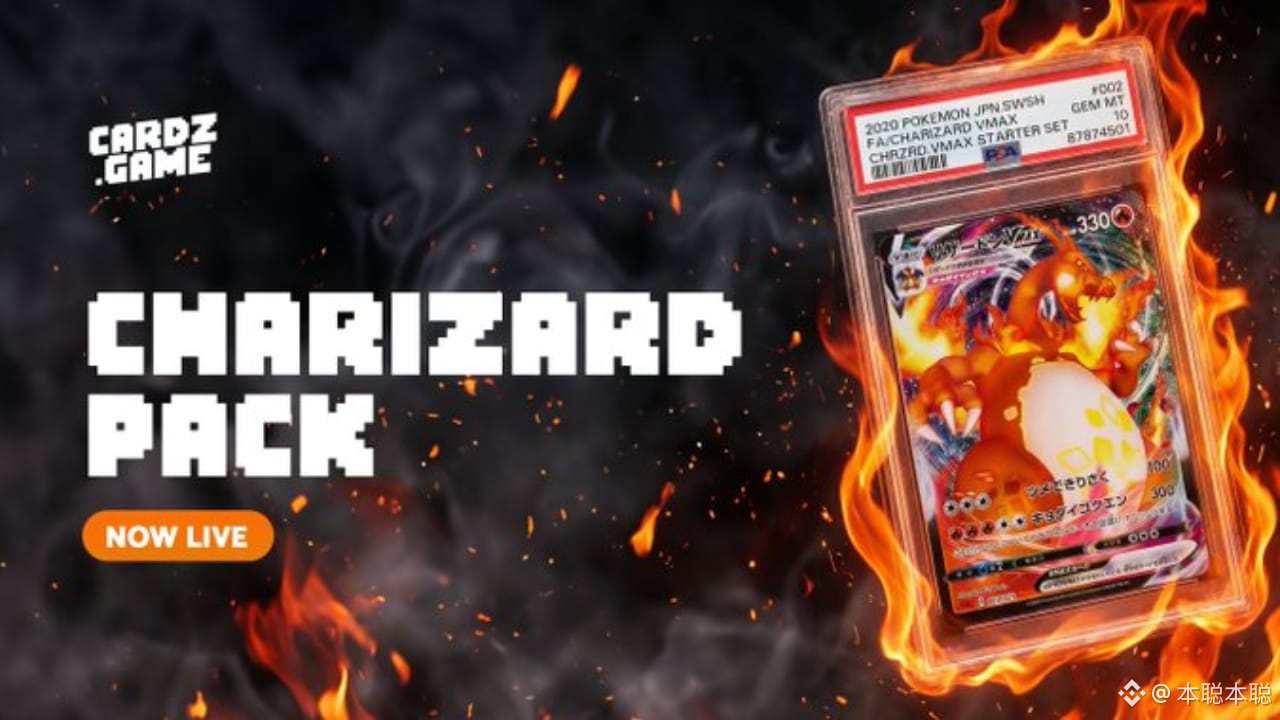
Trillion Market Dual Engine: Sports Cards Depend on Events, TCG Depends on IP
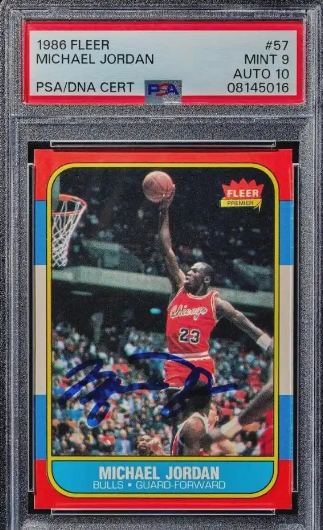
1. Sports Cards: Market Effect Determines Rise and Fall, Newcomers' Gold Rush Preferred
By 2025, the global sports card market size is expected to reach $12.6 billion, with three major categories showing impressive growth: WNBA cards have increased by 130% over five years, WWE cards by 125%, and F1 cards by 35%. The most attractive factor is the 'Real-Time Effect' - on the day baseball rookie Nick Kurts was named Best Rookie, the search volume for his rookie card on eBay surged by 23000%, with an ungraded base card skyrocketing from $50 to $800. However, high returns come with high risks: NBA star Jaren Jackson Jr. saw his card drop by 12.2% in a single month after his team was eliminated from the playoffs; Jalen Johnson, on the other hand, saw his cards rise by 18.16% as he exploded with averages of 25+10. The football world is even more dramatic; when rumors of Messi's retirement surfaced, his 2004 rookie card rose by 40% in three days, but after the rumors were clarified, the price quickly fell back to its original point.
2. TCG: Pokémon dominates, IP rises strongly
In the TCG category, Pokémon is a 'evergreen tree'; among the top five search series in 2025, (Prismatic Evolutions), (Destined Rivals), and (Journey Together) occupy three seats, while the remaining two are divided among Magic: The Gathering and Yu-Gi-Oh! (Master Rule 2025) series. A rare Chinese version of the Hudi card sold by a Shanghai seller fetched over $7000; emerging tracks are also worth paying attention to. (Runeterra: League of Legends Trading Card) made its debut in August 2025 and quickly climbed to the third spot on second-hand platform transaction rankings. After the My Little Pony English version cards entered Japan and South Korea, search volume surged by 1800% in the first month, with one signed card being speculated to $1200.
Three core elements determine the success or failure of card investment
1. Rating is the lifeline: A one-point difference can mean a tenfold price disparity
Card ratings directly determine value; PSA 10 cards are priced 2-10 times higher than 9-rated cards of the same series. For example, the PSA 10 price of the 1999 Charizard holo card is $270,000, while a 9 is only worth $23,000. Newbies need to be cautious of the 'self-assessment trap'; someone once spent $800 on a 'self-assessed 10' card, which was officially rated only 8, resulting in a direct loss of half the principal.
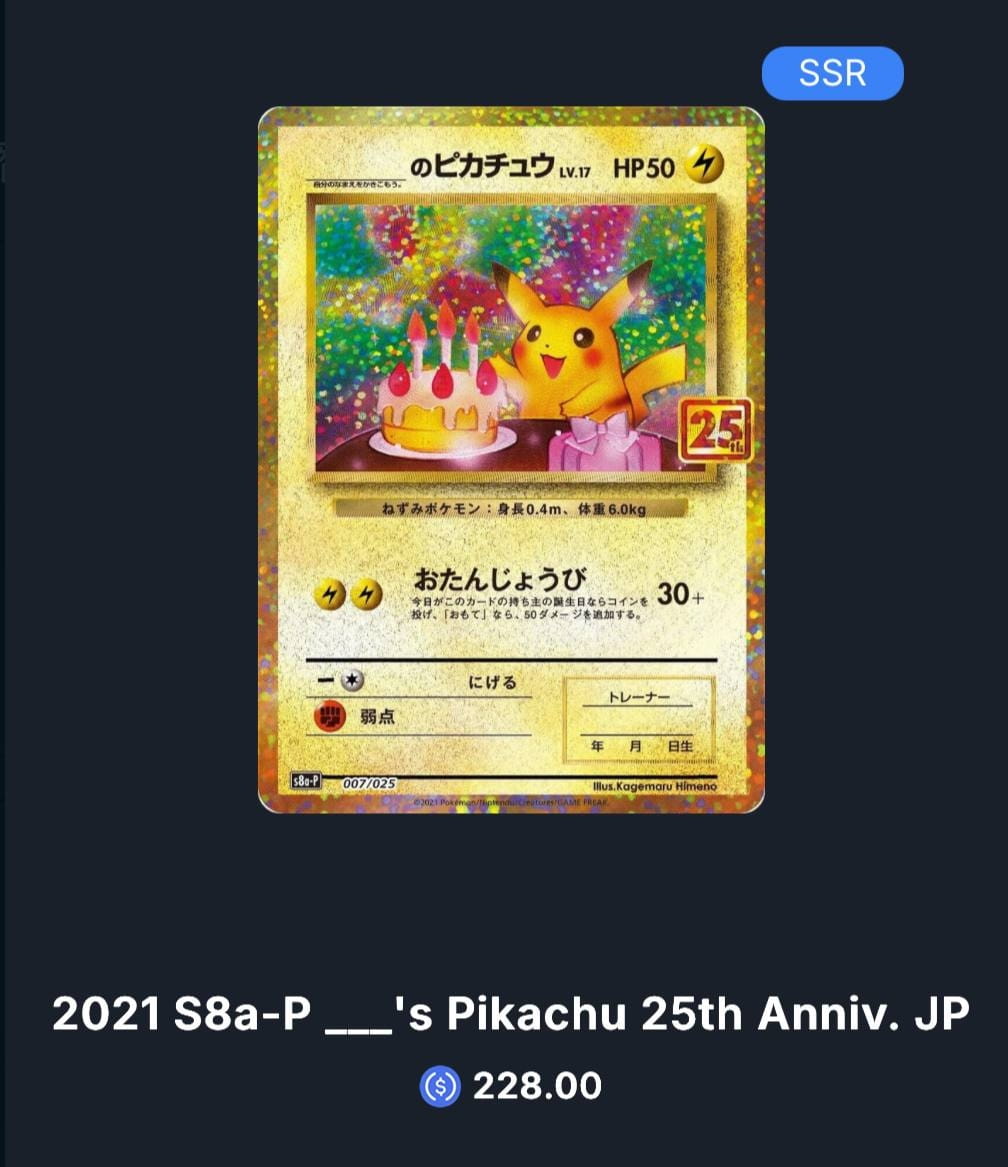
2. IP selection: Choosing the right IP can lead to effortless profits for years
Classic IPs have strong resilience; the core cards of Jordan and Pokémon have an average annual growth rate of over 15% for the past decade. Emerging IPs have astonishing explosive power, with Labubu's search volume skyrocketing by 2600% in 2025, and limited edition cards selling for up to $5400. However, avoid 'flash-in-the-pan' internet celebrity IPs; a certain collaboration card was speculated to $2000 upon release, but was worth only $100 six months later, making speculation risks extremely high.
3. Timing of entry: More important than vision is the secret to profit
Experienced collectors have summarized three best entry timing: off-season of competitions (price trough), low period of star players (e.g., before injury recoveries), and three months after the release of a new series (cooling of speculation). For example, an investor bought cards of WNBA star Stewart when she was injured, and after her recovery and championship win, the card prices skyrocketed by three times.
Anti-counterfeiting and asset protection: Blockchain + Cardz.game triple protection
The booming card market has given rise to counterfeiting chaos. In 2025, Shanghai police cracked a family-style counterfeiting case involving 6 million yuan, where counterfeiters printed fake cards on inferior paper and sold them at low prices through 'internal channels', with frequent issues of ink shedding and color fading, deceiving many newbies. Currently, the mainstream anti-counterfeiting method is blockchain; 89% of limited cards on eBay have achieved full lifecycle on-chain, and scanning a QR code allows users to view circulation records, with the circulation of counterfeits decreasing by 79%.
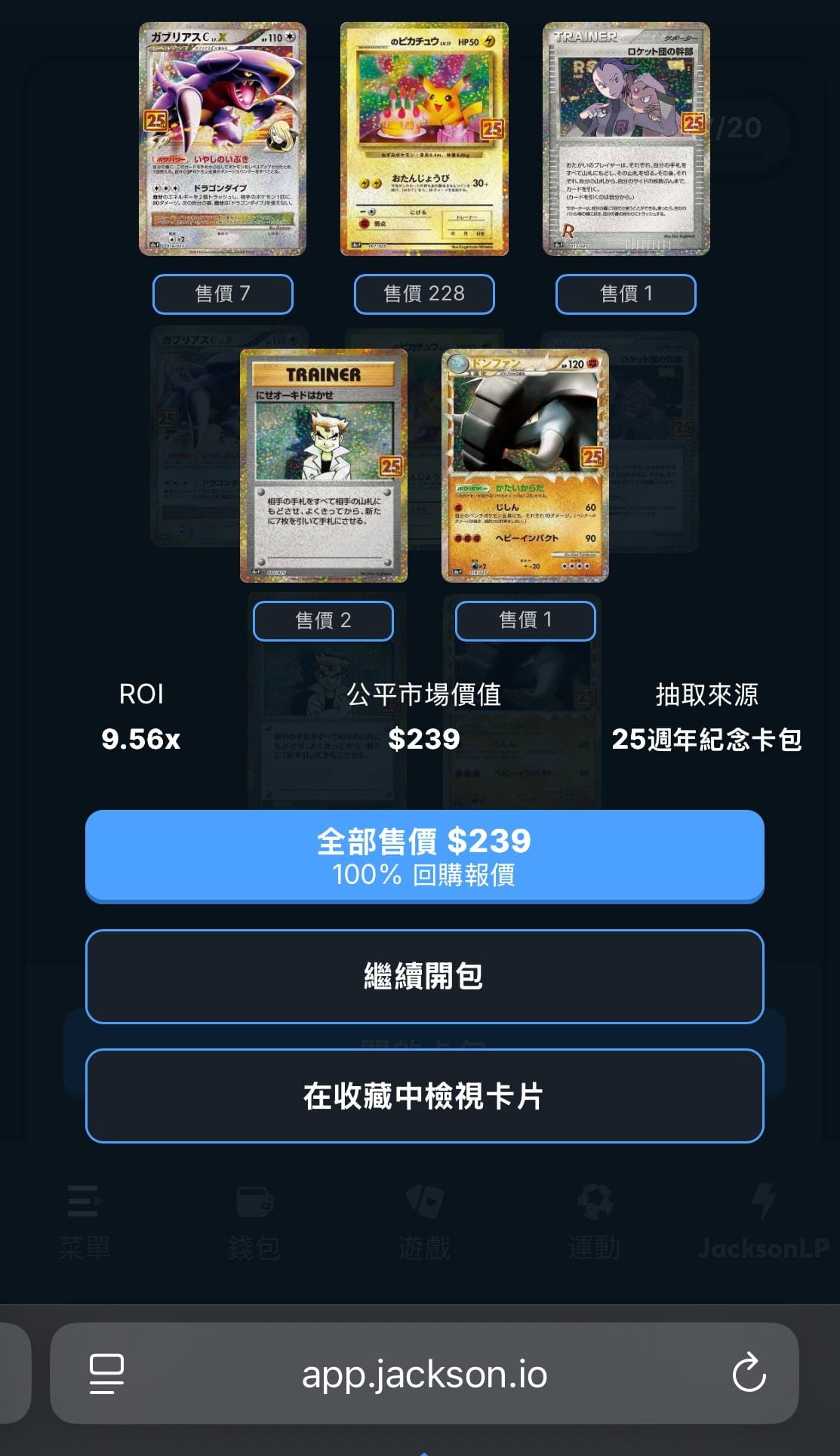
For ordinary investors, acquiring cards through Cardz.game offers greater security. The platform provides three authentication services: verifying PSA rating records, validating paper craftsmanship, and blockchain-based proof of ownership. In 2025, the platform intercepted over 200 counterfeit items for users. At the same time, Cardz.game collaborates with Jackson to optimize product models, eliminating the drawbacks of traditional chain games that exploit players. Through 'limited-time limited-quantity sales' and 'real-time public drop rates', it ensures the expected value (EV) of card packs remains stable. Based on the PSA rating prices of Pokémon cards on the blockchain, combined with a 90% instant buyback mechanism and JacksonLP liquidity pool, even if you don't open a 'God card', the asset still has solid underlying value.
Low-cost entry directions and future trends
Newbies do not need to blindly chase high-priced cards; the following three types of targets offer great value for money: ungraded first-generation Pokémon base cards, currently averaging only $200, with a low entry barrier and long-term steady growth; 2026 World Cup player cards, which have low acquisition costs at this stage, with great appreciation potential during the event cycle; anime IP character cards, such as a One Piece commemorative card from a Shanghai seller, which has risen to $4000; early positioning brings early benefits.
In the future, card trading will move towards 'digitalization of physical assets'. The traditional logistics and quality inspection processes that take weeks for consignment may be shortened to seconds with the collaboration of Jackson and Cardz.game. After physical goods are stored, the mapped NFTs can be instantly circulated in the secondary market of Cardz.game. This 'digital speed of physical assets' will become the core driving force for continuous capital inflow.
Final reminder: The core of card collection is 'scarcity + emotional value'. Do not blindly follow the trend of speculation. If you want to find reliable trading channels and accurately grasp investment opportunities, consider trying Cardz.game, which, with the support of a professional platform, allows you to safely share in the dividends of the overseas card market.