
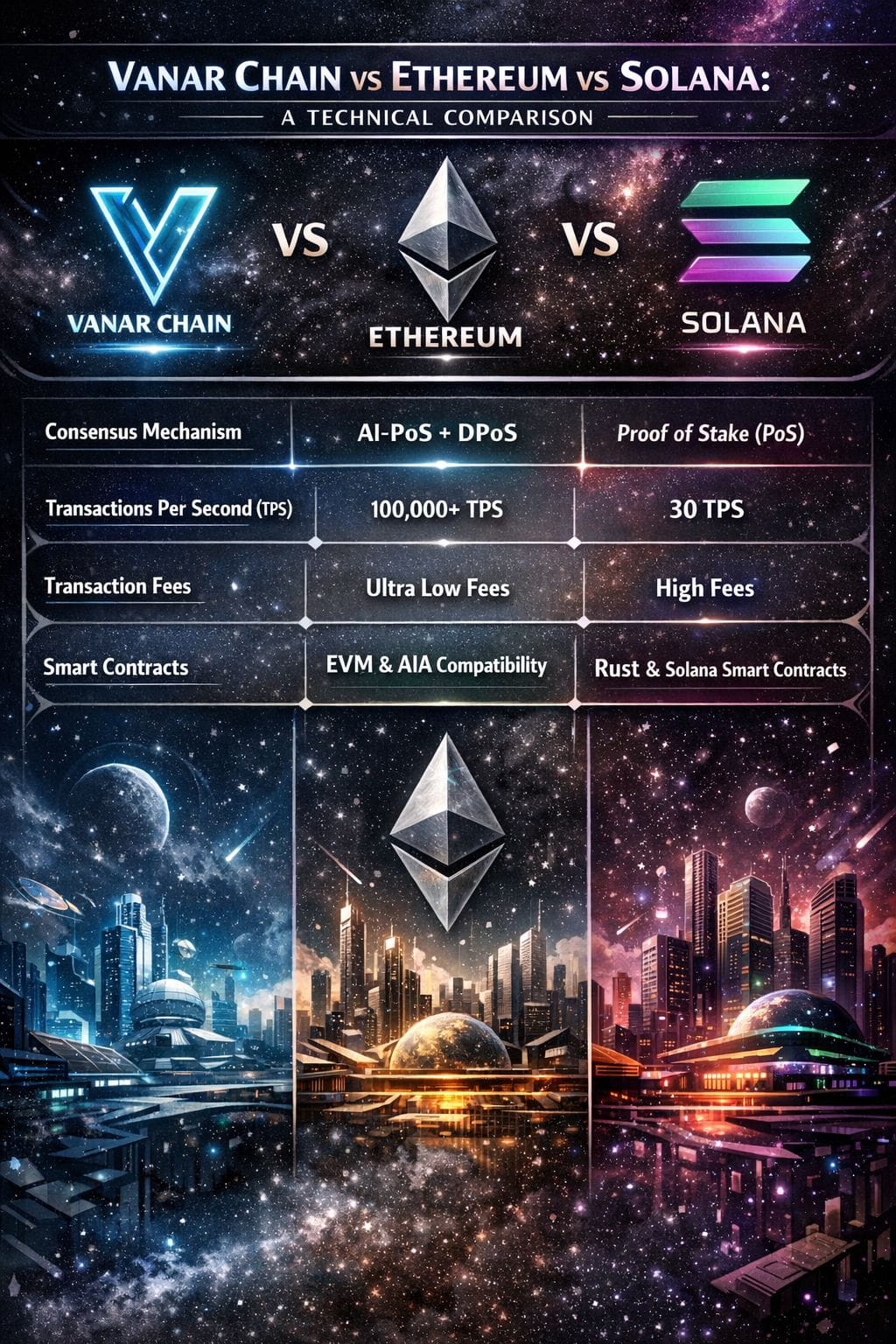
Let’s take a closer look at Ethereum, Solana and Vanar Chain. Each one goes after blockchain’s big challenges scalability, security and serving specific types of apps—but their approaches couldn’t be more different. Here’s how they stack up when you break down their architecture, performance, developer experience and where they really shine.
1. Architectural Design
Ethereum is the classic all purpose blockchain. It runs on the Ethereum Virtual Machine (EVM), putting decentralization and security above everything else. After switching to Proof of Stake (PoS), Ethereum doubled down on a big, diverse validator set and sticks with careful, slow moving upgrades to keep the network stable.
Solana takes a different route. It’s built as one tightly integrated system, all about speed. Proof of History (PoH) is its big technical trick, giving every transaction a clear timestamp. This, combined with PoS, lets Solana blaze through transactions but it means validators need beefier hardware and have to handle more complexity.
Vanar Chain, on the other hand, targets games, digital entertainment and apps meant for lots of users. It’s EVM-friendly (or fully EVM-compatible, depending on how you set it up), so Ethereum developers feel at home. But Vanar goes further, tuning its core systems for fast response times and predictable execution making it easy for teams to bring their projects over from Ethereum.
2. Consensus and Performance
Ethereum’s PoS is built for security and decentralization, not raw speed. Transactions generally finalize in seconds or minutes and the network itself can't handle huge volumes at the base layer. When things get busy, developers turn to Layer 2 solutions like rollups to keep things moving.
Solana, meanwhile, is all about throughput. On a good day, it can process thousands of transactions per second, with quick blocks and cheap fees. This makes it a favorite for high-frequency trading or apps that need speed. The catch? Validators need powerful machines and the network does hit the occasional rough patch.
Vanar Chain keeps things smooth and affordable, especially for real-time apps like games or digital worlds. It fine-tunes block times and cuts down execution costs, so users get a seamless experience without the hassle of dealing with Layer 2 complexity.
3. Developer Experience and Tooling
Ethereum leads the pack here. Its developer ecosystem is huge, with a mountain of tools, guides, and an active community. If you’re building DeFi, infrastructure or experimenting at the cutting edge, Ethereum’s the default. Still, gas fees can spike and network congestion is a real headache for apps aimed at everyday users.
Solana is a different beast. Developers mostly work in Rust and use specialized frameworks. This opens the door to powerful, high-speed apps, but the learning curve is steep and the community, while dedicated, is smaller and more technical.
Vanar Chain pitches itself as the easy pick for studios and companies building for big audiences. It sticks to familiar smart contract standards and makes deployment simple, especially for teams moving over from Web2 or Ethereum. This is a big draw for gaming and media projects.
4. Use Case Alignment
Ethereum is the go-to for DeFi, DAOs and infrastructure places where security and the ability to connect different protocols really matter. Solana shines in high-throughput environments: think on-chain trading, order books and apps that can’t afford to wait.
Vanar Chain stands out by going after games, virtual worlds and entertainment platforms. Its tech choices put user experience and scalability first—so it’s less about being a catch all blockchain and more about delivering where fast, engaging apps are the priority.
Conclusion
Each platform makes different trade-offs. Ethereum sticks to security and broad adoption, Solana chases raw speed and Vanar Chain goes all-in on entertainment at scale. Which one’s best? It depends on what you’re building, who you’re building for and whether you care more about security, performance or delivering a top notch user experience.