

Walrus Protocol ko sirf ek storage concept kehna galat hoga. “Use” section clearly dikhata hai ki users aur builders network ke saath practically kaise interact kar rahe hain — chahe woh data store karna ho, protocol secure karna ho, ya real applications build karna.
Entry point usually ek Sui-compatible wallet se start hota hai. Yeh wallet sirf $WAL hold karne ke liye nahi hota, balki Walrus ke on-chain storage layer aur ecosystem apps access karne ka primary gateway bhi banta hai. Yahin se users network ke saath directly interact karna shuru karte hain.
Wallet set up hone ke baad, users $WAL acquire karte hain, jo Walrus ecosystem ka core token hai. WAL ka role sirf holding ya trading tak limited nahi hai — isi token se storage payments hoti hain aur network participation possible hoti hai. Is wajah se token utility directly real storage demand se linked rehti hai.
Network me contribute karne ka ek important way staking hai. $WAL holders apne tokens stake karke decentralized proof-of-stake system ko support karte hain. Is process me reliable node operators ko incentives milte hain, aur delegators ko rewards — jisse long-term alignment aur network stability dono improve hoti hai.
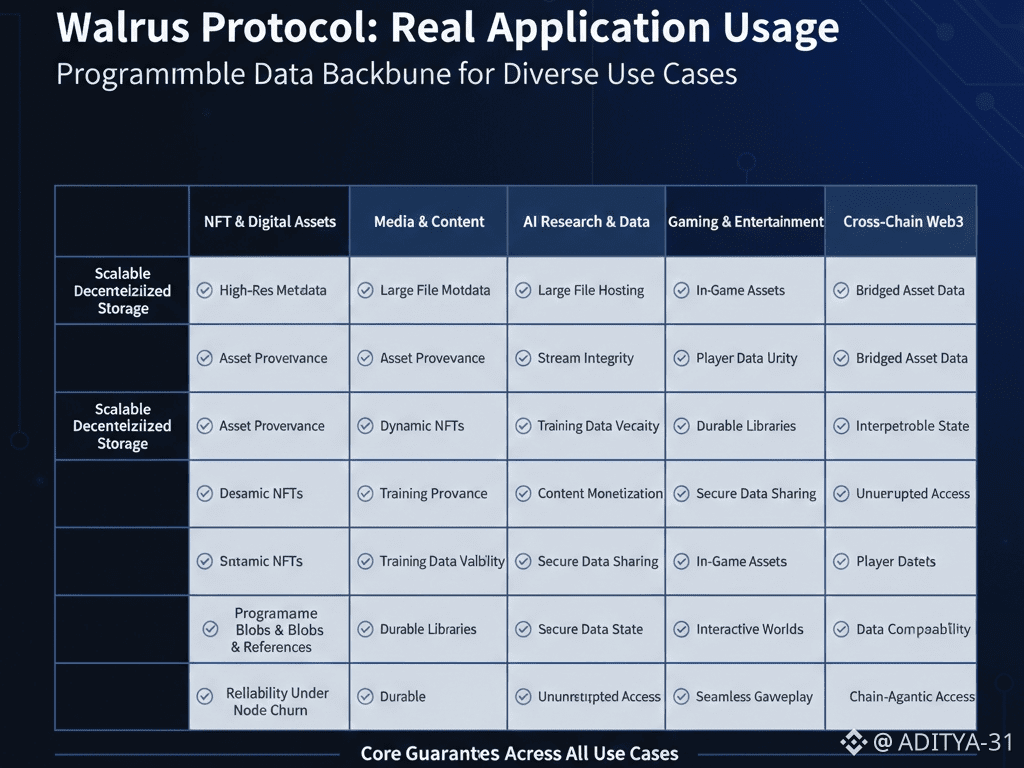
Sirf infrastructure level par hi nahi, Walrus ka use real applications me bhi dikh raha hai. NFT brands, digital vault services, AI research workflows, media platforms, gaming aur entertainment projects — sab Walrus ke scalable storage layer ka use kar rahe hain. Multiple chains par build hone wale projects bhi Walrus ko data store aur program karne ke liye adopt kar rahe hain, kyunki yeh sirf files host nahi karta balki on-chain data handling ko possible banata hai.
In sab interactions ko ek saath dekha jaye to clear ho jata hai ki Walrus ek working infrastructure layer hai. Yahan log storage ke liye pay kar rahe hain, staking ke through network secure ho raha hai, aur builders real Web3 applications me decentralized, programmable storage ko actively use kar rahe hain — sirf theory ke level par nahi.