

For a long time, finance has run on rules written in documents, checked by people, and enforced through long processes. That works, but it is slow, expensive, and often hard to connect to modern digital systems. The next step is not to remove the rules, but to turn them into something machines can understand and follow. That is the idea behind moving from market rules to machine rules, and it is a big part of what $DUSK is built for.
In the real world, assets are not just created and traded. They have a full life cycle. They are issued, used, transferred, updated, and sometimes closed or retired. At every step, there are rules about who can do what, under which conditions, and with which checks. On Dusk, these rules are not an afterthought. They are part of the asset itself. The asset carries its own logic, limits, and permissions wherever it goes.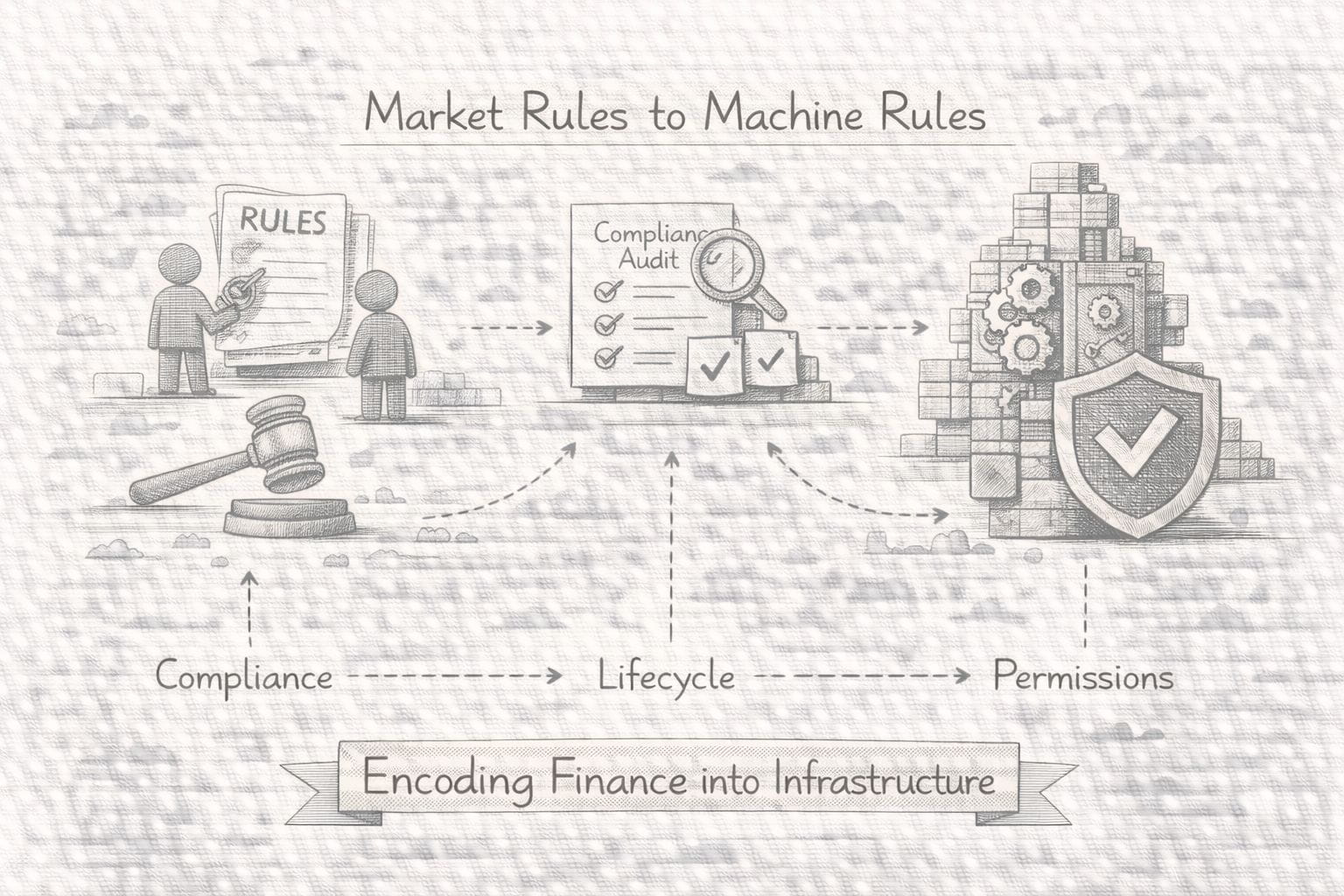
This is what makes rule-enforced assets so powerful. Instead of relying on manual checks or separate systems, the infrastructure itself helps make sure things happen the right way. Compliance becomes something that is built in, not something added later. That does not mean everything is public. It means the system can prove that rules were followed without exposing what does not need to be shown.
For builders, this opens the door to creating tools that fit real markets instead of just demos. For users, it creates a calmer experience, where things behave as expected and surprises are rare. For the wider community, it means we are building something that can last, something that respects how finance already works while making it more reliable and easier to use.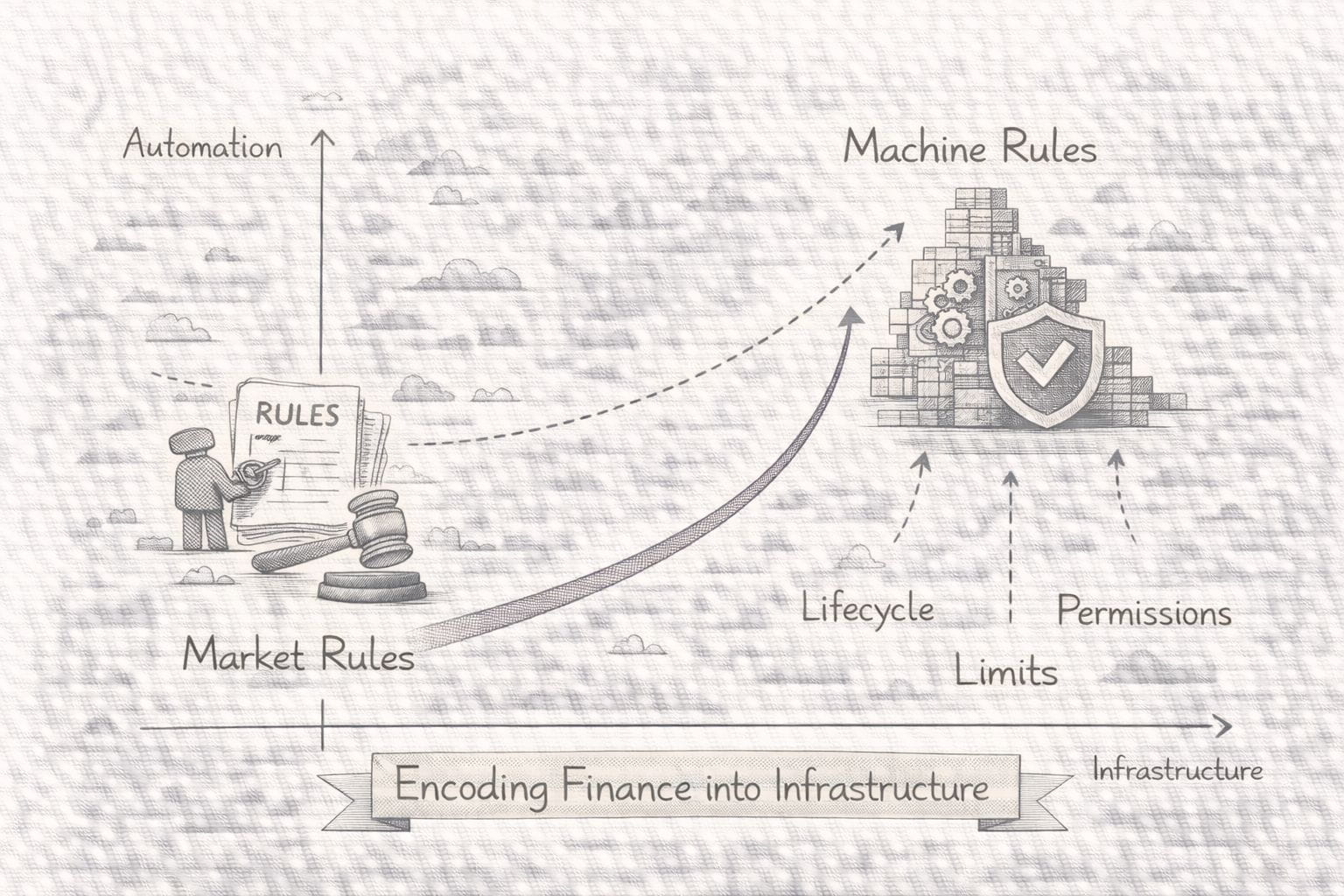
This is not about making finance louder or more complex. It is about making it quieter, clearer, and more dependable by putting the rules where they belong: into the infrastructure itself.
