


Plasma (XPL) represents an ambitious Layer 1 blockchain designed specifically for stablecoin payments, particularly optimizing for high-volume, low-cost transfers of assets like USDT. Launched in mainnet beta around September 2025, the network combines EVM compatibility, a custom consensus mechanism called PlasmaBFT, and innovative features such as zero-fee USDT transfers via a protocol-level paymaster system and support for custom gas tokens. These elements aim to enable near-instant, frictionless global payments while maintaining institutional-grade security and high throughput often cited as over 1,000 transactions per second with sub-second to sub-12-second block times.
However, as with many emerging blockchain projects, Plasma's technology remains in an active development phase. This introduces significant risks that investors, developers, and users should carefully consider before engaging with the ecosystem.
At its core, Plasma relies on PlasmaBFT, a pipelined, Rust-based implementation derived from the Fast HotStuff consensus algorithm. This BFT (Byzantine Fault Tolerant) variant is engineered for faster commit paths, reduced latency, and optimized performance under stablecoin workloads, which typically involve high transaction volumes with consistent low-latency demands. Unlike traditional sequential consensus designs, PlasmaBFT enables consensus in as few as two rounds under optimal conditions, contributing to rapid finality and scalability.
Despite these advancements, PlasmaBFT is still being finalized and rigorously tested. Documentation from the project's official resources highlights ongoing refinements to ensure safety guarantees while pushing performance boundaries. As a relatively novel adaptation of established protocols like HotStuff, it carries the uncertainties inherent to custom consensus implementations. Any undiscovered edge cases, synchronization issues in pipelined processing, or vulnerabilities during high-load scenarios could lead to network stalls, forks, or degraded performance directly impacting transaction reliability and user trust.
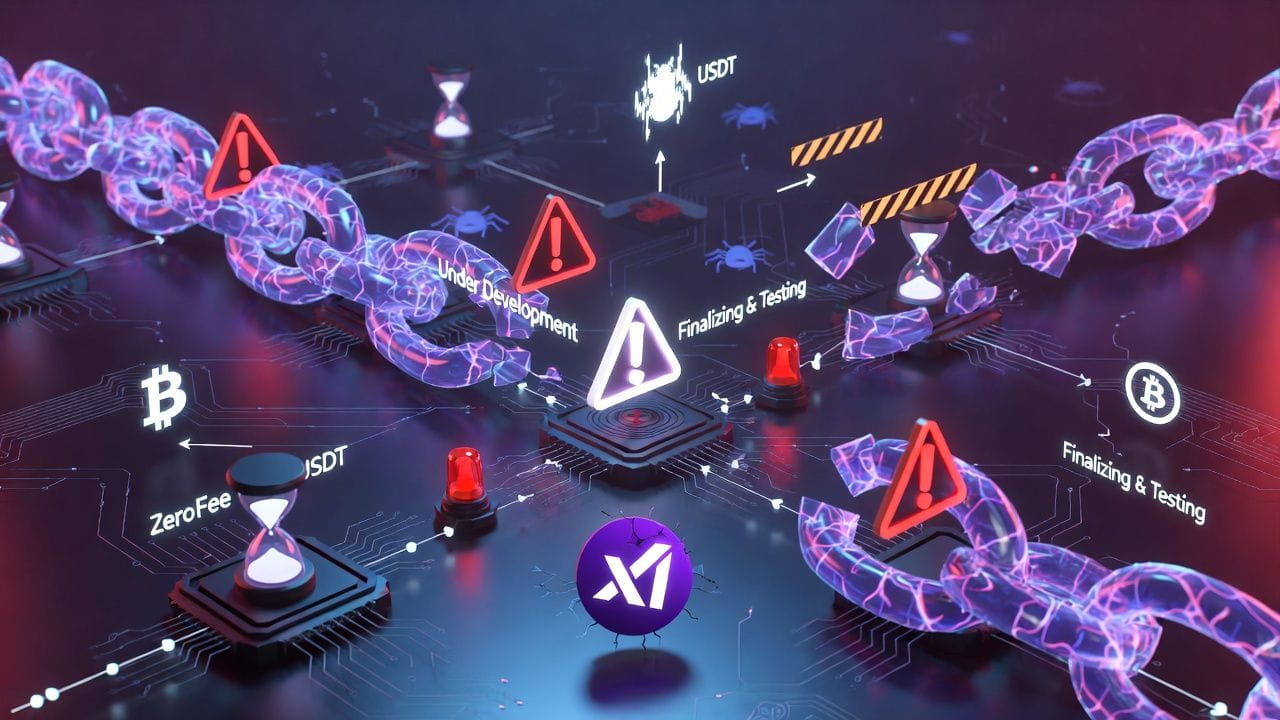
The blockchain's specialized stablecoin features further amplify development-stage risks. Key innovations include:
A protocol-level paymaster that sponsors gas costs for simple USDT transfers, enabling true zero-fee sends and receives without requiring users to hold the native XPL token.
Custom gas tokens, allowing fees to be paid in whitelisted stablecoins (e.g., USDT or USDC) rather than solely in XPL.
Confidential transactions and other payment-oriented optimizations.
These are planned or partially rolled-out implementations, with some features (like expanded zero-fee support or broader custom gas options) potentially subject to phased deployment. Integrating such mechanisms at the protocol level requires deep modifications to execution layers (built on a modified Reth client for EVM compatibility) and economic models. Challenges could arise in abuse prevention (e.g., spam attacks exploiting sponsored gas), quota management for the paymaster funded by XPL allocations, or ensuring seamless interoperability with DeFi protocols and bridges.
Early-stage blockchain technology inherently carries risks of bugs, security vulnerabilities, or unforeseen performance bottlenecks. Plasma, despite drawing inspiration from battle-tested models and launching with substantial stablecoin liquidity (over $2 billion TVL reported at debut), operates in a complex environment. Potential issues include smart contract exploits in EVM-compatible code, consensus failures under adversarial conditions, or scalability limits when global demand spikes. Historical precedents in crypto show that even well-audited projects can face post-launch vulnerabilities ranging from reentrancy attacks to economic exploits that erode token value or disrupt functionality.
For XPL holders and participants, these risks manifest in multiple ways. The token underpins Proof-of-Stake security through staking for validators, rewards distribution, and fallback gas payments. Any consensus instability or delayed feature rollouts could reduce staking participation, validator incentives, or overall network adoption, pressuring XPL's utility and market price. Moreover, while Plasma emphasizes Bitcoin-anchored security in some descriptions and focuses on stablecoin-native design, the combination of novel consensus, paymaster economics, and custom features increases the attack surface compared to more mature chains.
Regulatory and adoption hurdles add indirect pressure: as a payments-focused chain, Plasma must navigate compliance landscapes, especially for cross-border stablecoin flows, which could influence development priorities or introduce unforeseen constraints.
While Plasma (XPL) offers compelling innovations for stablecoin infrastructure high throughput via PlasmaBFT, zero-fee USDT transfers, and EVM flexibility its reliance on actively developing core components introduces material technology and development risks. Bugs in consensus logic, implementation delays for specialized features, or security issues could compromise network integrity, token functionality, or long-term value. Participants should approach with diligence, monitor official updates from plasma.to and docs.plasma.to, and weigh these early-stage uncertainties against the project's potential to capture a slice of the growing stablecoin economy.

