

You ask why @Dusk feels different.
I answer that it never rushes to justify itself.
You have seen enough blockchains chase relevance. You have watched stories inflate quickly and collapse even faster. Every cycle delivers the same muted lesson: most projects are engineered to be seen, not to endure.
You mention that Dusk Network has existed since 2018.
I nod that alone is meaningful.
Back then, markets were noisier. Capital was looser. Patience was scarce. Building something slow, regulated, and deliberate was unfashionable. Privacy was treated either as marketing or as liability. Compliance was a punchline. And yet, this protocol chose that direction anyway.
You ask what kind of direction that is.
I tell you it’s the unglamorous one. The difficult one. The path most teams avoid.
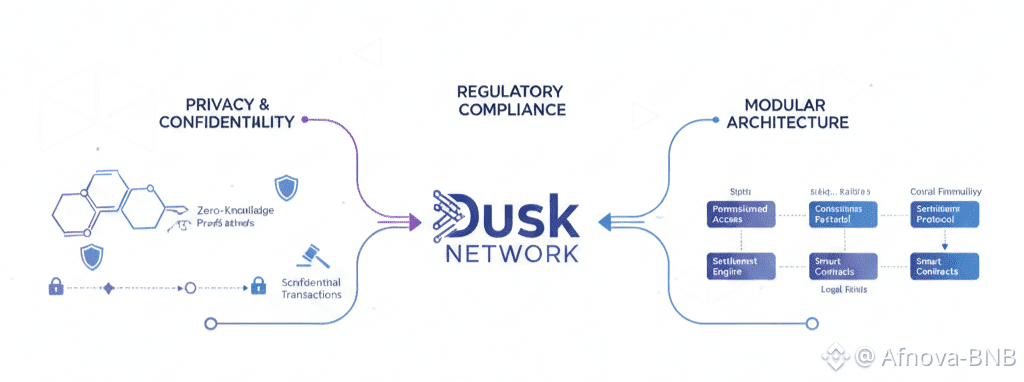
Dusk wasn’t built to impress crowds. It was built to withstand examination financial, legal, institutional. The kind of scrutiny that ignores narratives and demands precision. The kind that doesn’t care about momentum, only answers.
You point out how most systems add privacy later or bury it behind abstraction. Here, it’s foundational. Not to erase activity, but to manage visibility who can see what, and when. Privacy paired with accountability. That balance is uncommon because it imposes discipline on builders and limits on users.
You pause, realizing why that matters.
We have both watched capital drift away from disorder not abruptly, but consistently. Serious money wants clarity. It wants frameworks it can navigate. It wants systems that don’t fracture when regulation arrives.
Dusk didn’t wait for that moment. It assumed it.
You bring up modular architecture.
I explain that it isn’t a slogan here it’s a defensive strategy.
If regulated finance is going to touch your chain, you can’t weld everything into a single rigid design. You need components that evolve independently. Privacy that can be audited. Settlement that can be proven. Logic that adapts without rewriting the past.
This is where many projects quietly break. They optimize for speed. Dusk optimized for longevity.
You say it feels slow.
I agree intentionally so.
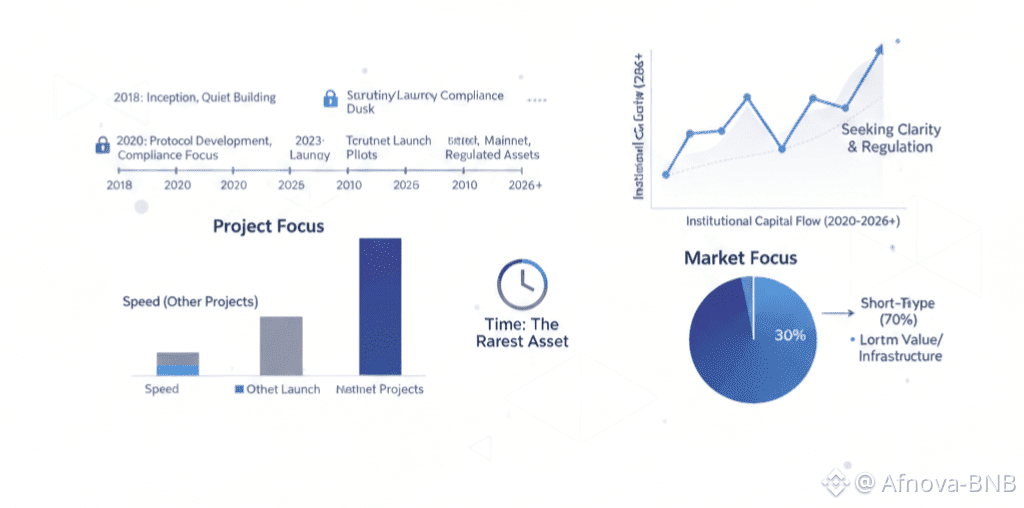
Tokenized assets are discussed everywhere, but few platforms are actually prepared to host them under real-world constraints. That gap isn’t technological it’s architectural. You need confidentiality for participants, transparency for oversight, finality that holds up in court, and infrastructure that doesn’t blink when real value is on-chain.
That’s the environment Dusk was designed for. Not prototypes. Not demos. Actual financial rails.
You notice how little noise it makes.
That, too, is a signal.
Projects chasing attention speak constantly. Projects building for institutions speak sparingly. They know their audience and who they aren’t trying to impress.
There’s another truth the market only teaches over time.
Trends burn out. Infrastructure remains.
When speculation returns, serious systems look dull. When risk tightens, they suddenly feel obvious. Dusk lives in that second phase the one people recognize only after paying for the first.
This isn’t a promise of immediate upside. It’s an offer of durability. A foundation built on the assumption that regulation will increase, privacy will be demanded, and finance won’t settle on platforms that can’t explain themselves.
You sit with that.
This isn’t about today’s price. It’s about future relevance. About whether a chain still matters once the noise disappears and only function remains.
I say it quietly, because loud certainty usually masks doubt.
Dusk doesn’t need belief.
It needs time.
And in this market, time is the rarest asset of all.
You close the page with something unexpected not hype, not adrenaline.
Confidence.
