

For many years, most blockchains were built to do two main things: move tokens and run simple smart contracts. That design worked well at the beginning, but the internet has changed. Today, most new apps are built around media, games, AI content, virtual worlds, and digital assets that are much more complex than a simple number in a wallet.
The problem is that traditional blockchains are not made to handle this kind of data. Storing images, videos, 3D models, or documents directly on-chain is expensive and inefficient. So developers usually store these files somewhere else and only save a link on the blockchain. This works, but it creates a weak point. If that storage goes offline or the link breaks, the asset still exists on-chain, but the content is gone. Many people have already seen NFTs or digital items that no longer load because of this.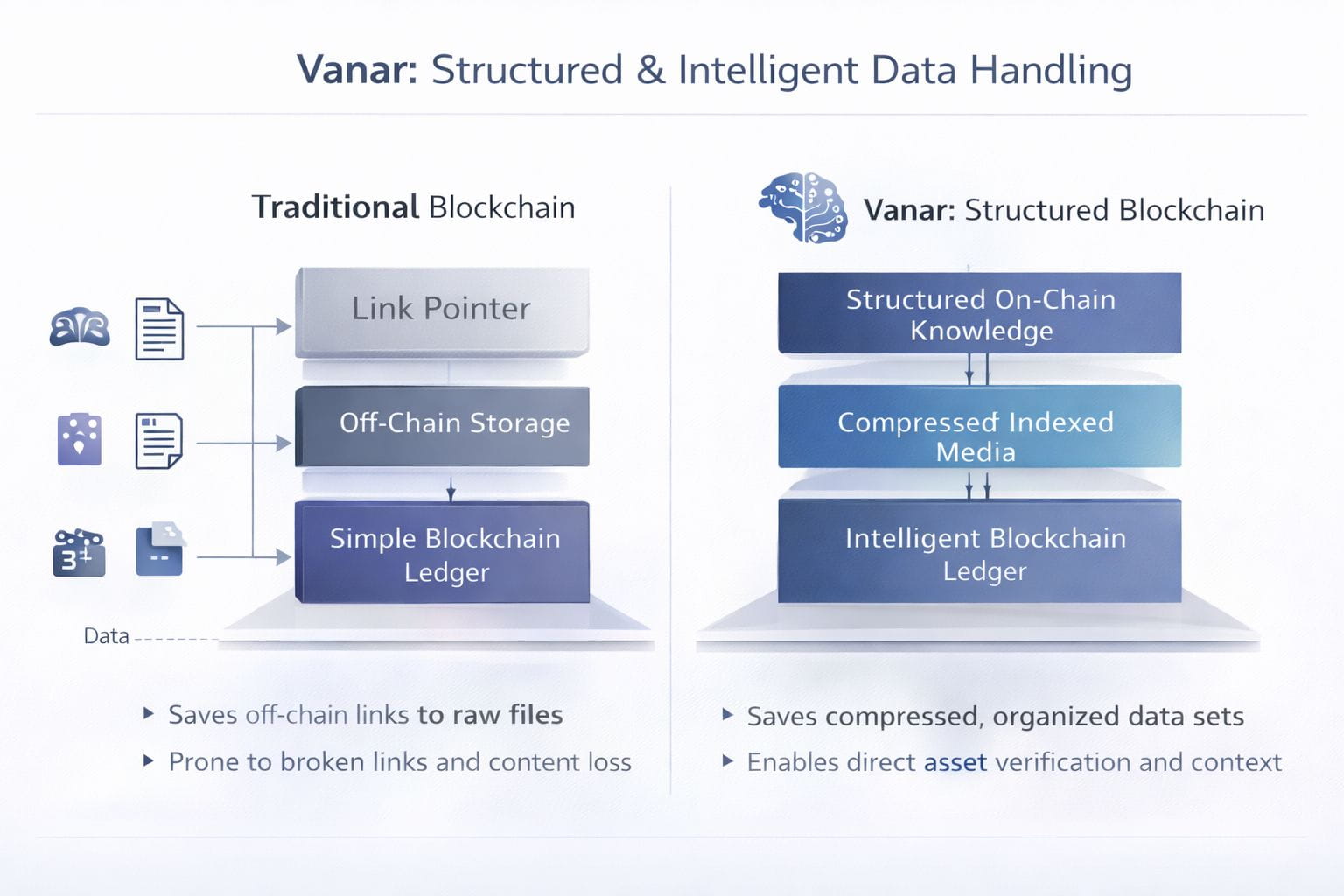
Vanar takes a different approach. Vanar is an L1 blockchain designed from the start for real-world applications like gaming, AI, and digital experiences. Instead of treating data as something external, Vanar treats data as part of the system itself.
The key idea is simple: the chain should not only point to data, it should understand it. Vanar uses a structured and compressed data model that keeps the important information and meaning of an asset on-chain, while large raw files can still live in distributed storage. This keeps the network efficient, but also makes assets more reliable, verifiable, and long-lasting.
This is especially useful in areas Vanar is already working in, such as the Virtua metaverse and the VGN games network. In games and virtual worlds, there are thousands of assets like items, characters, skins, and environments. These assets change, move, and interact every day. They are not just tokens, they are pieces of content with history and context. Vanar’s design makes it easier to track, verify, and keep these assets usable over time.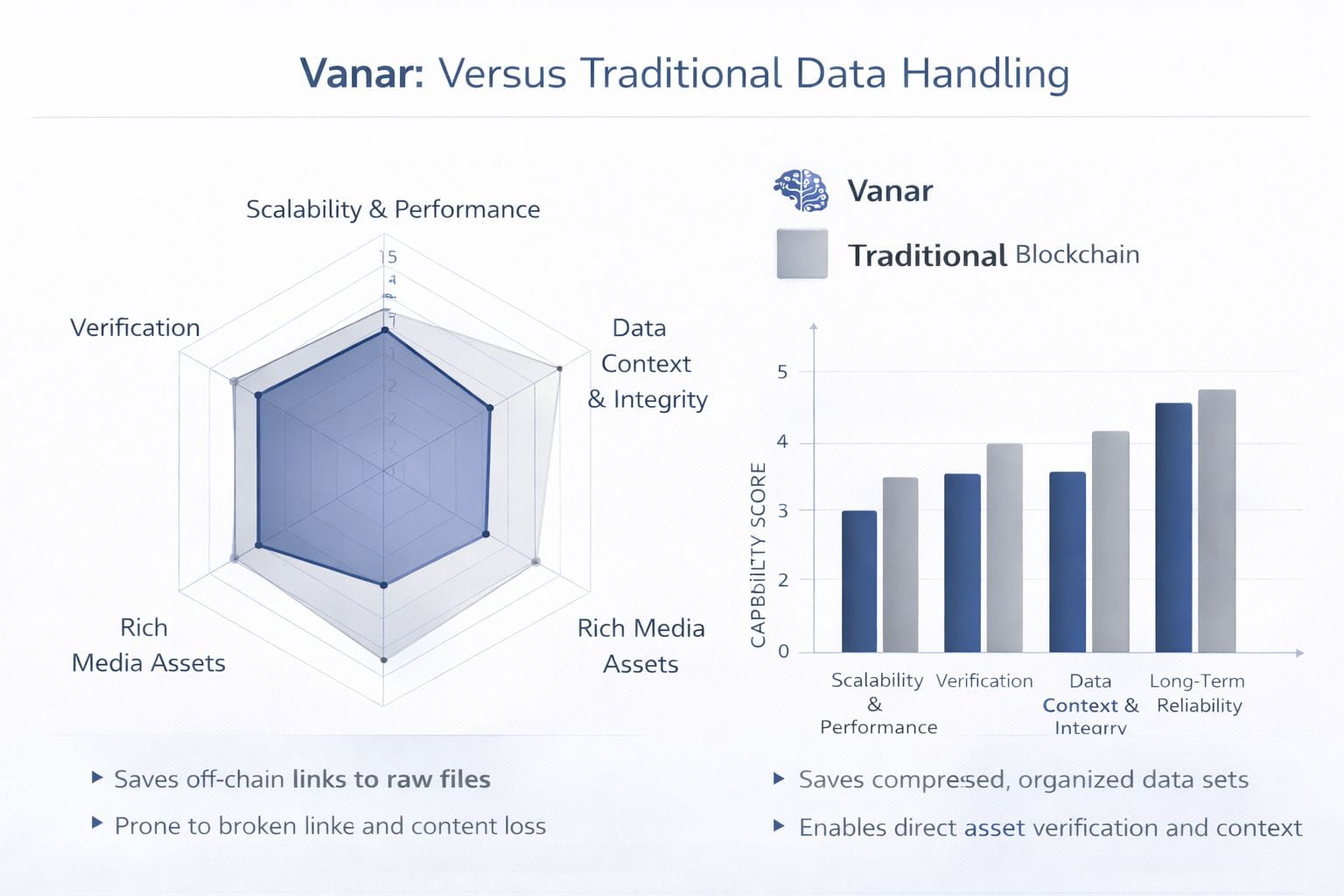
The same logic applies to AI content, digital media, and even regulated assets that depend on documents, records, and metadata. As rules around data retention and audit trails become stricter, systems need more than just transaction logs. They need structured, reliable information storage.
Vanar, powered by the VANRY token, is built around this idea of long-term data usefulness. It is not trying to be just a faster ledger. It is aiming to be a system that can support rich digital worlds, content, and applications for many years.
As blockchains grow up, they are starting to look less like simple ledgers and more like shared memory for the internet. Vanar is building for that future, where understanding data matters just as much as moving it.
