


Designing to Fail, Not to succeed.
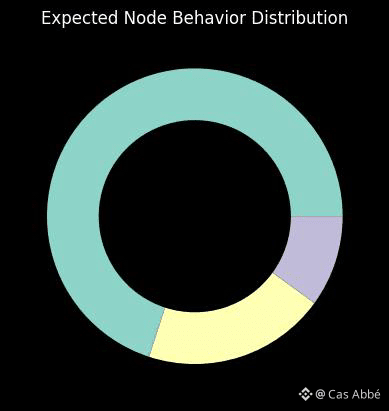
One of the distinguishing features about Walrus is that it assumes failure. Nodes will go offline. The operators will act in a selfish way. Churn will occur in networks. Walrus does not strive to eradicate these facts. It designs around them.
Such an attitude causes the creation of a system in which one node is not vital. The information is encrypted, dispersed and retrieved even in situations where sections of the network have failed. Security comes through the structure as well as redundancy and not through trust or reputation. That is the way that the robust systems survive in the world.
Behavioral Engineering as Incentives.
Walrus considers tokens to be behavioral engineering tools and not a decorative resource. The type of rewards is designed in such a way that it is incentives to availability and correctness rather than mere capacity. This is in line with the behavior of the operators with what the users need to receive: access to data that is reliable.
In cases where incentives are consistent, systems are self-reinforcing. Even advanced technology cannot work when it is not in line. The long-term viability of Walrus lies in it being able to continue to be aligned with the changes in the network and the usage patterns.
The Unspoken Contradiction of Tradeoff between Efficiency and Resilience.
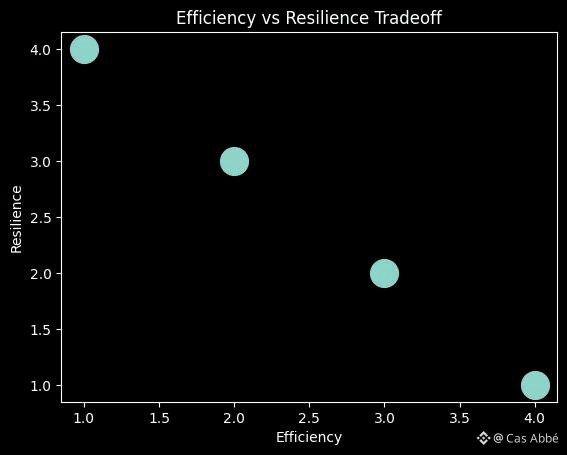
Walrus does not go after hypothetical optimal efficiency. Rather it tolerates a bit of overhead in order to gain resilience. This sacrifice is not accidental. Efficiency optimized systems are the ones that will crash when the environment is changed. Resilience optimized systems degenerate gracefully.
This type of design is a long run orientation. Walrus is not designed to exist in ideal conditions, but rather in imperfect unpredictable ones.
Risk Analysis: Governance Pressure and Economic Drift
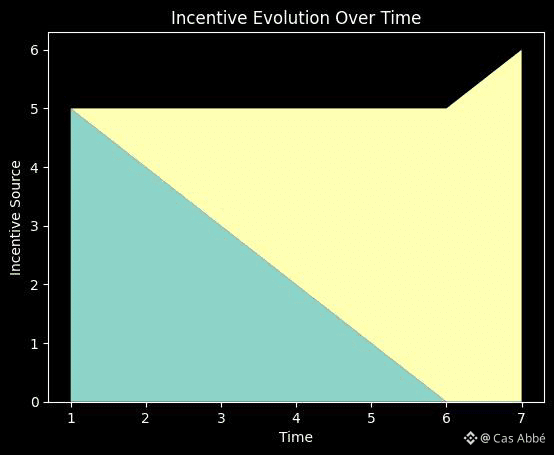
Incentive systems tend to drift over time. Something that is effective on a small scale may not be effective on a large scale. Walrus should also be capable of adjusting its economics without losing trust. The decisions of governance in terms of rewards, pricing and participation will be critical.
Governance capture where a small group of players has a disproportional influence is also a risk. This should be mitigated by designing proper protocols, being transparent and performing constant vigilance.
Why Walrus Is a Bet on Maturity.
Eventually, Walrus is a bet on maturity in the market. It presupposes that builders eventually will find reliability, as opposed to hype, guarantees, instead of spectacle, more important. Provided that such an assumption is not true, Walrus can continue to be niche. In case, it is correct, Walrus may turn into invisible infrastructure, which individuals may use without minding.
And in infrastructure, such invisibility is the success most often.

