

$WAL was designed around reliability, not excitement.
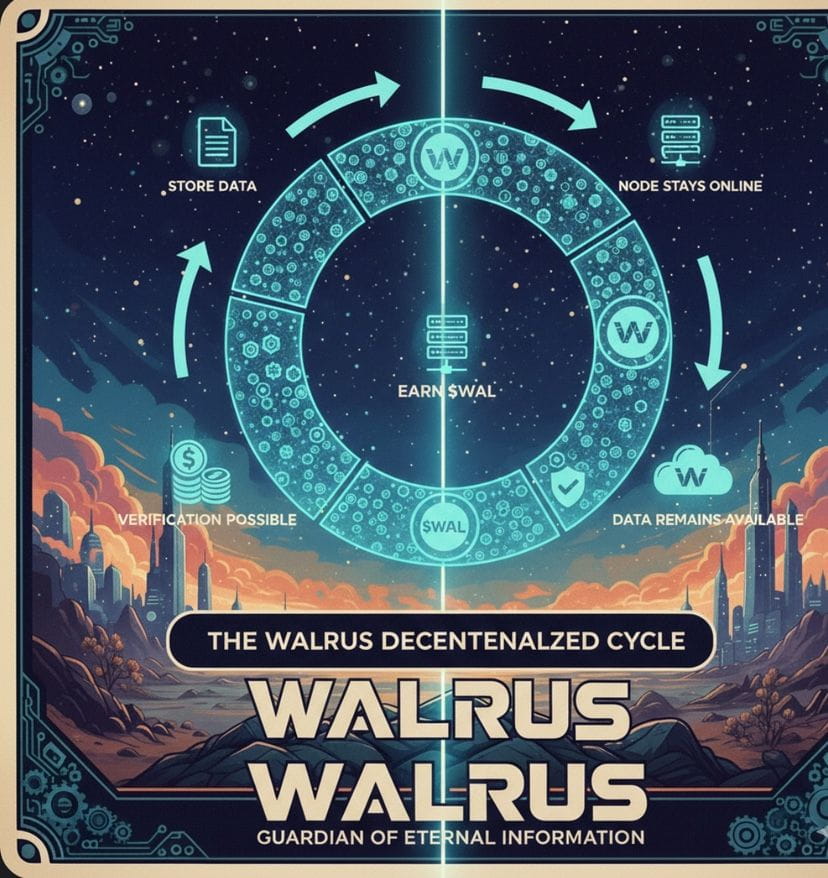
Many tokens benefit from spikes in activity. More usage means more attention and more value. That model does not work for data availability. Data is still important when activity drops. In fact, that is when it matters most.
People usually look backward during problems. During audits. During disputes. During exits. If data is missing at that moment, verification becomes trust.
Walrus aligns incentives with this reality.
Nodes earn $WAL by staying online and keeping data accessible over time. They are rewarded for consistency, not noise. If they fail, they lose rewards. This keeps the system honest without needing permission or oversight.
Walrus avoids execution on purpose. There are no balances that grow endlessly. No state that keeps expanding. This keeps storage needs predictable and prevents hidden debt from building up.
As years pass, predictability becomes valuable. Systems that grow too complex struggle to maintain themselves. Walrus stays narrow so it can stay reliable.
When users need proof, they should not depend on trust. They should depend on access. Walrus makes that possible. $WAL keeps incentives aligned so the system keeps working even when attention is gone.
Infrastructure like this is rarely loud. Its value becomes clear later. When data is old. When shortcuts fail. When history must be checked.
Walrus was built for that future.

