

Why True AI-Native Blockchains Are a Game Changer
In today’s blockchain world, almost every project likes to claim it’s “AI-powered.” But if you look a little deeper, you’ll see there’s a world of difference between a blockchain that simply tacks on AI features after the fact, and one that’s built from the ground up with artificial intelligence as a core consideration. Vanar Chain is a prime example of why this distinction is so important for anyone interested in building, using, or investing in the future of Web3.
Think of it like constructing a house. Yes, you can install solar panels on the roof after it’s built—but if you design the whole house around renewable energy from the start, you unlock efficiencies and capabilities that retrofits can never match. The systems work together seamlessly, and the result is something truly next-level.
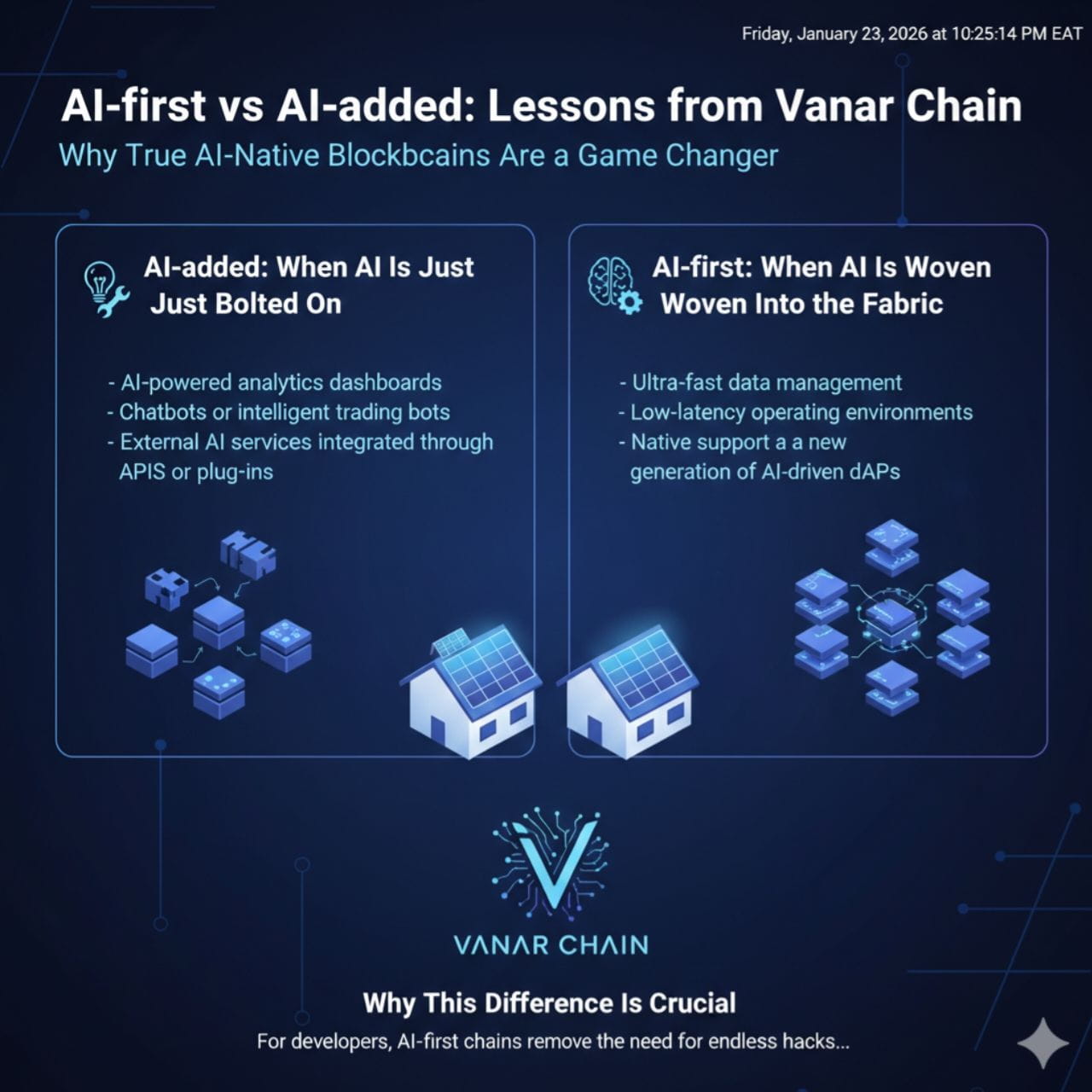
AI-added: When AI Is Just Bolted On
For most so-called “AI blockchains,” the approach is simple: build the usual blockchain infrastructure, and then add AI tools on top. This might mean:
- AI-powered analytics dashboards that help interpret on-chain data
- Chatbots or intelligent trading bots layered into user interfaces
- External AI services integrated through APIs or plug-ins
These enhancements can make certain tasks easier or more efficient, but they’re always an afterthought—sitting on top of an architecture that wasn’t designed for AI from the beginning. This leads to clunky data pipelines, inefficient communication between components, and a reliance on patchwork solutions. AI becomes a nice-to-have, not a must-have. While this can be fine for small improvements or quick wins, it often leads to bottlenecks and limitations when you try to scale or build more complex AI-powered applications.
AI-first: When AI Is Woven Into the Fabric
AI-first blockchains take a radically different approach. Here, AI isn’t just an extra—it’s a fundamental part of the system’s DNA, influencing everything from the core protocol and data handling, to the way applications are built and run on the network. Take Vanar Chain, for instance—they’ve engineered:
- Ultra-fast data management to keep up with the demands of AI processing and big data
- Low-latency operating environments where real-time AI computations are actually possible
- Native support for a new generation of AI-driven decentralized apps, spanning gaming, digital media, virtual worlds, and more
The mindset shifts from “How do we add AI capabilities?” to “What should this blockchain look like if AI is a primary user and participant?” This foundational perspective changes data storage strategies, application interactions, consensus mechanisms, and even the overall feel of the ecosystem. It paves the way for new types of use cases and user experiences that simply aren’t possible with traditional or AI-added chains.
Why This Difference Is Crucial
For developers, AI-first chains remove the need for endless hacks, middleware, or custom workarounds. The tools and infrastructure required to build advanced AI-powered applications are already in place, making development faster, more robust, and more scalable. For users, the difference is palpable—AI-driven apps don’t feel like bolted-on novelties, but instead operate smoothly and natively within the blockchain ecosystem. And for the broader Web3 space, having chains with a clear AI-first mission means less time chasing the latest trend, and more energy focused on meaningful progress and innovation.
The Big Picture
The example set by Vanar Chain is hard to ignore: AI is quickly moving from a flashy bonus feature to a core part of the blockchain stack. As the demand for AI-empowered decentralized applications grows, the projects that built their infrastructure around AI from the outset are likely to maintain a serious advantage over those scrambling to retrofit AI later on.
So, next time you’re evaluating an “AI blockchain,” look beyond the marketing slogans. Ask yourself whether AI is genuinely part of the chain’s design philosophy, or if it’s just a last-minute add-on. In the long run, that difference may determine which platforms thrive and which fade away.
FAQs
Q: What does AI-first actually mean in the context of a blockchain?
A: AI-first means that artificial intelligence isn’t just a feature—it’s a foundational part of the blockchain’s architecture, shaping everything from how data is handled to how applications are built and interact.
Q: Are AI-added chains still useful or viable?
A: They can work for certain purposes, especially for quick enhancements, but they’re much more likely to hit roadblocks around scalability, integration, and performance as demands increase.
Q: Why is Vanar Chain described as AI-first?
A: Because every aspect of its technical design—from data throughput and latency to native app support—was created specifically to empower AI-native decentralized applications and experiences.
This isn’t financial advice—just some perspective for builders, investors, and anyone curious about where blockchain and AI are heading.
