


The token design can be used to tell the real intentions of a project. Numerous blockchain tokens are designed in such a way that they generate notoriety at a low cost with intensive emissions and steep incentives. These designs are bootstrapped and tend to degenerate with time. Dusk Network is a net different since they assume that tokenomics are a behavior-modifying instrument in the long term and not an experience-generating tool in the short term.
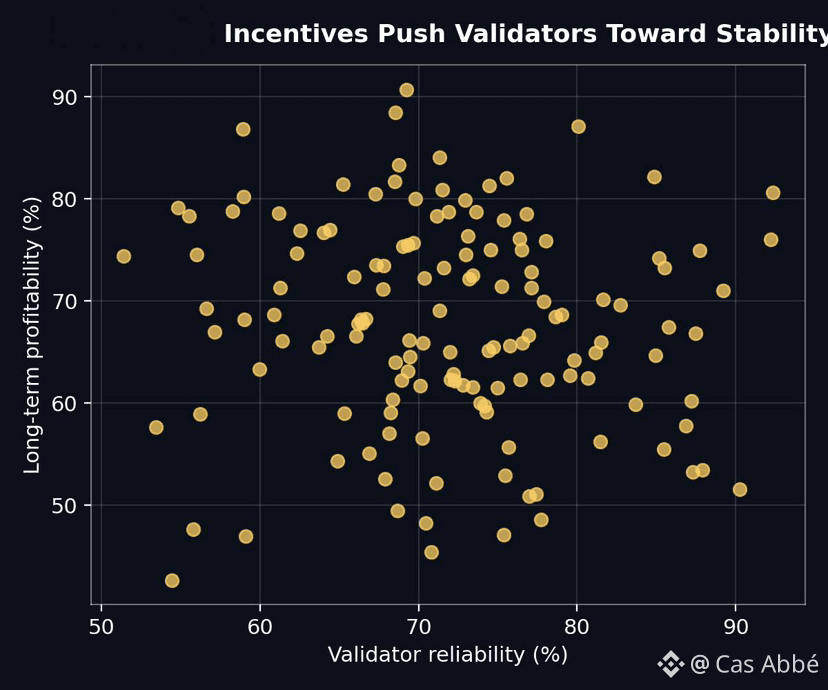
The DUSK token is used mainly as a security asset. Staking makes validators consistent with network integrity, uptime and correctness. Emissions depreciate over time in order to prevent the endless inflation and in order to promote sustainability by using it in actual sense. Soft slashing will not immediately obliterate capital but rewards misbehavior, recognizing that operators of infrastructures also need stability and not just responsibility.
The behavioral consistency is the positive impact of this design. Validators have no reason to move to more lucrative but less dependable sources. This is conducive to those applications where predictability of performance and long-term security is necessary, particularly those in controlled settings with operational risk being of greater importance than hypothetical upside.
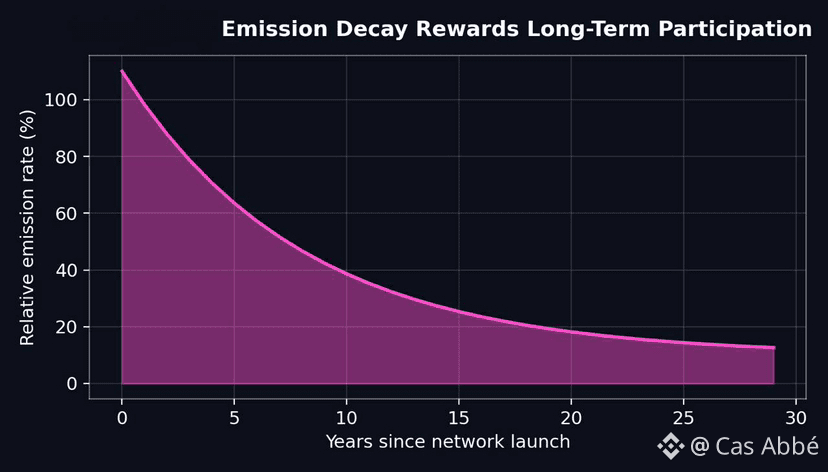
Incentive intensity is the tradeoff. Light penalties can lower the deterrence when not fined. Economic pressure is not imposed overnight but as a gradual process. This means that it needs regular checkups and realignment in order to make sure that reliability does not erode silently. The concept of tokenomics will not ensure any behavior, it will merely influence incentives.
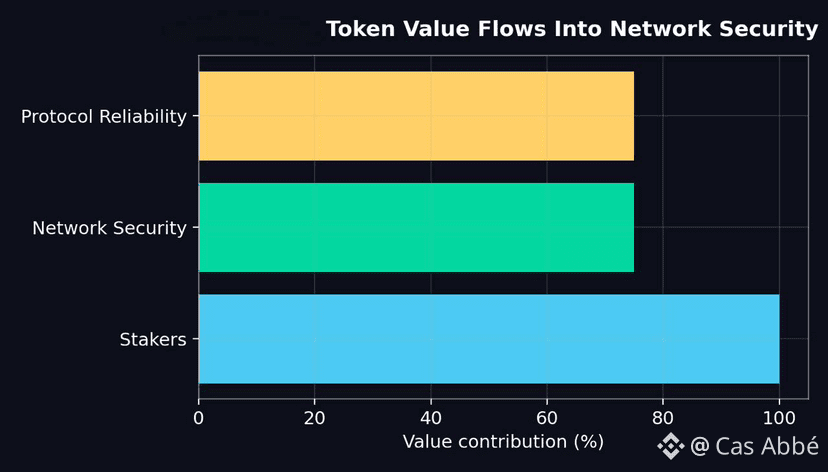
There is also narrative risk. Models that are developed with the aim of stability often do not work when the cycle is hype-driven. The infrastructure-oriented tokens cannot be overvalued by markets simply because they do not include dramatic upside scenarios. This may have an influence on perception though the system may be functioning well.
