

Stablecoin payments didn’t become a serious topic overnight. Since around 2020, when USDT and USDC started dominating on-chain volume, traders and institutions alike began to realize that blockchains weren’t just for speculation anymore. By 2023, stablecoins were settling more value annually than some traditional payment networks, and in 2024–2025, regulators, banks, and fintech companies openly acknowledged them as a core part of global digital finance. But here’s the uncomfortable truth most traders learn the hard way: stablecoins are only as good as the blockchains they run on.
Today, most stablecoin payments still rely on general-purpose blockchains that were never designed specifically for money movement. Ethereum, for example, is secure and programmable, but anyone who traded during high volatility periods in 2021 or 2022 remembers gas fees jumping to $50–$100 per transaction. That’s fine for DeFi power users, but it breaks the idea of stablecoins as everyday payment tools. Even newer chains often optimize for NFTs, gaming, or speculative throughput rather than predictable financial settlement.
This is why the idea of a stablecoin-first blockchain like Plasma is gaining attention in 2025. Instead of treating stablecoins as just another ERC-20 token, Plasma is built around the assumption that stablecoins are the primary asset moving on-chain. That sounds subtle, but from a trader’s perspective, it changes everything. Fees, finality, and user experience stop being afterthoughts and become the core design problem.
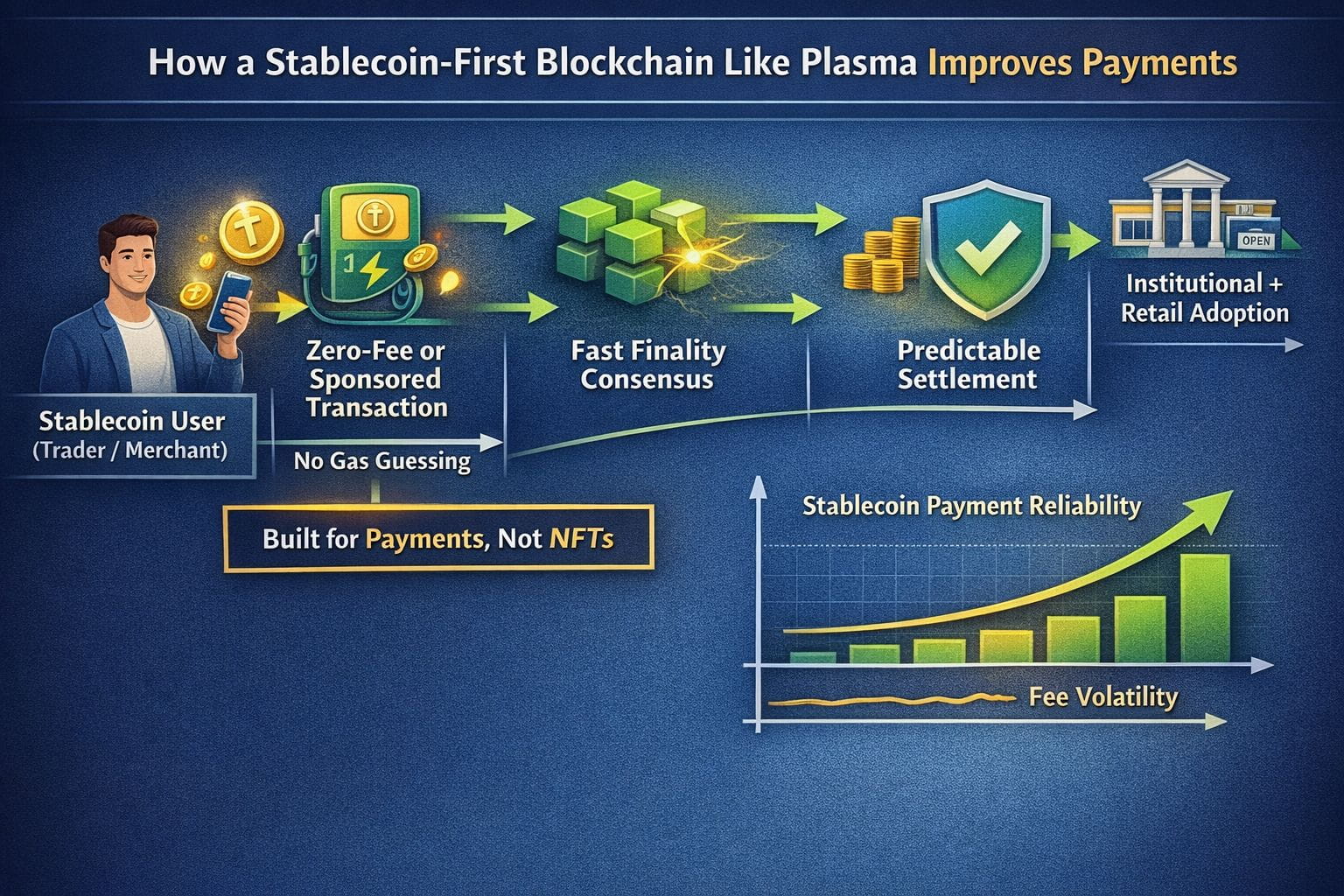
Stablecoins are meant to behave like digital cash. When you send $1,000 USDT to an exchange, a merchant, or a counterparty, you don’t want to think about gas tokens, mempool congestion, or whether the transaction will finalize in 30 seconds or 10 minutes. Plasma’s approach, using fast-finality consensus and gas abstraction, directly targets these friction points. The idea of zero-fee or sponsored stablecoin transfers isn’t marketing hype—it’s a response to real pain traders face when moving funds frequently.
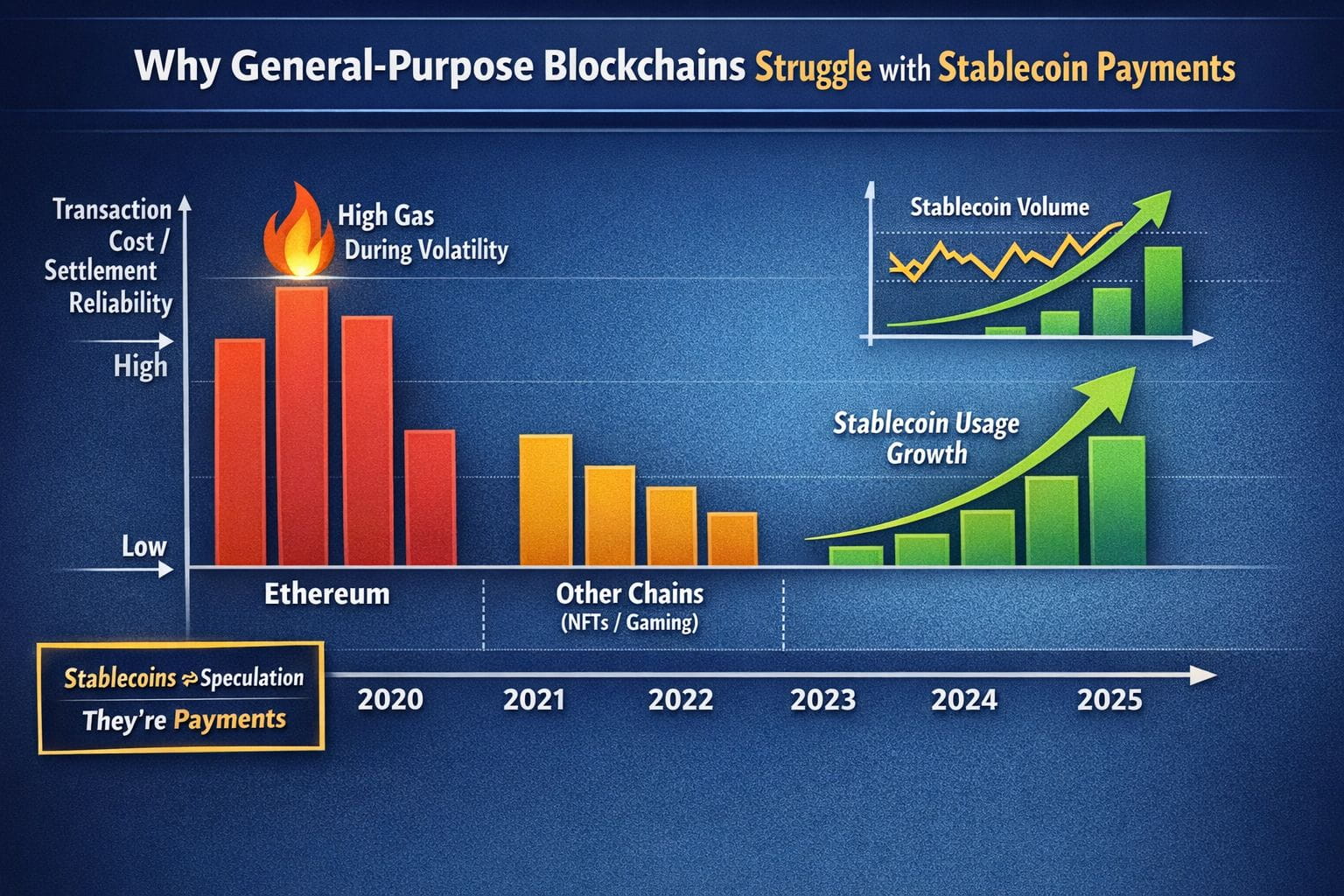
The trend toward specialized financial blockchains has accelerated since 2024. According to public blockchain data, stablecoin transfers consistently account for over 60% of on-chain transaction value across major networks. At the same time, institutions entering crypto markets want deterministic settlement. They don’t want probabilistic finality or fee spikes during market stress. Plasma’s use of a HotStuff-based consensus with near-instant finality fits that institutional mindset while still remaining accessible to retail users.
Another important factor is Bitcoin. Traders still view BTC as the ultimate collateral, but Bitcoin itself isn’t designed for complex financial workflows. Plasma’s native Bitcoin bridge reflects a broader 2025 trend: bringing Bitcoin liquidity into programmable environments without relying on centralized custodians. For traders, that means stablecoin strategies backed by BTC collateral can operate faster and more transparently, which is something DeFi has struggled with for years.
From a developer’s angle, Plasma’s EVM compatibility matters more than people admit. The market learned its lesson from past “Ethereum killers” that required new languages or tooling. Liquidity follows familiarity. By keeping Solidity and existing wallets in play, Plasma reduces migration friction, which is critical for stablecoin ecosystems that depend on network effects.
Speaking personally, after years of trading across chains, the biggest cost isn’t fees alone—it’s uncertainty. Not knowing how long settlement will take or how much it will cost during volatility forces traders to over-collateralize or keep funds idle. A blockchain optimized specifically for stablecoin payments addresses that hidden cost. It’s not about speculation; it’s about reliability.
Stablecoin payments are trending because they solve real-world problems: cross-border transfers, instant settlement, and 24/7 availability. But for them to scale beyond crypto-native users, the infrastructure underneath has to evolve. Blockchains like Plasma represent that next step—quietly shifting focus from flashy features to the boring, essential mechanics of money. And in finance, boring usually wins.