
Davos concluded its 56th Annual Meeting on January 23 with a twist worthy of a global political comedy script. The once temple of the 'Green Deal' turned into an informal symposium praising fossil fuels — because, apparently, the future is made of oil and irony. Donald Trump stole the show (or the spectacle), mocking European wind turbines — 'spinning failures' — and proclaiming that American gas and oil are the true stars of modern sustainability. Amid discreet applause and incredulous glances, the former president basically renamed the World Economic Forum to 'International Hydrocarbon Club.'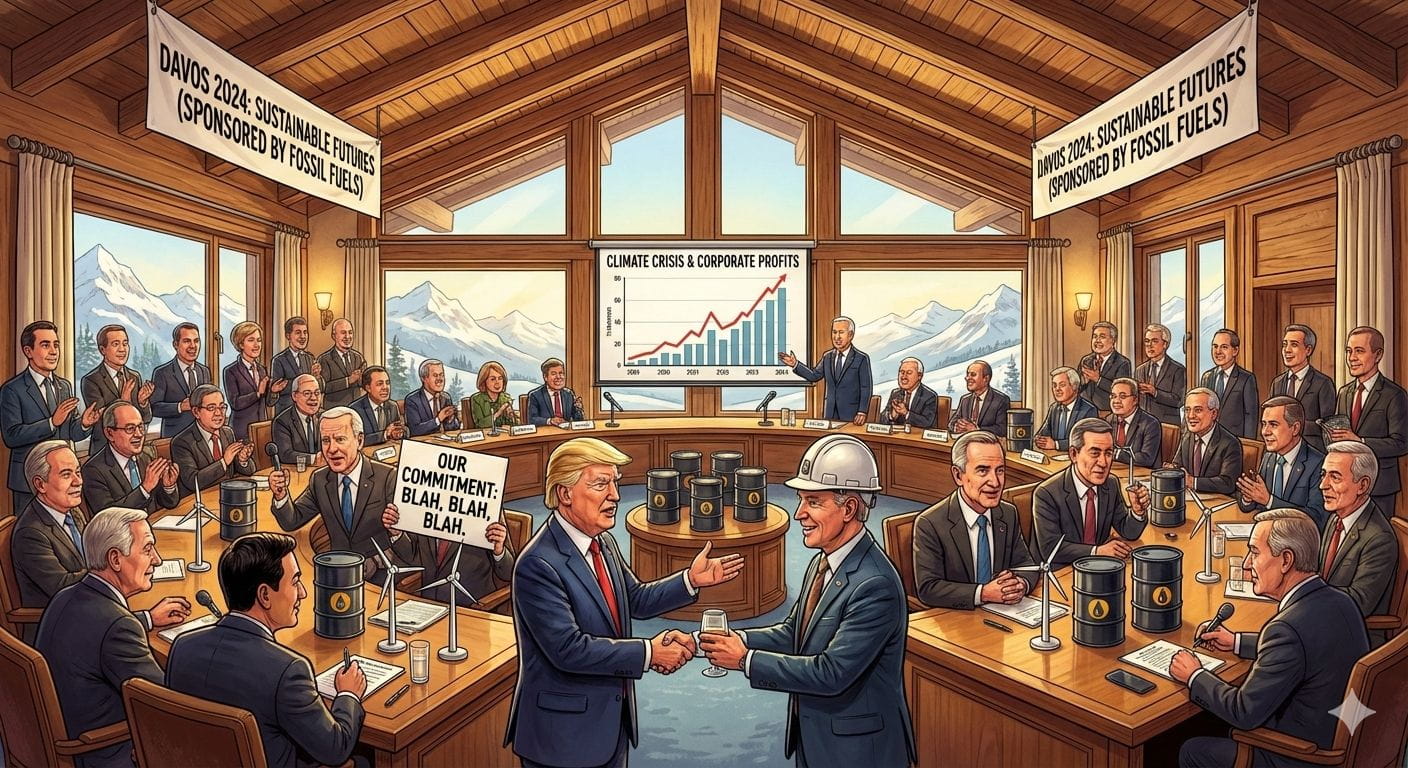
The U.S. Energy Secretary, Chris Wright, echoed the new gospel of carbon: doubling oil production would be not only sensible but almost an act of global charity. Criticizing the European Union and California has become a diplomatic sport.
As a bonus, Wright diagnosed renewable energies as 'economic failures' — and, let's face it, Davos loves this kind of embarrassing frankness. Meanwhile, the CEO of Saudi Aramco, Amin Nasser, added an aristocratic touch to the chaos, ensuring that oil will remain 'vital for decades.'
Who needs a green future when there are infinite reserves of fossil nostalgia? On the other side of the room (and reality), Ursula von der Leyen vowed to double Europe's nuclear and green bets. 'Reliable and cheap energy,' she promised — possibly dreaming of a continent that does not emotionally depend on American gas. Mark Carney, the Canadian with a philosopher's calling, announced the birth of a new multipolar world, while billionaires like Andrew Forrest tried to remind those present that renewable energy is still, look at that, economically viable. In the end, the executives collected their badges and carefully ambiguous speeches.
Environmental risks remain at the top of global concerns — it's just that nobody wants to talk much about it. Davos 2026 will go down in history as the year when 'green' became a career diplomat: discreet, resilient, and invisible.