
If I had to summarize KGeN in one sentence, it might be: This is a Web3 project that should look at financial reports first, and then discuss narratives.
In the current cycle, everyone's patience for 'storytelling' has almost been exhausted. Whether it's AI, DePIN, or blockchain games, as long as it strays from real revenue, it can easily lose weight rapidly after the emotional tide recedes. Therefore, to understand KGeN, the most important order is not how new the concept is, but whether it makes money and how the money comes in.
The first layer is a rare real revenue scale.
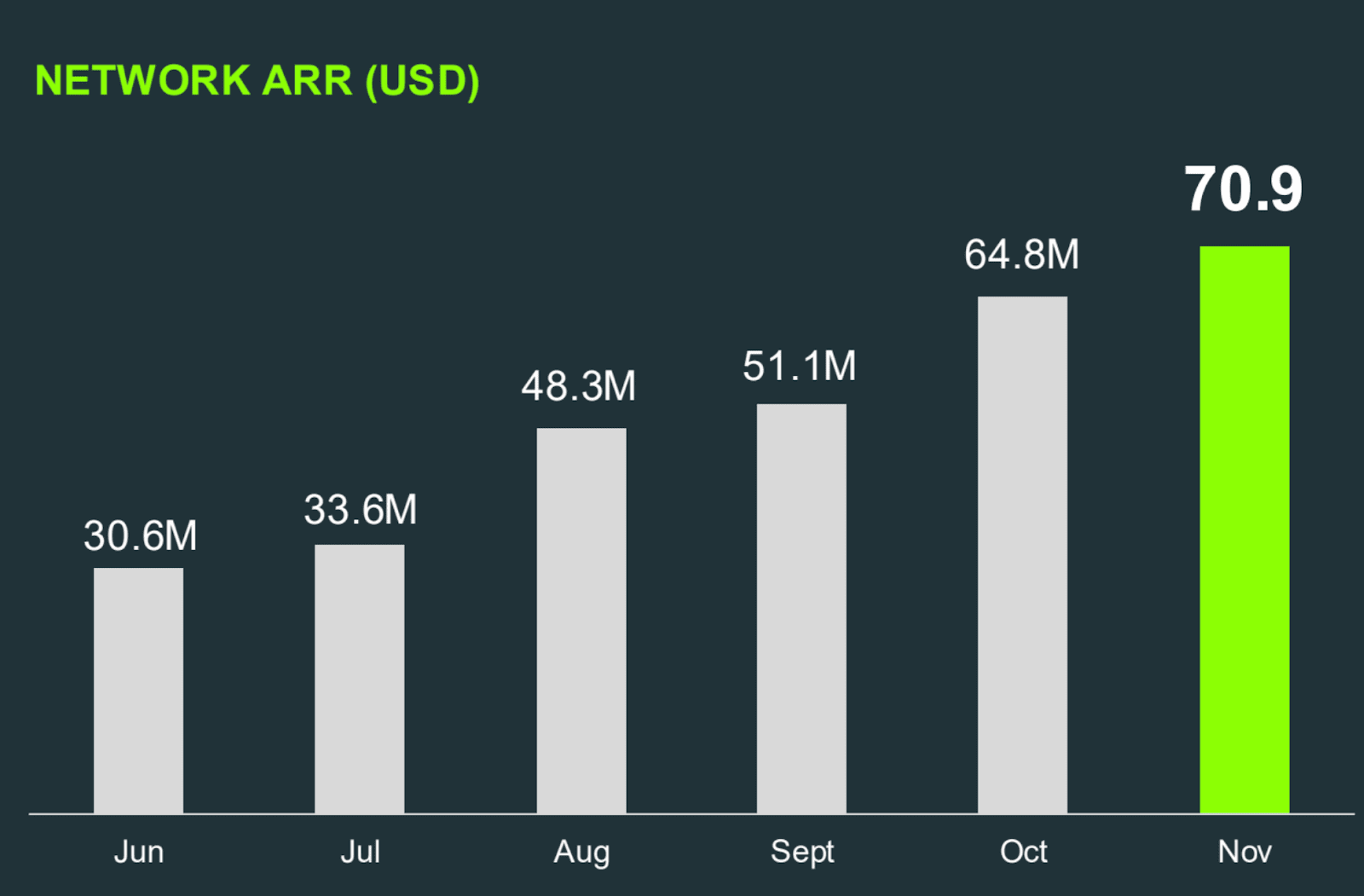
As of now,$KGEN the annual recurring revenue (ARR) has exceeded 80 million dollars. The key to this number is not in being 'large,' but in being 'stable.' It is not piled up by one-time activities, airdrops, or short-term collaborations, but contributed by paying customers continuously, which means the protocol has completed the most basic and difficult step of business validation: someone is willing to pay for its services in the long term. In a market filled with expected pricing and emotional games, a stable ARR itself is a filter that can naturally distinguish 'business' from 'story.'
The second layer is that the revenue structure is not singular.
The cash flow of KGeN does not bet on a single short-term narrative window, but comes from multiple complementary directions:
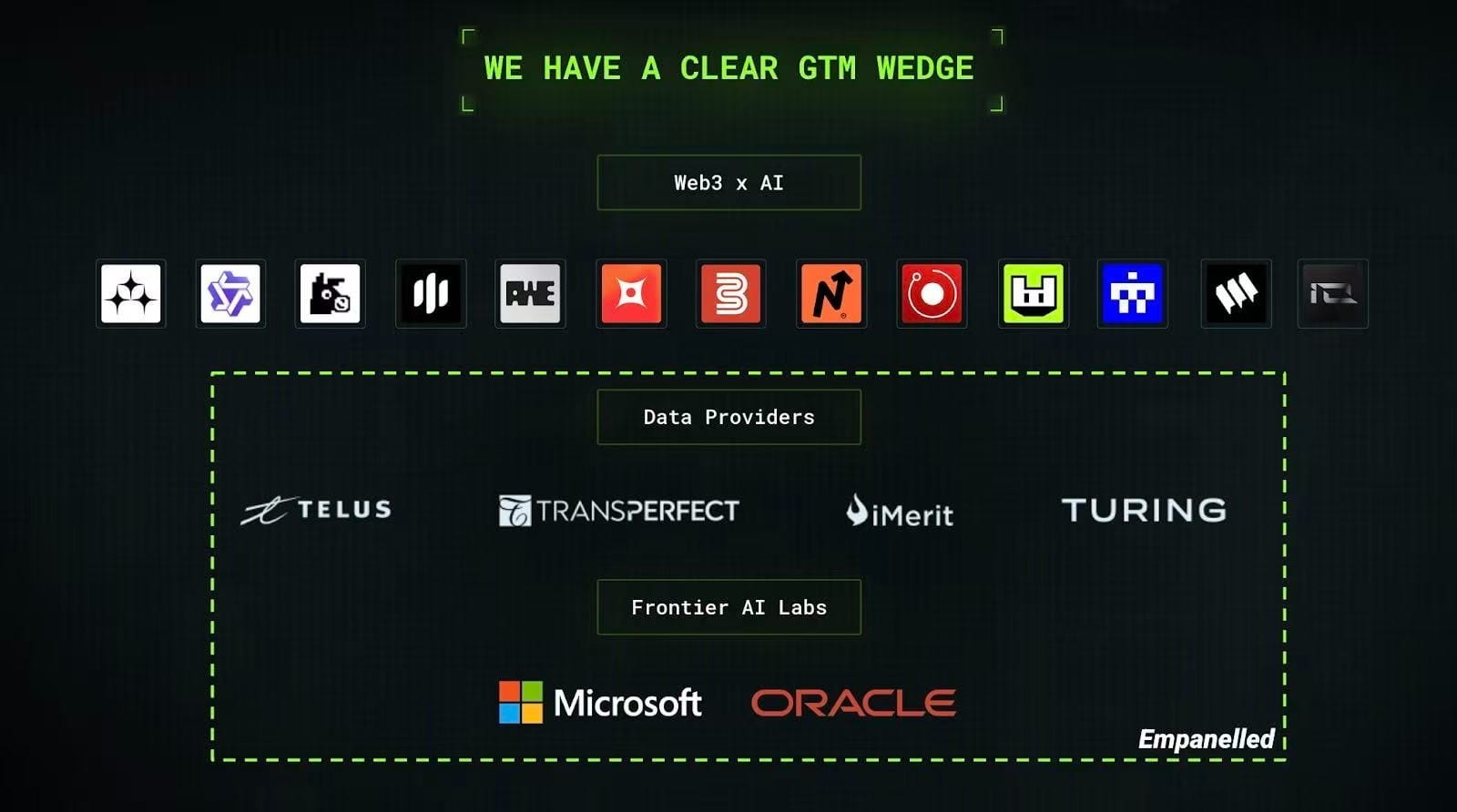
On one hand, there is the user acquisition (UA) budget of game developers, where brands need real users, real behaviors, and real retention; on the other hand, there is the long-term procurement demand for high-quality human data from AI companies. This multi-source structure makes its revenue somewhat counter-cyclical, rather than fluctuating wildly with market sentiment.
The third layer is the true value of the KAI engine.
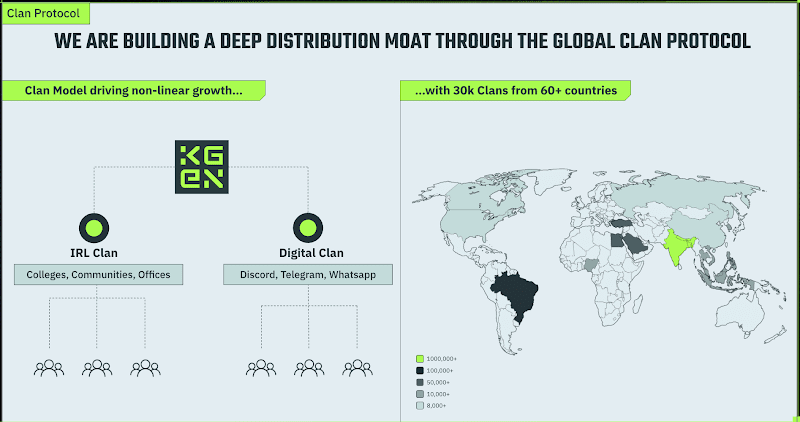
Behind KGeN is a validated user network with a scale of over 48,900,000 people. These users are not anonymous addresses or fake accounts, but real humans verified by identity, skills, and behavior. KAI is built on this network, providing enterprise-level AI training and evaluation services for technology companies, including RLHF (Reinforcement Learning from Human Feedback), TTS, multilingual annotation, etc.
Essentially, KGeN is not simply about 'selling data.' For AI companies, what is truly scarce is not the volume of data, but the trusted and scalable human feedback capabilities. The role of KGeN is to transform dispersed human participation into a standardized, verifiable, and sustainable procurement infrastructure. This is also why it can penetrate the most irreplaceable link in the AI industry chain.
The fourth layer is the logic of value capture for the token.
KGEN is not positioned at the forefront as an emotion-driven tool, but its position is not marginal. The token is on the path of protocol revenue, directly linking the two most core cash flows:
First, the expenditure incurred by game developers through the protocol for precise user acquisition;
Second, the B2B revenue generated by AI companies purchasing training and evaluation services.
This means that the demand for the token does not solely arise from the emotional speculation of the secondary market, but has a clear correlation with the scale of the protocol's business. Simply put, the more money the protocol makes, the larger the value space that the token can capture.
In the Web3 world, what is truly scarce is not new concepts, but already functioning business closed loops. The significance of KGeN may not lie in how far it can go, but in the relatively clear sample it provides: when real users, real needs, and real revenues stand behind the token, the narrative becomes a secondary consideration.
Time and data will ultimately provide the answer.
#KGEN #Aİ #Web3
