
Systems that last do more than process transactions. They remember in a responsible way. Institutional memory is not about storing everything. It is about preserving outcomes while protecting intent. This distinction is critical for governance, compliance, and long term coordination.
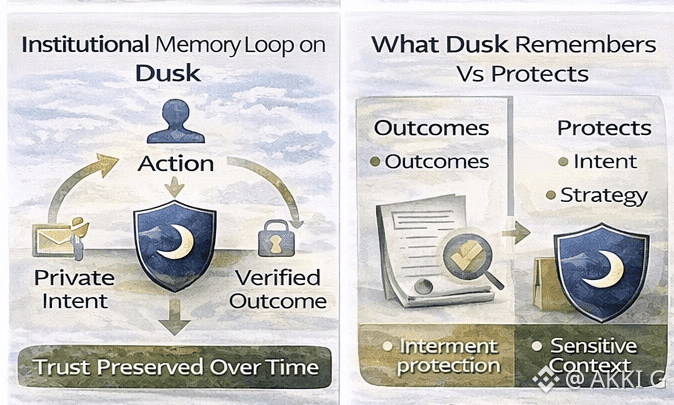
Dusk enables institutional memory by separating execution from verification. Actions occur privately. Outcomes are provable and recorded. Over time, the system develops a coherent history that can be used to refine decisions, manage risk, and improve behavior. What it does not do is expose internal strategies or sensitive context.
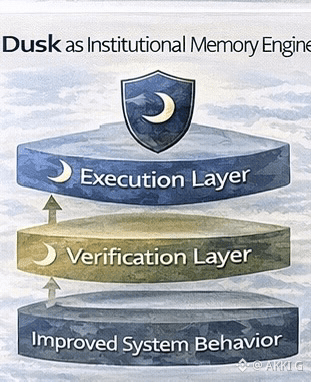
This balance allows organizations to learn without leaking. Memory becomes a feedback loop that strengthens the system instead of threatening its participants. That is the difference between a protocol that survives cycles and one that collapses under its own history.
