

null
Author: Hotcoin Research
Introduction: The Importance of Macroeconomic Factors in the Cryptocurrency Market
The current volatility of the cryptocurrency market is increasingly difficult to explain solely by 'narrative heat' or 'on-chain innovation.' Cryptocurrency assets are becoming more like 'macro-sensitive risk assets,' affected repeatedly by interest rates, inflation, dollar liquidity, regulatory frameworks, geopolitical issues, and institutional fund flows. You will see the same on-chain data interpreted as 'capital inflow' when interest rate cut expectations rise, and as 'risk contraction' when tariff threats and geopolitical tensions escalate; similarly, ETF fund inflows, when regulatory pathways are clear, represent long-term increments, but during periods of heightened policy uncertainty, they may also become a short-term exit for panic selling. Macroeconomic variables are no longer background noise; they are the core engine driving market trends, depth of pullbacks, and structural patterns.
This article will analyze the mechanisms and pathways through which macro factors affect the crypto market, outline the main macro variables that may influence the crypto market in 2026, and look ahead to the potential evolution of these variables and their impact on crypto market trends, aiming to provide ordinary investors with a clearer framework: in the increasingly noisy macro environment of 2026, how to identify where trends come from, why fluctuations occur, why capital tends to certainty assets, and which variables, once they shift, require immediate adjustments in positions and risk exposure.
1. Historical Review of Macro Variables' Impact on the Crypto Market
In the early stages of the crypto market, the impact of macro factors was not apparent, and crypto assets were primarily driven by their supply and demand and technological advancements. However, as market value expands and institutional participation increases, crypto assets are gradually being viewed as high-risk investments, and their price fluctuations are increasingly linked to the macro environment. The following are the typical pathways through which major macro variables influence the crypto market:
Interest Rates and Liquidity: Interest rates determine the tightness of the monetary environment, thereby affecting global liquidity and risk appetite. When interest rates fall or liquidity expands, investors are more willing to allocate high-risk assets, and funds may shift from low-yield bonds to stocks, crypto assets, and other areas. Conversely, in a high-interest-rate environment, the rise of risk-free rates weakens the motivation for investors to allocate crypto assets. The ultra-low interest rate environment in 2020-2021 fueled the surge in risk assets; however, the rapid rate hikes to over 5% starting in 2022 have sharply tightened liquidity, putting pressure on the crypto market. In the second half of 2024, the Federal Reserve is expected to begin a rate-cutting cycle, with rates projected to fall to the 3.5-3.75% range by the end of 2025, and the market expects rates to further ease to around 3.25% in 2026. Interest rates and liquidity can be considered one of the most significant macro factors influencing the crypto market in recent years.
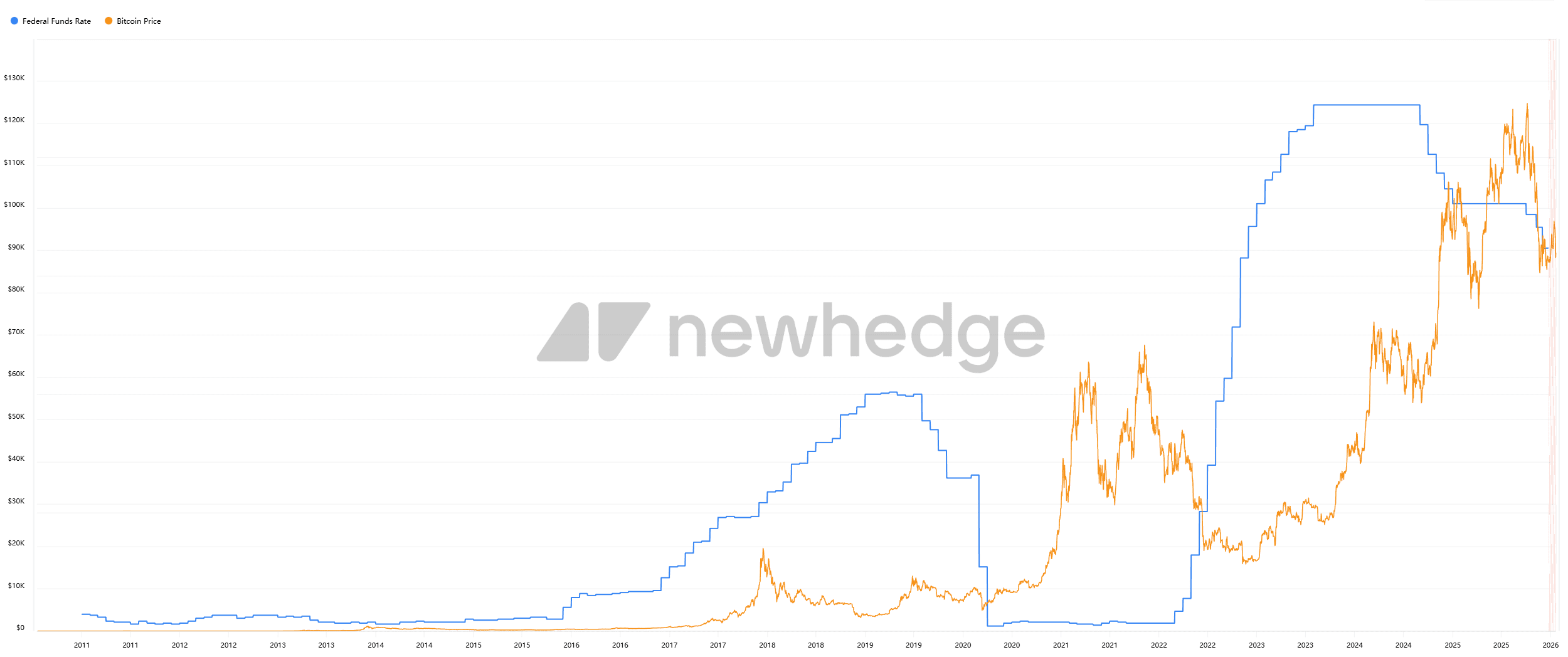
Source: https://newhedge.io/bitcoin/bitcoin-vs-federal-funds-rate
Inflation and Economic Growth: The level of inflation affects monetary policy direction and is directly related to the purchasing power of fiat currency and investor psychological expectations. In a high-inflation environment, central banks often tighten policies, which has historically pressured the crypto market, as seen in 2022. However, inflation itself has led some investors to view Bitcoin as "digital gold" to hedge against inflation risk, although this safe-haven property was not immediately reflected during the high inflation period of 2021-2022, overshadowed by the negative effects of tightening policies. On the other hand, economic growth or recession indirectly influences crypto investment by affecting corporate and household wealth and market risk appetite. The low crypto market in 2022-2023 was partly due to tightening policies in a high-inflation context, and the slowing global economic growth and rising recession expectations also weakened speculative interest. Overall, inflation and economic cycles shape the policy environment and risk sentiment, having a medium-term impact on crypto prices, often intertwined with interest rate policies.
Regulatory Policy and Legal Environment: Regulatory variables significantly impact the crypto market by altering the behavioral norms of market participants, capital inflow and outflow channels, and legitimacy expectations. Favorable regulations, such as clarifying legal status and approving new investment channels, often enhance investor confidence and attract incremental capital; while prohibitive measures, such as banning trading and prosecuting industry leaders, can trigger market sell-offs and risk aversion. From 2021 to 2023, U.S. regulators took enforcement actions against certain crypto projects and delayed ETF approvals, which temporarily pressured market sentiment. However, the regulatory framework gradually promoted by various countries from 2024 to 2025 brought some positive news to the market: for example, the MiCA regulation in Europe is set to implement unified regulatory standards starting in 2025, and the U.S. passed the Stablecoin Act (GENIUS Act) in 2025, providing a standardized approval path for exchange-traded products (ETPs), which enhances compliance and transparency and is viewed by the market as a long-term positive. The short-term impact of regulatory factors is reflected in the shock of policy news, while the long-term effect profoundly shapes the industry landscape and capital distribution, being another decisive variable besides monetary policy.
Institutional Fund Flows and Market Structure: With the opening of compliant investment channels such as ETFs and the participation of listed companies and institutional investors, the funding structure and pricing mechanisms of the crypto market are undergoing changes. Institutional funds are typically large in volume and prefer mainstream assets, and their inflow and outflow amplify market trends. For example, following the launch of the first U.S. spot Bitcoin ETFs in 2024-2025, there was a massive influx of funds. According to statistics, in 2025 alone, Bitcoin ETFs and holding plans from listed companies like MicroStrategy contributed nearly $44 billion in net buying demand. Institutional participation has also brought about changes in market structure, with Bitcoin's dominance in the total crypto market cap rising to over 60% in 2025, significantly higher than in previous cycles, indicating that capital is becoming more concentrated in leading assets like Bitcoin.
Stablecoins and Capital Flows: As a key infrastructure in the crypto market, the issuance and circulation of stablecoins directly reflect the status of on-site capital as a "water reservoir," and are also influenced by macro conditions. In a bull market, capital inflows drive stablecoin market cap to rise rapidly, while in a bear market, stablecoin demand decreases, and the scale contracts. Changes in stablecoin supply often lead or synchronize with the dynamics of capital inflow and outflow in the market. For example, during the bull market from 2020 to 2021, the supply of stablecoins like USDT and USDC surged from less than $30 billion to over $150 billion by the end of 2021; however, in the bear market of 2022, the total market cap slightly declined, stabilizing around $130 billion in early 2023. Entering the new cycle from 2024 to 2025, the stablecoin market is expanding again, with the total global stablecoin market cap surpassing $300 billion, an increase of about 75% from a year ago.
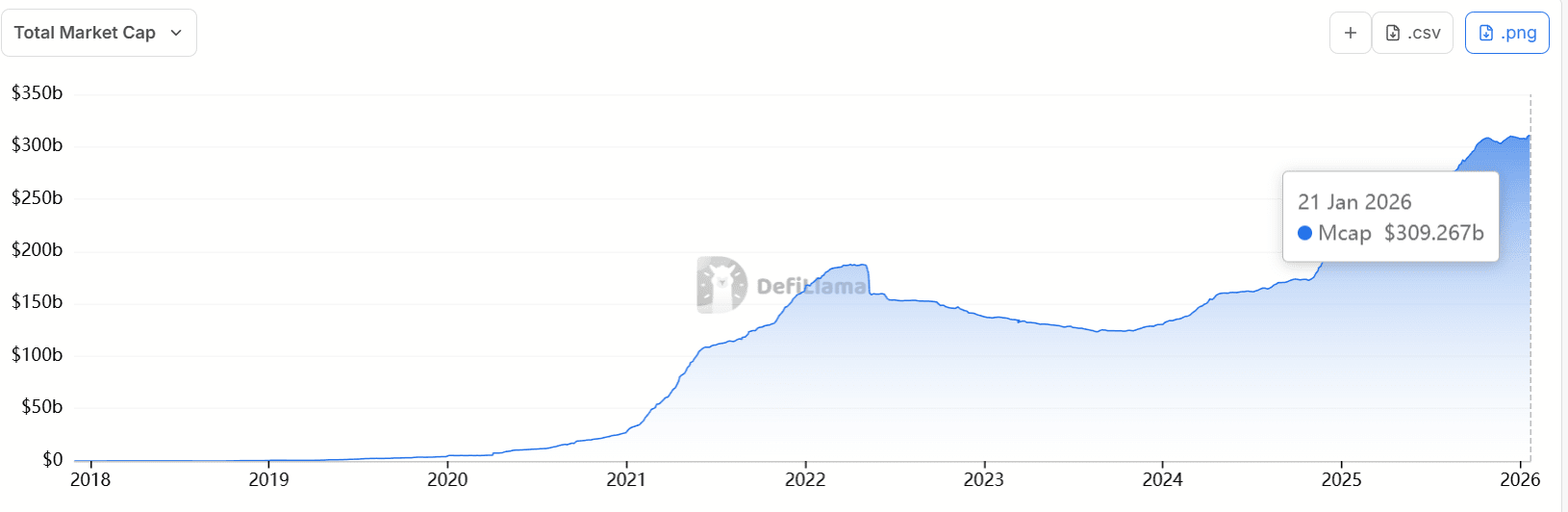
Source: https://defillama.com/stablecoins
2. Analysis of the Impact of Macro Variables on the Crypto Market
Variable One: Outlook on Global Interest Rates, Inflation, and Liquidity
Monetary Policy Direction – Impact Level: ★★★★★
Entering 2026, the global monetary policy environment is at a critical turning point. The Federal Reserve experienced a transition from tightening to loosening in 2024-2025: after consecutively raising the federal funds rate to a peak of 5.25%, it began to gradually lower rates at the end of 2024. In 2025, the Federal Reserve cut rates three times, bringing the rate down to the range of 3.5% to 3.75%, the lowest level in three years. In 2026, the Federal Reserve is expected to continue to ease slightly but at a restrained pace: the Fed's dot plot suggests the federal funds rate will drop to around 3.25% by year-end. It is noteworthy that Chairman Powell's term will end in May 2026, which may introduce some policy uncertainty regarding the Federal Reserve's leadership. Overall, unless there are significant inflation surprises, the monetary environment in the U.S. in 2026 is expected to be friendlier than in the past two years; while there are no signs of re-quantitative easing (QE) yet, at least liquidity will no longer continue to tighten, which is beneficial for the performance of risk asset prices.
Regarding other major central banks, the European Central Bank and the Bank of England are also gradually ending interest rate hikes in 2024-2025 and are likely to enter a wait-and-see or rate-cutting cycle in 2026, although the extent may lag behind the Federal Reserve. The Bank of Japan is an exception; its interest rates have long been at zero or even negative, and while they were raised slightly in 2025, they remain low, maintaining a relatively independent pace in 2026. Overall, global interest rates are entering a downward channel in 2026, particularly as interest rate declines in dominant markets like the U.S. will release more liquidity and reduce the opportunity cost of risk assets. However, persistently high inflation remains a potential threat: if inflation does not decline as expected, central banks will be constrained by price pressures and unable to loosen significantly.
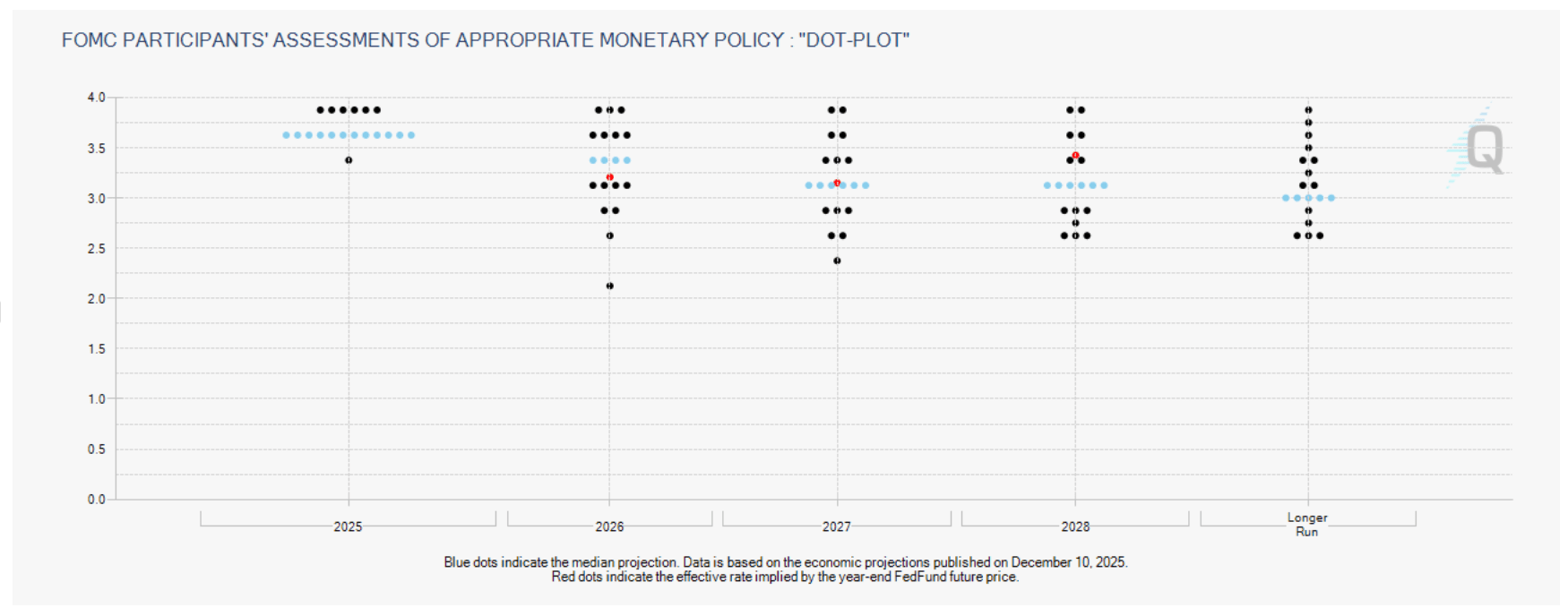
Source: https://www.cmegroup.com/markets/interest-rates/cme-fedwatch-tool.html
Inflation and Economic Outlook – Impact Level: ★★★★☆
The mainstream expectation for 2026 is that inflation rates in major economies will further return to targets or even slightly below target levels. For example, the Federal Reserve's latest predictions show that U.S. PCE inflation will fall to around 2.4% in 2026, close to the long-term target of 2%. The cooling of inflation allows central banks to halt interest rate hikes, which is a significant benefit for risk assets, including the crypto market. If inflation remains moderate or slightly below expectations in 2026, it could provide central banks with room for unexpectedly aggressive rate cuts or liquidity support, further boosting market valuations. For example, when inflation data slightly exceeded expectations at the end of 2025, both Bitcoin and U.S. stocks rose in tandem.
In terms of economic growth, global economic growth in 2026 is expected to be moderate. The IMF predicts that major developed economies will grow around 2% in 2025-2026, with the U.S. possibly slightly ahead of Europe. A low growth but not recessionary environment typically supports moderate policies and stable market confidence. JP Morgan's 2026 outlook also assumes that major economies will grow steadily or slightly above potential levels. However, if a significant financial risk event occurs unexpectedly in 2026, it may initially impact risk assets, including crypto. Historically, in recessionary environments, central banks tend to loosen policies more aggressively, which could subsequently give rise to a new bull market.
Continuous monitoring of risks includes: energy prices or geopolitical conflicts causing repeated inflation; changes in leadership at major central banks or poor policy communication leading to market fluctuations. If these risks can be avoided, a loose monetary environment will become an important support for the crypto market in 2026.
Variable Two: Regulatory Policy Trends and Market Structure Changes
Regulatory and Legal Environment – Impact Level: ★★★★☆
The year 2025 is referred to as the "Year of Crypto Regulation," as major jurisdictions have introduced or implemented key regulations, accelerating the crypto industry's shift from a gray area to compliance. Progress in regulatory policies will remain a focal variable in the crypto market in 2026. Overall, global regulation is moving toward clarity and standardization, which will improve long-term market expectations, but differences in pace during the short-term transition may also trigger capital flows and fluctuations in market sentiment.
In the U.S.: The GENIUS Act, the first federal stablecoin law, was passed in July 2025. According to the law's requirements, regulatory agencies will issue specific implementation rules by July 2026. If the rules are well formulated, it will greatly enhance the transparency of stablecoins and the participation of banks, further expanding the supply of stablecoins and the capacity of the crypto market, which may also lead to a more decentralized market structure. Currently, the market share of USDT has dropped from 86% in 2020 to about 58% in 2025, while USDC has risen to 25%, and new stablecoins like USD1 and PYUSD have rapidly emerged. In addition to stablecoin legislation, the U.S. Congress has also promoted discussions on the CLARITY Act (Digital Asset Market Structure Clarification Act) in 2025, attempting to delineate the boundaries between security tokens and commodity tokens. The focus in 2026 will be whether such legislation can be implemented. Although there is still political uncertainty regarding the passage of the CLARITY Act, the market is highly attentive to it, and if passed, it is expected to trigger a new round of price increases.
On the regulatory front, the U.S. Securities and Exchange Commission (SEC) completed an important shift in 2025. The new chairman launched the "Project Crypto" initiative to comprehensively reform crypto security regulations. In September 2025, the SEC approved universal listing standards for spot commodity ETFs, significantly reducing the legal barriers for issuing crypto ETFs. In 2026, more types of crypto ETF/ETP products are expected to emerge (such as diversified crypto asset basket ETFs, ETH spot ETFs, etc.), enriching investor tools and marking the inclusion of crypto assets into mainstream portfolios. It is worth noting that the SEC and CFTC's stance on DeFi, altcoins, and other areas remains unclear. If regulatory constraints on certain tokens or decentralized protocols emerge in 2026, it could impact the prices of related assets. However, until the CLARITY Act is resolved, the scope of enforcement in this area is expected to remain cautious.
Other Regions: The European Union implemented the MiCA (Markets in Crypto-Assets Regulation) fully in 2025, and the regulatory environment in the EU is expected to remain stable and continue moving toward compliance in 2026. In addition to MiCA, the EU also passed amendments to anti-money laundering regulations in 2025, requiring crypto transactions to comply with the "Travel Rule," which helps improve the transparency of crypto transactions and combat illegal capital flows, but also puts pressure on non-compliant platforms. Major Asian economies also strengthened their crypto regulatory frameworks in 2025. Japan improved exchange and custody regulations; South Korea advanced the legislation of the Digital Assets Basic Law for comprehensive crypto regulation; Hong Kong issued more exchange licenses and introduced stablecoin regulation in 2025; Singapore implemented a crypto licensing system under the Financial Services and Markets Act in 2025 and will enter a regular regulatory phase in 2026. Additionally, emerging markets in regions such as the Middle East and Latin America have also formulated crypto-friendly policies or attracted crypto companies to settle in 2025 (such as the UAE and El Salvador). In 2026, these areas may continue to benefit from the outflow of crypto capital.
In summary, regulatory variables are expected to have a more positive impact on the crypto market in 2026: clear rules remove barriers to industry development, while policy trends still require close monitoring, as any regulatory shifts in any region may quickly reflect in prices through globalized markets.
Variable Three: Institutional Investment and Market Structure Evolution
Institutional Funds and Investment Tools – Impact Level: ★★★★☆
The year 2026 may witness a significant increase in the institutionalization of crypto assets. Firstly, with the launch of Bitcoin ETFs and Ethereum futures/spot ETFs in the United States, traditional financial institutions are unprecedentedly incorporating crypto assets into their asset allocation. Products like ETFs lower the barrier to investing in crypto, and conservative institutions such as insurance companies, pension funds, and university endowments are beginning to venture into Bitcoin through ETFs and small-scale exploratory allocations. According to statistics, Bitcoin ETFs listed in the U.S. in 2025 brought about $30 billion in incremental value to Bitcoin. This figure is expected to continue rising in 2026, expanding the asset class from BTC and ETH to crypto portfolio ETFs, DeFi ETFs, and more. A large influx of funds from the securities market through ETFs will provide lasting buying support for Bitcoin and major cryptocurrencies. On a deeper level, ETFs have changed the structure of capital, making the market's chips more dispersed among numerous institutional portfolios, thereby reducing systemic risk.
Secondly, it has become a trend for listed companies to hold cryptocurrency and report it in their financial statements. As of January 21, 2026, MicroStrategy had accumulated 709,715 Bitcoins, accounting for 3.38% of the total Bitcoin supply. More and more companies are incorporating crypto assets into their balance sheets, which has enhanced market recognition. Moreover, emerging companies categorized as "Digital Asset Treasuries" (DAT) have gone public, injecting considerable buying pressure into the market from 2024 to 2025, with expectations for continued expansion in 2026. However, it is also essential to pay attention to the fact that when prices are high, these holding companies may consider profit-taking or reducing their positions, potentially leading to marginal selling pressure. Overall, the increase in institutional holdings strengthens Bitcoin's store of value attribute and market stability but also creates a certain degree of cyclicality—institutions may buy low and sell high, thus alleviating extreme volatility.
Changes in Market Structure: Another impact of institutional participation is the alteration of market structure and volatility patterns. In 2025, Bitcoin's dominance rose to over 60%, and volatility was relatively low. This is partly attributed to institutions favoring blue-chip assets, leading to more capital being concentrated in BTC, ETH, and other top cryptocurrencies, rather than flowing into speculative altcoins. Additionally, the development of the derivatives market and the use of options hedging strategies have also suppressed some short-term volatility. It is expected that in 2026, the proportion of institutional holdings in Bitcoin will further increase, while Ethereum is likely to continue its steady growth. For small and medium market cap tokens, 2026 may be a tale of two extremes. On one hand, macro recovery is favorable for overall market cap expansion, with Bitcoin leading to an "altcoin season." On the other hand, regulatory clarity may serve as a double-edged sword for altcoins; the altcoin sector in 2026 may not witness the kind of widespread euphoria seen in 2017 or 2021, but rather a bifurcation: quality projects at the forefront benefit from industry growth, while the tail end and high-risk tokens remain sluggish.
In summary, driven by institutionalization, the crypto market in 2026 may be dominated by institutions and compliant funds, with blue-chip coins and quality projects at the core, while speculative bubbles are relatively contained.
Variable Four: Geopolitics and Global Capital Flows
Geopolitical Events and Macro Risks – Impact Level: ★★★☆☆
In addition to economic and regulatory factors, geopolitical situations and significant macro risk events can also indirectly impact the crypto market by affecting investor risk appetite and capital flows. In 2026, attention should be given to the following aspects:
International Tensions and Conflicts: Geopolitical uncertainties (such as geopolitical conflicts and trade frictions) often trigger a rise in short-term risk aversion in global markets, leading capital to flow into traditional safe-haven assets like the dollar and gold, while stocks and cryptocurrencies face downward pressure. However, serious long-term geopolitical risks (such as economic sanctions or currency devaluation in some countries) can sometimes spur localized crypto demand as people seek channels for asset transfer and inflation hedging. For instance, following the Russia-Ukraine conflict, the Russian ruble plummeted, leading to a surge in local Bitcoin trading volumes. Potential risks in the international situation in 2026 include: escalating tensions in Eastern Europe and the Middle East, renewed geopolitical conflicts in the U.S. involving Venezuela and Greenland, sanctioning and capital controls resulting from great power competition, and uncertainties from the U.S. mid-term elections. All of these factors could push global risk aversion higher, negatively impacting the crypto market in the short term. However, in the long term, the neutral and borderless nature of crypto assets may allow them to serve as a liquidity outlet during global financial fragmentation, which highlights their value in hedging traditional systemic risks.
Exchange Rates and the Dollar's Trend: The strength of the U.S. Dollar Index (DXY) often exhibits a certain inverse relationship with the crypto market. When the dollar appreciates significantly, capital may flow out of emerging markets, and global liquidity tightens, which is detrimental to non-dollar assets like crypto; conversely, when the dollar weakens, crypto assets tend to be more appealing. If the Federal Reserve lowers interest rates in 2026 while Europe lags behind, the dollar may weaken moderately, reducing currency concerns for non-U.S. investors and enhancing their motivation to allocate in crypto. If a country experiences a currency crisis in 2026, the inflow and outflow of regional capital in the crypto market may undergo structural changes: citizens or businesses in high-inflation countries may increase their crypto holdings to preserve wealth, potentially bringing new incremental users and funds to the crypto market.
Global Capital Controls and Tax Policies: India has previously imposed high taxes and strict regulations on crypto trading, leading to a decline in trading volumes; if it relaxes its policies in 2026, it could release significant potential demand. Conversely, if some crypto-friendly regions tighten due to policy changes, corresponding markets may shrink. Another dimension involves increasingly strict regulations on cross-border capital flows in various countries (such as anti-money laundering and anti-tax evasion), where crypto can be used for legitimate compliant cross-border transfers, such as international remittances using stablecoins, but it can also be misused by criminals. In 2025, multiple countries enhanced enforcement against crypto-related money laundering, and such enforcement will become more routine in 2026, which will short-term affect the demand for certain anonymous or privacy-related tokens.
Overall, the impact of geopolitical and macro risk events is sudden and short-term, making precise predictions difficult. However, investors should have risk control plans, such as appropriately allocating mature assets like gold and Bitcoin for hedging.
3. Outlook for the Crypto Market in 2026 Under Multiple Macro Variables
Based on the analysis of macro variables above, we can forecast potential market trends for crypto in 2026. Of course, the future is filled with uncertainties; the following scenarios aim to provide a framework for thinking, and investors should adjust expectations based on real-time data.
Baseline Scenario (Macro Stability and Easing): Moderate global economic growth, with major central banks like the U.S. slightly cutting rates and maintaining rates around 3%, while inflation remains close to target levels. No significant negative shocks on the regulatory front, with enacted regulations gradually implemented and the market adapting well. In this scenario, the crypto market is expected to continue the upward trend of 2025 and enter a mature growth phase. Bitcoin may set new highs based on the 2025 peaks, driven by sustained ETF inflows and the gradually evident effects of reduced supply; the annual cumulative increase may be narrower but still considerable compared to 2025. Ethereum is expected to benefit from technological upgrades and increased institutional allocations, likely outperforming Bitcoin in certain months while maintaining a degree of follow-through overall. Among mainstream altcoin projects, those with clear application value and good compliance prospects will be sought after, while purely speculative altcoins may see relatively short-lived and limited price increases even in a bullish market atmosphere. The scale of stablecoins is expected to further rise and surpass the $400 billion mark. Overall investor sentiment is optimistic yet more rational, with market volatility at moderate levels, and extreme euphoria or panic is less likely to occur.
Optimistic Scenario (Macro Surprises and Technological Breakthroughs): Adding several positives to the baseline: rapid decline in inflation or even signs of slight deflation, prompting major central banks to restart quantitative easing (QE) in the second half of 2026; the U.S. Congress smoothly passes the CLARITY Act and other crypto legislation, with SEC and CFTC coordinating regulation to eliminate regulatory gray areas; tech giants releasing significant applications that bring blockchain technology to hundreds of millions of new users, or pension funds in countries like the U.S. and Europe beginning to allocate investments in Bitcoin. These additional positives could trigger "FOMO" sentiment, pushing the market into an accelerated upward phase. Bitcoin prices could experience parabolic rises similar to those in 2017 or 2021 in this optimistic scenario. Leading cryptocurrencies like Ethereum could also surge in tandem, possibly recreating short-term surges in altcoins, with total market capitalization potentially surpassing previous cycle multiples, truly entering the global financial asset category. However, it is essential to be cautious, as such overheating states are often hard to sustain, and once the macro or policy environment shifts, it could lead to a severe correction.
Pessimistic Scenario (Macro Shocks and Risk Events): If the following combinations occur: rising inflation in the U.S. hinders the rate-cutting process, systemic crises emerge in international financial markets, U.S. crypto legislation stagnates or even regresses, escalation of the Venezuela incident and disruptions to energy and inflation expectations from sanctions, forced U.S. acquisition of Greenland and threats of tariffs against Europe, uncertainty in U.S. mid-term elections affecting policy expectations, etc. Under such a pessimistic macro scenario, the crypto market is likely to suffer heavy losses. Liquidity tightening and risk aversion may cause Bitcoin prices to fall sharply, and institutional funds may withdraw from crypto ETFs due to losses in other assets or a sharp drop in risk appetite, resulting in net outflows. Additionally, if some large industry institutions face risks, panic sentiment may intensify. In a pessimistic scenario, altcoins are likely to be the first and most severely impacted, with Ethereum and others also declining in tandem with the market. For long-term investors, a pessimistic scenario provides opportunities to position quality assets at lower prices; for short-term traders, it is crucial to be prepared to stop-loss.
The most likely trend may lean towards the positive side, situated between the baseline and optimistic scenarios. Current signs indicate that the macro environment is gradually improving, regulatory frameworks are coming into place, and organic innovation within the industry is gaining momentum. Bitcoin has not experienced the extreme euphoric bubbles post its new high in 2025, which leaves room for further upward movement in 2026. Market sentiment, having been tempered by the events of 2022-2023, has also matured and become more rational. As long as no significant negative "black swan" events occur, the overall trend of the crypto market in 2026 looks bullish, although the pace of volatility may be more moderate than before. The yearly trend may be characterized as "oscillating upward": the first quarter may witness consolidation influenced by macro uncertainties or profit-taking, while the second and third quarters may rise in response to lower interest rates and the realization of regulatory positives, with the fourth quarter possibly seeing another surge if new technological catalysts emerge. Looking further ahead, 2026 could lay the foundation for the next crypto cycle; regardless of price fluctuations, the underlying fundamentals are more solid than ever: global user numbers continue to grow, mainstream institutional acceptance is rising, legal statuses are clearer, and technology is continuously evolving. These fundamental factors will support crypto assets moving toward a broader stage.
Conclusion
The crypto market in 2026 stands at a new starting point. The changing winds of the macro economy and policy waves will continue to shape the fate of this emerging market to a large extent. From interest rate trends to regulatory laws, from institutional funds to geopolitics, various macro variables interact, making the crypto market no longer isolated from the global financial system but rather integrated within it, resonating in unison. On one hand, this means that the investment logic for crypto assets is richer, requiring investors to possess a macro perspective and cross-market thinking; on the other hand, it also indicates that crypto is gradually maturing, with its rise and fall no longer solely a celebration for speculators but closely related to global economic rhythms and institutional changes.
For ordinary investors, 2026 will be a year full of opportunities and challenges. We must recognize the historical opportunities that may arise from a warming monetary environment and clearer regulations, while also remembering the market's volatility and the potential for unexpected risk events. Being cautious yet forward-looking, rational yet passionate, will enable us to grasp the threads of crypto investment amid the complex and ever-changing macro landscape. Looking ahead, the crypto market will continue to evolve; regardless of bullish or bearish trends, its inherent innovative vitality and pursuit of open finance will not cease. Let us wait and see what splendid chapters the crypto world will write in 2026, driven by the macro tides.
About Us
Hotcoin Research, as the core research institution of Hotcoin Exchange, is dedicated to transforming professional analysis into your practical tool. We analyze market trends through weekly insights and in-depth reports; through our exclusive column "Hotcoin Selected" (AI + expert dual screening), we identify potential assets and reduce trial-and-error costs. Each week, our researchers will also interact with you live, interpreting hot topics and predicting trends. We believe that warm companionship and professional guidance can help more investors navigate cycles and seize the value opportunities of Web3.