
Public blockchains solved transparency, but they also created a new problem: information leakage. Every transaction reveals timing, size, and behavioral patterns. For retail users this may be acceptable, but for institutions it is a deal breaker. Strategies, liquidity movements, and compliance-sensitive actions cannot be exposed in real time without consequences.
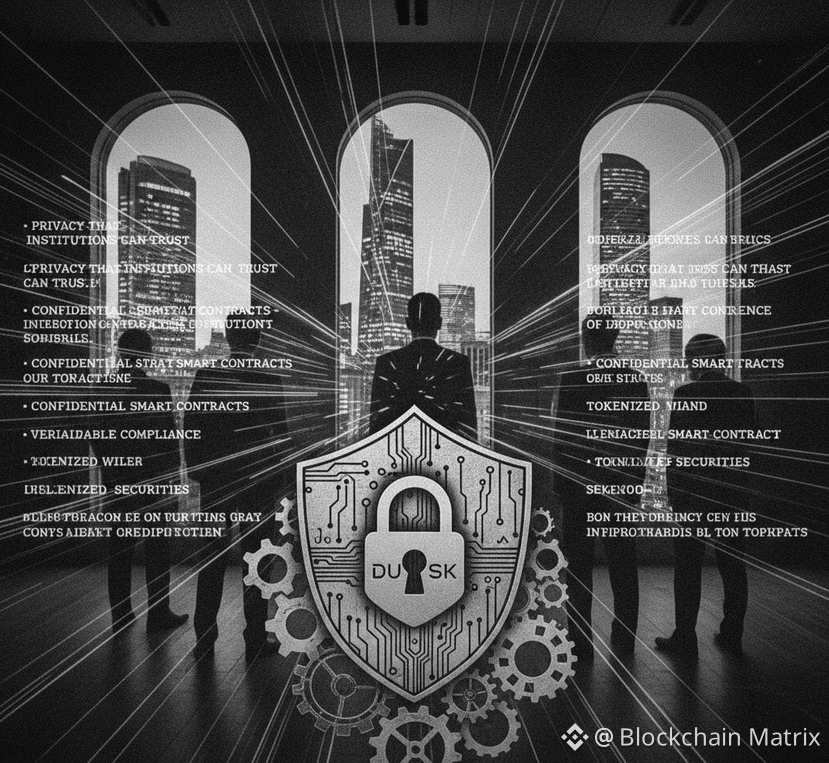
This is where @Dusk positions itself differently. Dusk Network is built around the idea of privacy with receipts — transactions are confidential by default, yet still verifiable when disclosure is required. Validators can confirm correctness without seeing private details, allowing compliance, audits, and reporting without exposing sensitive data.
Traditional finance already works this way. Funds don’t publish portfolios live. Banks don’t reveal internal transfer routes. Markets rely on controlled disclosure. Dusk brings this logic on-chain through confidential smart contracts, making it possible for regulated assets and tokenized securities to function at scale.
For institutions, this is not ideology, it’s operational necessity. A transparent ledger turns every trade into market intelligence. A confidential ledger with proofs enables participation without strategy leakage. That distinction matters.
From an investment perspective, $DUSK should be viewed as infrastructure, not a short-term narrative. The real signal is not hype, but retention: pilots, integrations, developer activity, and real usage of confidential contracts. If institutions continue to build and stay, value compounds quietly.
Privacy isn’t about hiding wrongdoing — it’s about enabling compliant finance to move on-chain safely. That’s the long-term thesis behind #dusk .
