

Thursday morning was a rainy day and spearheaded by the silent Plasma power I witnessed the beginning the first time ever. This was on co-working space, where I was meeting a small group of developers working and the laptops were whirring and the screens were bright with colorful charts and lines of code. They did not create some other flashy token, but created something more serious, and tried to make blockchain usable, reliable and accessible. One of them incidentally added that with Plasma, their users could engage the platform without fearing wait times and high-priced charges. That was the sort of thing that might have passed as understated, yet the more I listened the more of the revolutionary nature it had. Plasma did not involve hype, headlines, it involved the user experience, and at that point, I started to envision its potential in the real world.
Plasma does not require implementing technical skills on the one hand, or constant troubleshooting, as other solutions do. Money was transferred virtually unnoticed, NFTs transferred users without resistance, and microtransactions became unobtrusive. To the developers it was an opportunity to be creative rather than being in a fire-fighting situation all the time. It was trust to the user without necessarily grasping the inner workings of the system. However, such a simplicity-reliability balance is not common in technology, and I liked the consideration that Plasma designers put in the design.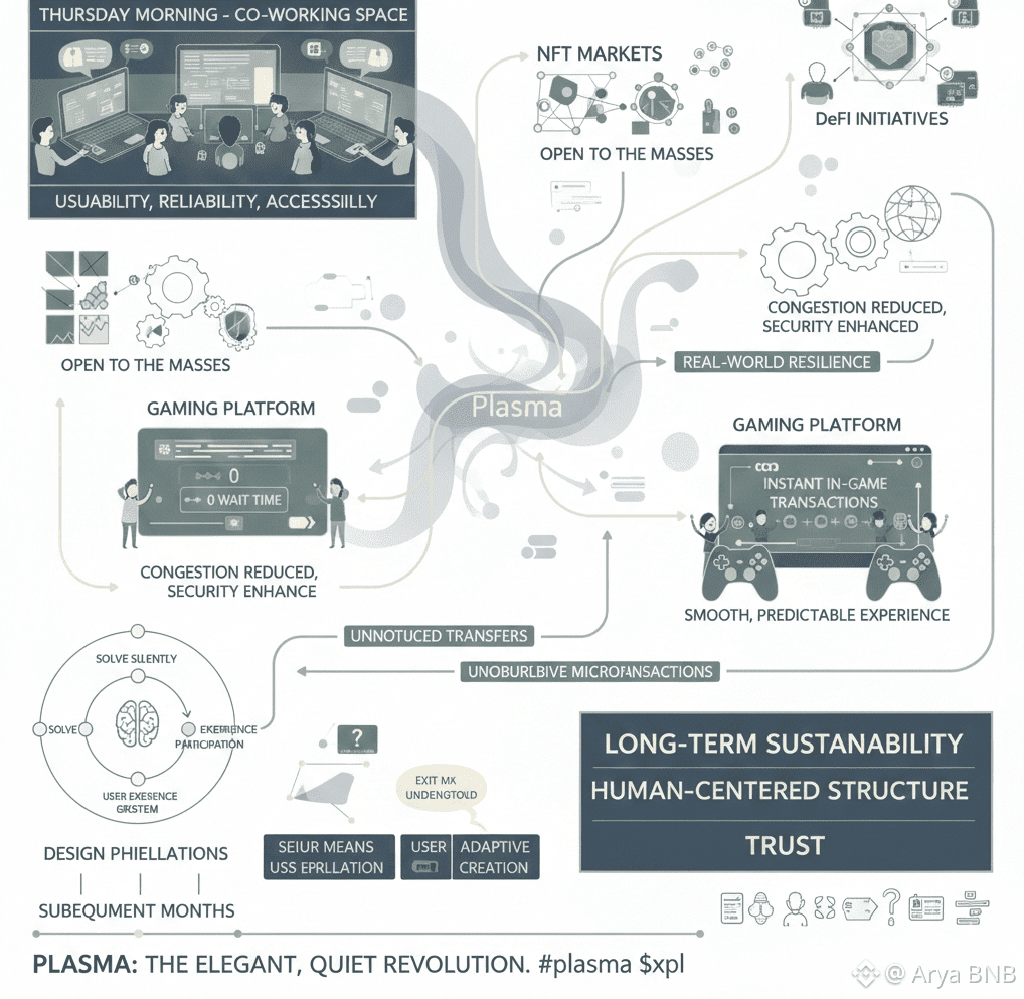
I am going to their testnets and seeing it in use. There was one moment that was very sharp, a small team of gamers trying Plasma-enabled platform cheered and applauded when they conducted transactions within in-game that occurred immediately with no interruption. Previously, even trivial purchases in the game were slowed down or thrown off-budget, which would blemish the experience. The gamers were not interested in the technical terms, they just felt that it all was smooth and predictable. It was the magic of Plasma and in that room with lots of screens and keyboards, it was very close to living and changing the way people were dealing with blockchain technology.
I was able to observe Plasma enhance its presence in numerous applications during the subsequent months. NFT markets were opened to the masses. DeFi initiatives succeeded in eliminating congestion at the expense of security. Startups testing small-scale payment systems had found that Plasma could withstand the vagaries of a real environment usage. And still, even when it was increasingly adopted, it never required notice. Its design philosophy was subtle: find solutions to the challenging issues in silence to give the users a chance to concentrate on the things that matter, namely, participation, creation, and experience. I could not help noticing that in its proprietary way Plasma was elegant.
The initial installations needed special attention, and people should have understood how to use exit means in a reasonable way. But these problems did not seem like anything to surmount; they seemed to be a part of a living, growing system. The issues that arose gave information on the needs of the user and the behavior of a human being. Developers gave stories of users instinctively understanding things that they were totally unaware of such as quitting to the main chain without harm. These minor achievements helped to strengthen the belief that it is not the complexity or speed that matter with technology- the real substance is its usability, confidence, and potential to make smaller individuals an empowered force that can do things.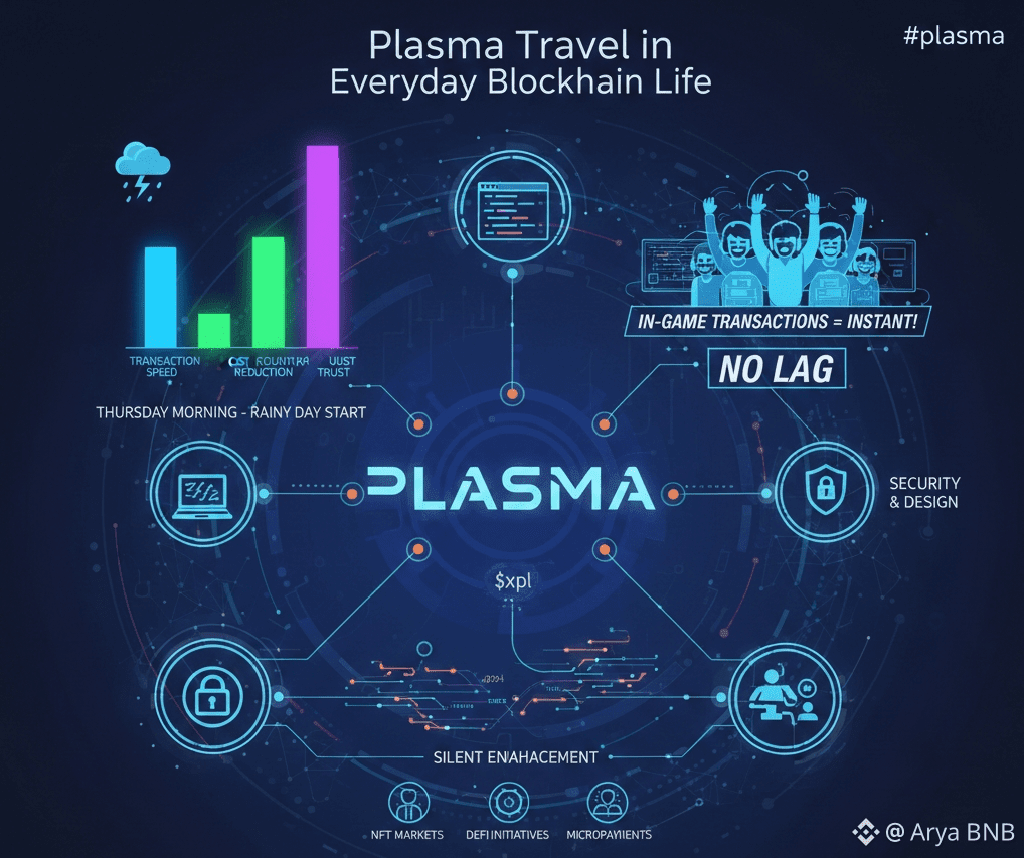
The further I traced the path that Plasma took the more I realized that it was influencing the blockchain ecosystem. It took the discussions about pure throughput numbers and made it to refer to long-term sustainability. It caused constructors to consider design, safety and other user experience at the same time. It was a reminder to the community that its point of view on scaling is not only about transactions per second; and resiliency, predictability, and subtle human-centered structure. Plasma silently influenced what should be expected of how the decentralized systems ought to work and thus, it is an example not only of what is expected in terms of performance but also in the form of a well-considered design.
It was a rainy Thursday when after several months of poor health I was sitting back and I was minding my own business and I went to reflect on something Plasma had told me and I knew that something was beyond technical accomplishment. It measured human relationship, between the people who developed it and those that use it, between creativity and dependability, between aspiration and tolerance. Plasma is a light in an oft-paced world who is usually quick then fast forward to the next busiest thing but always has to stop and think of the progress that will require the most patience and care until its results are felt everywhere. It has already altered how we engage with blockchain by providing proof that considered systems can effectively alter the most common things one transaction at a time.

