

Walrus has quietly become one of those infrastructure stories that traders can’t ignore anymore, even if “decentralized storage” sounds like plumbing at first glance. The simple pitch is this: Walrus is a decentralized network for storing big chunks of unstructured data l think images, video, model files, game assets, archives without forcing every blockchain validator to replicate everything. Mysten Labs first unveiled it on June 18, 2024 as a developer preview aimed at Sui builders, framing it as a storage and data-availability layer that can keep costs closer to cloud-style replication rather than the “everyone stores everything” model most chains inherit.
What makes Walrus different, and why the word “programmable” keeps showing up in conversations, is that it treats storage as something apps can reason about onchain. In normal cloud storage, data sits there like a box in a warehouse: you can fetch it, you can delete it, but the storage layer doesn’t have native rules you can compose with smart contracts. Walrus aims to change that by pairing blob storage with an onchain coordination layer (Sui), so apps can attach metadata, manage lifecycle rules, and build logic around access, verification, and even deletion in a more structured way. When people say “blob,” they just mean a Binary Large Object basically any file-like chunk of data that isn’t naturally a row in a database.
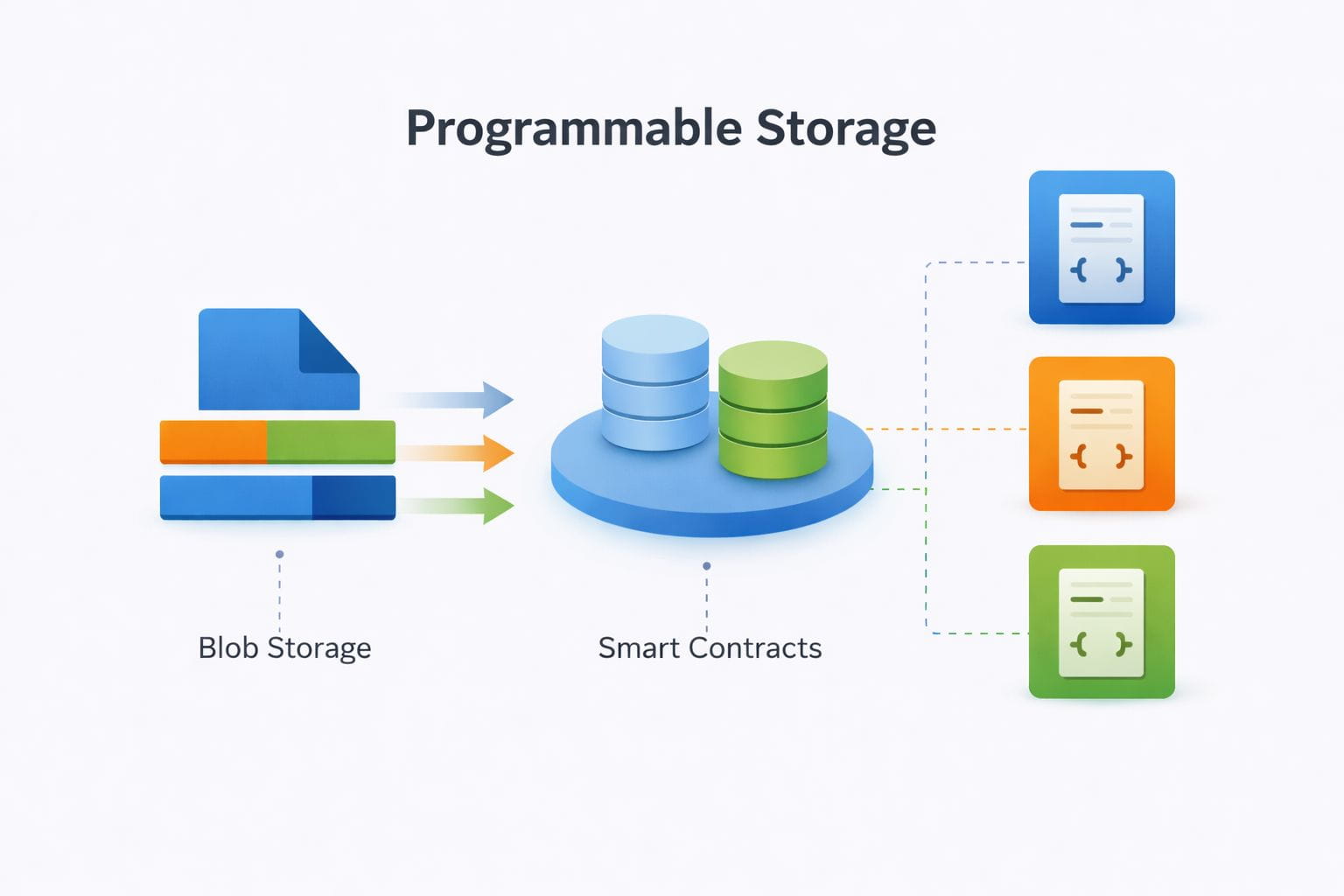
The technical trick under the hood is erasure coding. Instead of storing full copies of a file everywhere, Walrus slices data into “slivers” and spreads them across operators; you only need a threshold of slivers to reconstruct the original file. Mysten’s early materials made a very trader-friendly claim: reconstruction can still work even if up to two-thirds of slivers are missing, while keeping the effective replication factor far lower than typical onchain replication. That’s not just academic if you’ve traded enough cycles, you know markets reward systems that can survive chaos without rewriting the whole stack.
Progress-wise, the timeline is pretty clean. After the initial June 2024 preview, Walrus’ public Testnet went live on October 17, 2024 with 25 independent community operators supporting the network globally, plus early partners experimenting with migrations and use cases. The real “it’s for real now” moment came March 27, 2025, when Walrus launched Mainnet. The docs note Mainnet is operated by a decentralized set of over 100 storage nodes, and that Epoch 1 began on March 25, 2025 details that matter because they signal it’s not just a whitepaper narrative; it’s an operating network with live committees and incentives.
So why is it trending again right now? In my view, it’s because storage stopped being a background concern the moment AI and rich-media apps became the main drivers of onchain activity. Walrus has leaned into that narrative hard in recent updates, emphasizing verifiability being able to prove where data came from and whether it’s been changed and tying it to real economic pain like fraud and “bad data” risk. Traders latch onto narratives, sure, but devs latch onto tooling and proofs, and this is where Walrus starts to feel like more than a “Filecoin alternative.”
Two datapoints helped cement that shift. First, the Walrus Foundation announced a $140 million private token sale on March 20, 2025 led by Standard Crypto, with participation from major crypto funds and Franklin Templeton Digital Assets capital that typically shows up when institutions believe an infrastructure layer might become sticky. Second, on January 21, 2026 Walrus highlighted Team Liquid migrating 250TB of footage and brand content onto the protocol, which is the kind of scale claim that gets traders’ attention because it hints at real demand rather than testnet vanity metrics.
If you’re trading this theme, the question I keep coming back to is: can “programmable storage” become as obvious a primitive as programmable money? Walrus is betting that apps will want data that’s not only stored, but governable, composable, and verifiable especially as AI and onchain agents push more value into datasets and media. That’s still a bet, but the cadence from June 2024 preview to October 2024 testnet to March 2025 mainnet, and now to early 2026 enterprise-scale stories, shows steady execution.


