
Meet Walrus—the storage powerhouse quietly handling petabytes of data while fueling everything from ad networks to AI agents. No central points of failure, no drama. Just a rock-solid, decentralized protocol on Sui that’s shot from mainnet launch to production workhorse in under a year. If you’re looking for fast, verifiable storage that scales as big as your ambitions, this is it. As Web3 inches into the mainstream, Walrus is the muscle making big ideas actually work. Gaming, media, AI, you name it—Walrus brings the cloud-level performance, but with the transparency and control only on-chain tech can offer.
The secret sauce? Battle-tested architecture. Walrus hit mainnet on March 27, 2025, after a testnet that chewed through over 500,000 uploads starting October 2024. Now, it's holding steady at around 4 petabytes—serious capacity for real, demanding apps. This isn’t just empty storage, either. Walrus delivers millisecond response times, right up there with AWS, but every bit of data is secured by cryptographic proofs. You get tamper-resistance and total traceability. Their Red Stuff erasure coding splits data into tiny pieces stored across 200+ active nodes. The result: 4.5x overhead, 10 times cheaper per gigabyte than typical providers, and it shrugs off up to two-thirds of node failures without losing a byte.
Look at who’s building on Walrus and things really come into focus. Alkimi Exchange, taking on the $750 billion ad industry, pushes more than 25 million impressions a day through Walrus blobs. Ads aren’t just served—they’re encrypted, gated, and only reach authorized eyes. Over in gaming, The Vendetta Game runs fully on-chain, storing and verifying game states with Walrus and its SEAL access controls. Cheats and leaks? Not happening. Players actually own their stuff, and trustless PvP finally means something. Since September 2025, SEAL has handled about 70,000 decryption requests across 20+ projects. When production apps need serious, programmable privacy, they turn to Walrus.
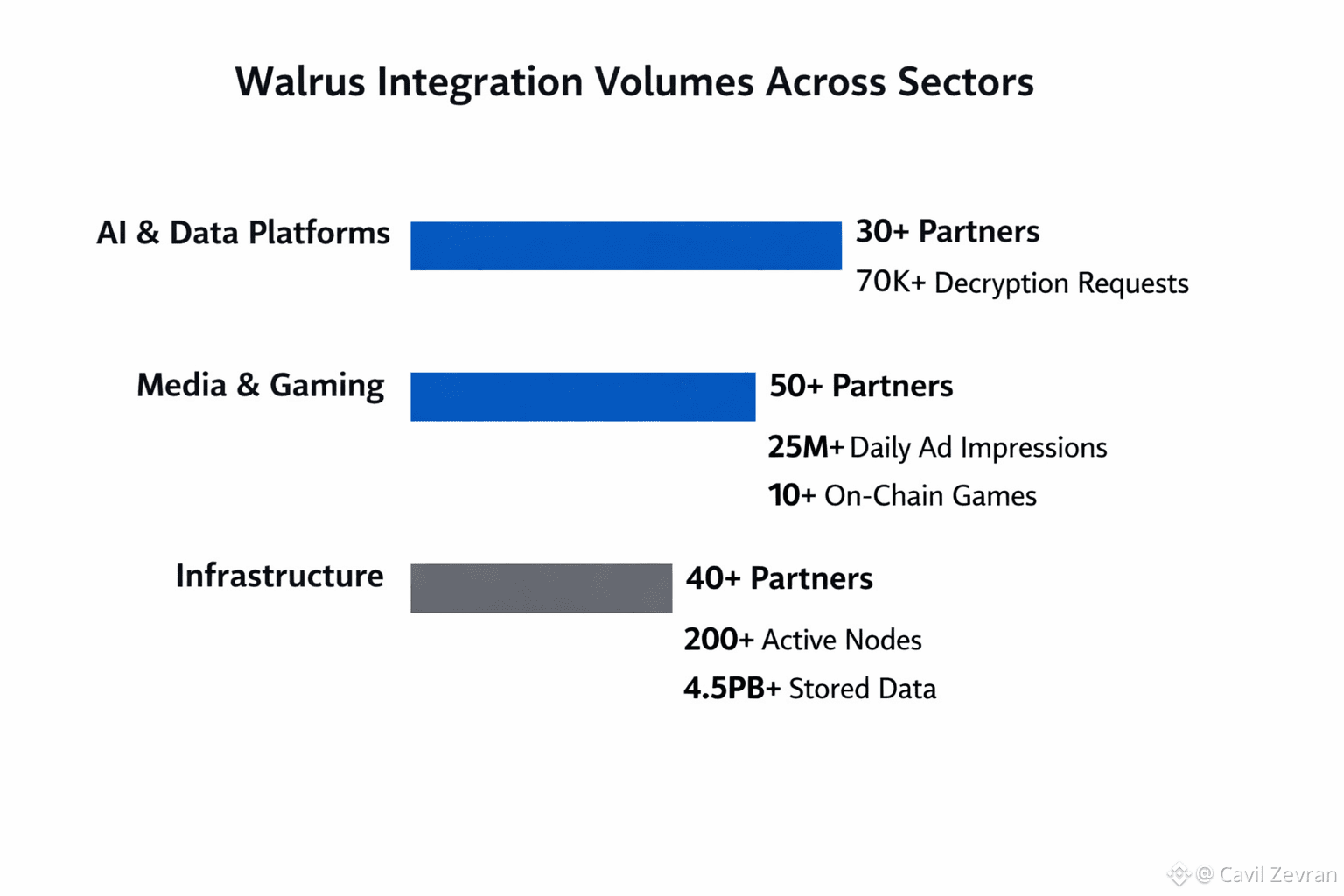
AI and data platforms are getting in deep, too. Inflectiv AI mints high-quality datasets on Walrus, using ownership policies to control who gets access, and making sure only clean, reliable data feeds the agents. Tensorblock keeps AI infrastructure locked down—models, memory, and logic all encrypted, only available to verified folks. OpenGradient jumped in June 2025 for model storage with on-chain permissions, and new partnerships are rolling out privacy-focused training. This isn’t test phase stuff; it’s live and running. Walrus’s chain-agnostic approach means it isn’t stuck on Sui—they’re eyeing 100+ chains, letting data flow freely across Web3.
Media and gaming giants are joining the party. THS Studios, big in horror films, uses Walrus for programmable IP protection. They can set who sees what, and verify every delivery. Decrypt puts its articles, videos, and archives on Walrus for censorship-resistant distribution. Tradeport’s NFT marketplace stores dynamic, upgradable metadata and assets, so digital collectibles can actually evolve. Claynosaurz was a mainnet launch partner. In August 2025, Space and Time rolled out Walrus Explorer, which lets devs run ZK-verified queries and see real-time network stats. Plume, an RWA chain, uses Walrus for asset-backed data, tokenizing the real world with verifiable storage.
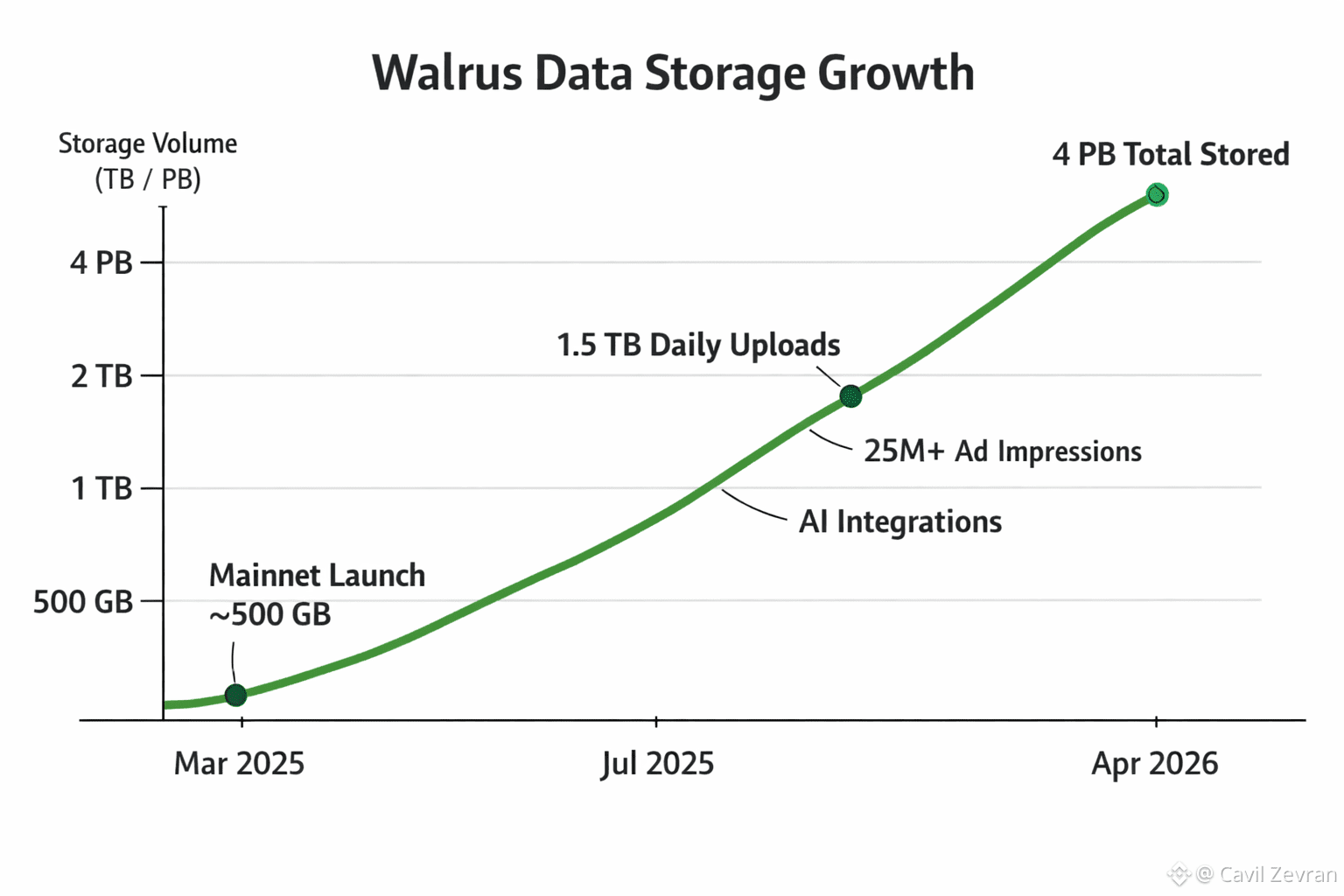
There’s plenty happening at the infrastructure layer, too. Linera speeds up instant transactions with smooth handling of massive datasets. Baselight is building a permissionless data economy right on top of Walrus’s decentralized backbone. Over 170 projects have plugged into Walrus since launch. AI tools like Talus (for revenue-generating agents), media giants like OneFootball, and intelligence platforms like Arkham are all tapping in. Daily uploads can spike to 1.5 terabytes, and the network’s self-healing tricks—proportional repairs and lightweight proofs—keep things humming, even under heavy load.
But Walrus is thinking bigger than just storage. It’s laying the groundwork for a real data economy, where assets are not just stored but monetized and governed. With $140 million in backing from Standard Crypto and a16z, their RFP program—launched in January 2026—funds new builders working on video infrastructure and more. If you’re an enterprise or developer looking for fast, reliable, production-grade data layers, Walrus is already changing the way we store, access, and verify information in this AI-powered Web3 world.

