
Picture this: you’ve got over €300 million in tokenized securities, funds, and bonds—right at your fingertips, sitting in your own wallet. No waiting days for settlements, no jumping through hoops for compliance. Just instant, secure trades. That’s what Dusk Network is bringing to the table. Since launching in 2018, Dusk has been laser-focused on real-world asset tokenization, building out a system where both big institutions and everyday folks can tap into high-yield investments—without the middlemen or all the usual red tape. I’ve seen plenty of blockchains claim to be the next big thing in RWAs, but Dusk isn’t just talking. They’re actually moving real assets on-chain and letting people access liquidity, automation, and global markets right now.
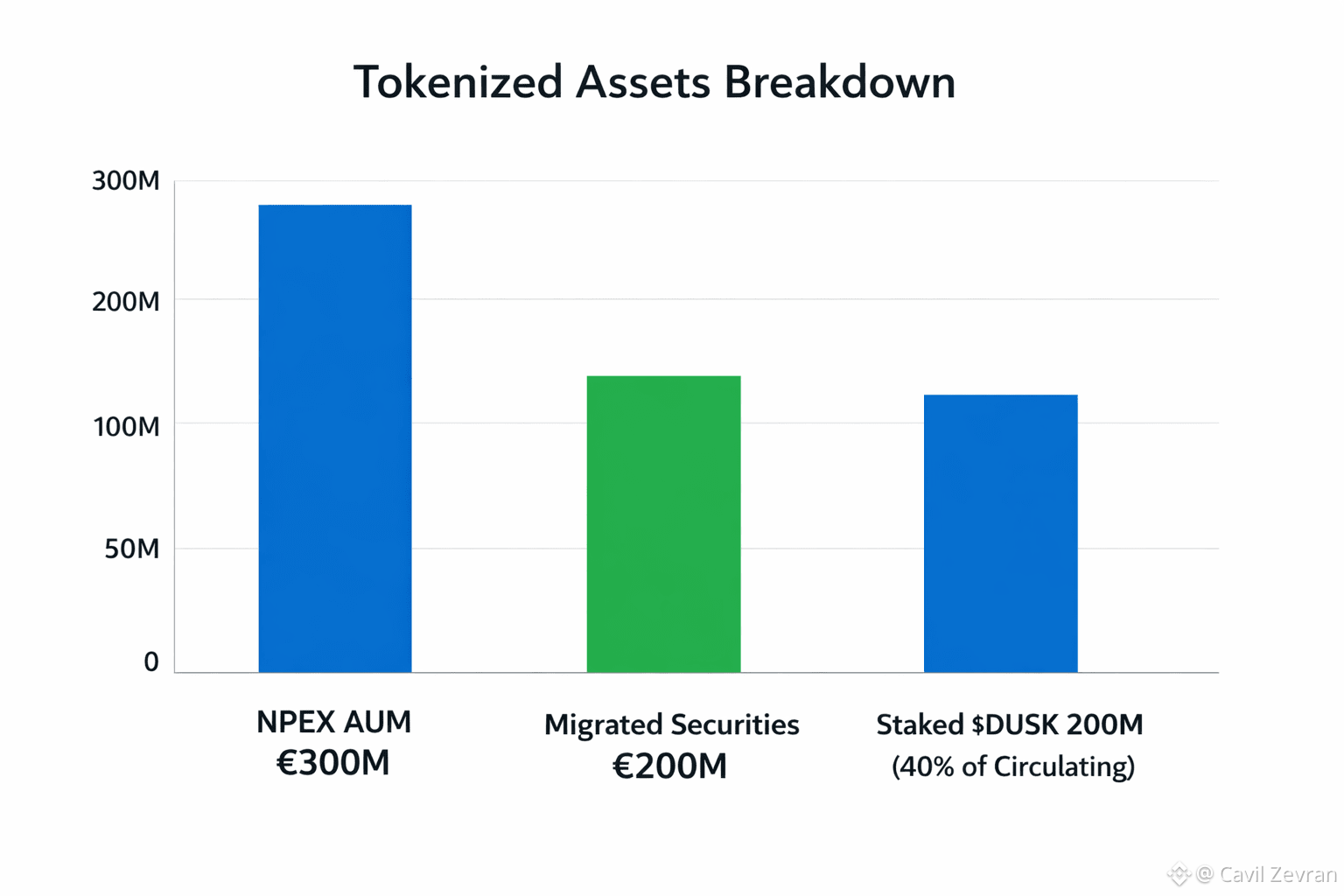
The big move here is DuskTrade. This is Dusk’s regulated RWA platform, and they kicked off the waitlist in January 2026. It’s a joint project with NPEX, a Dutch exchange that already manages €300 million. NPEX brings real regulatory muscle—licenses for organized trading, securities brokering, crowdfunding, and more. Soon, they’ll add DLT-TSS approval. All that lets them tokenize and trade equities, bonds, and funds directly on Dusk. And it’s not just hype: they’ve already moved over €200 million in securities on-chain. That means companies can now raise money globally by turning their assets into tokens, automating everything from dividends to shareholder votes with smart contracts that handle compliance behind the scenes. For institutions, this setup finally breaks down the walls between markets and pools liquidity, making it way easier to reach international investors and skip the usual custody headaches.
What keeps everything running is Dusk’s custom tech stack. The native asset—$DUSK—powers fees and staking. Meanwhile, their compute layer, Piecrust VM, lets them bake actual securities laws into smart contracts. In January 2026, they rolled out DuskEVM, so Solidity developers can deploy apps directly on Dusk’s chain. It’s fast, too—settlements clear in under 10 seconds, and the chain handles 100–200 transactions per second thanks to their Segregated Byzantine Agreement consensus. For real-time pricing, they pull in data feeds from Chainlink’s Data Streams. Cross-chain? No problem—CCIP bridges handle that. And partners like Quantoz use Dusk to issue euro-backed stablecoins (EURQ), which helps keep trades steady even when markets get choppy. Add privacy layers on top, and sensitive stuff—like who owns what—stays hidden but still auditable for those who need to know.
For regular users, this is a game-changer. You get to actually own tokenized shares or bonds, keep them in your own wallet, and trade them around the world—without needing a broker or bank to sign off on every move. These aren’t just crypto tokens tied to speculation; they’re backed by real economic activity. Businesses love it too. With NPEX’s portfolio coming on-chain, that €300 million AUM unlocks a whole menu of new investment options. The network’s solid: since launching mainnet in January 2026, Dusk has been pumping out over 8,600 blocks a day. Staking keeps things secure, with over 200 million $DUSK locked up—about 40% of the total supply. Inflation is steady at around 10% a year, but fee burns help keep things balanced as more assets move on-chain. And for transparency, users can check private transactions using DuskExplorer, building trust in these new digital assets.
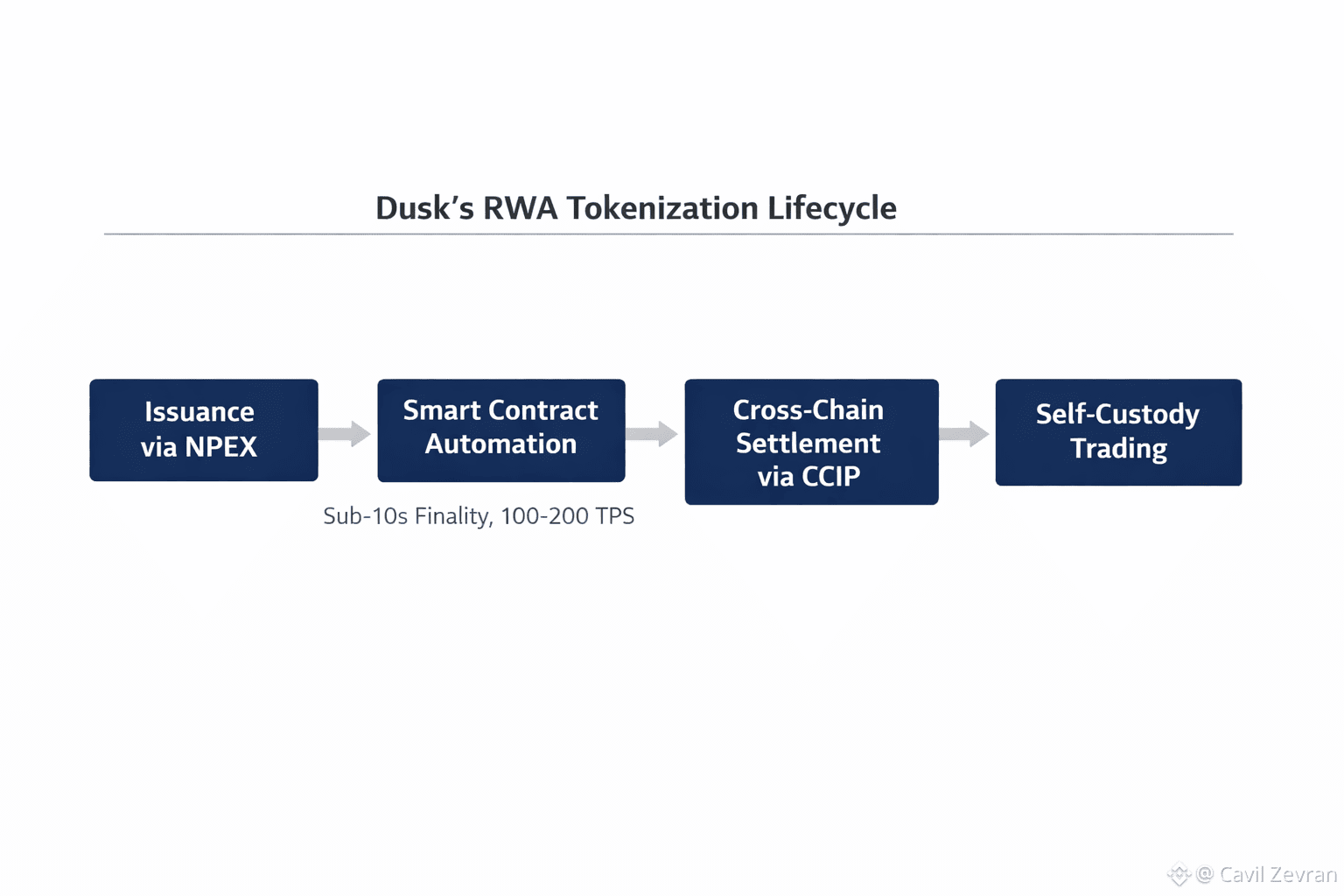
So, how does tokenization actually work on Dusk? They’re handling the whole process. Issuers hop onto licensed platforms like NPEX to mint tokens that represent real assets—compliance gets baked in thanks to zero-knowledge proofs through the Citadel protocol, lining up with MiFID II rules. Transfers happen confidentially using the Phoenix or Moonlight models, and with Hedger’s alpha, Dusk even supports confidential lending through homomorphic encryption. No more worrying about everyone seeing your business on a “glass ledger”—Dusk keeps sensitive data private, but lets regulators peek in when they need to. As the big players eye trillions of dollars in RWAs for blockchain, Dusk’s model trims costs by automating settlements and reporting. That means more inclusion for underserved markets, and with partners like Cordialsys and 21X, even enterprise clients can jump on-chain without legal headaches.
