
Picture Team Liquid—one of the biggest names in esports—grabbing 250 terabytes of their history from scattered hard drives and pushing it straight into a decentralized future. That’s the scale of what Walrus is pulling off on Sui right now. They’re not just making storage reliable; they’re making it game-changing. While most big companies struggle with isolated data, rising costs, and the constant threat of failure, Walrus steps in as the heavy hitter: blockchain-level verifiability mixed with the speed and efficiency you’d expect from top-tier cloud storage. The result? A whole new way for big players to store, access, and actually use their data.
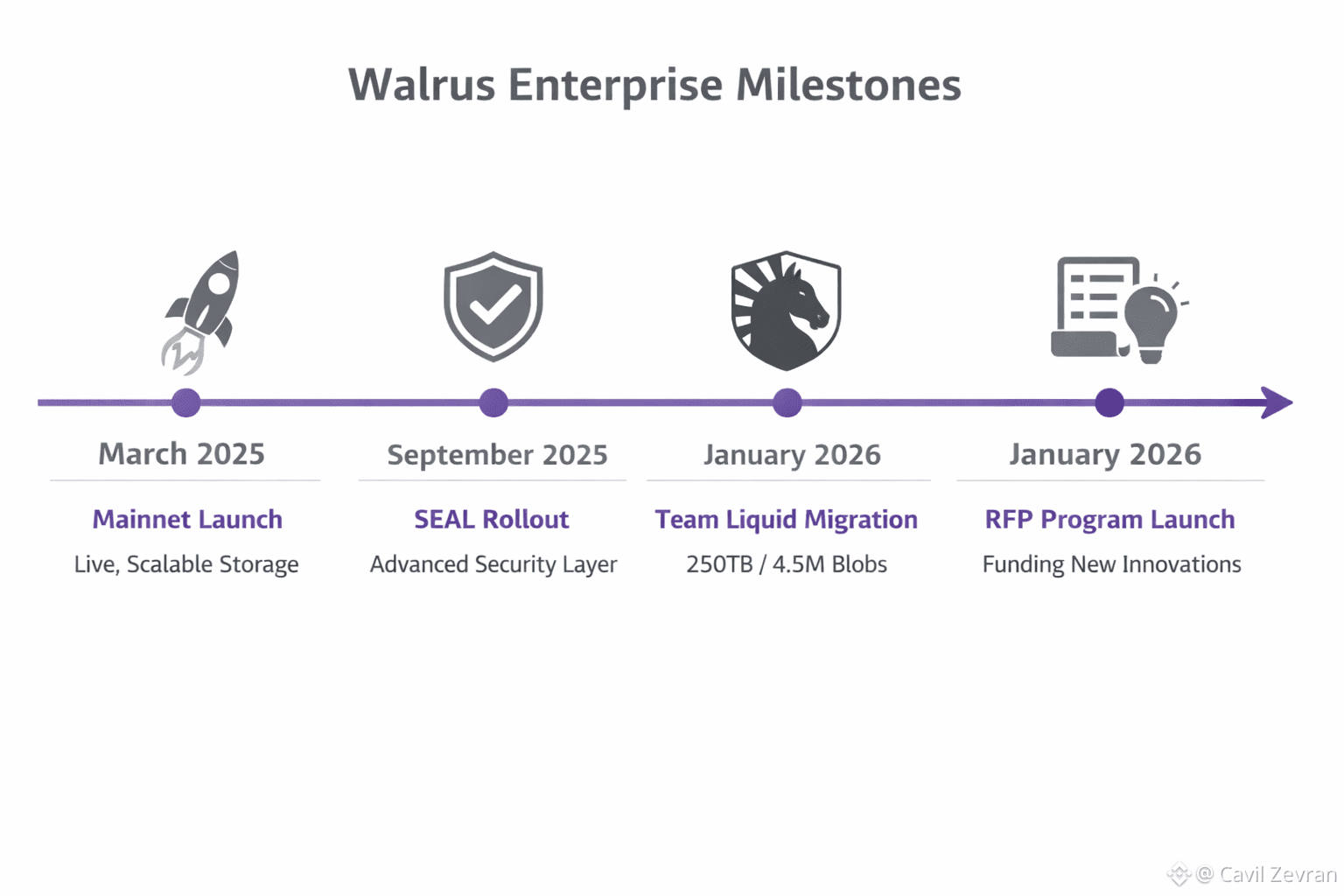
So what makes Walrus stand out? It’s all about how it handles those mountains of unstructured data that usually stymie traditional systems. Their blob-optimized setup breaks files into tiny pieces using the Red Stuff two-dimensional system, then scatters them across more than 200 active nodes. Even if two-thirds of those nodes go down, your data’s still safe. Repairs happen smart and fast, using just a sliver of the bandwidth compared to old-school replications. This isn’t just some idea on paper—it’s live. Since March 27, 2025, Walrus’s mainnet has handled daily upload spikes of 1.5 terabytes, with around 2 terabytes stored in total. And the kicker: it costs about ten times less per gigabyte than the usual cloud options. For enterprises, that means you can finally ditch fragile, overpriced setups for something decentralized, secure, and self-healing.
Team Liquid’s migration in January 2026 is a perfect example. They moved 250 terabytes—4.5 million blobs—of match footage, behind-the-scenes content, and their entire brand archive from physical drives to Walrus, using ZarkLab. AI meta-tagging kicks searchability up a notch, so global teams can instantly find what they need. No more data silos, no more single points of failure. Now, their content lives on-chain, ready for fan engagement, monetization, or exclusive drops—no need to shuffle files around each time. Team Liquid says this upgrade doesn’t just preserve memories; it opens up brand-new ways for stakeholders to connect. Walrus shows it can handle the enterprise demands of making data permanent, accessible, and actually useful.
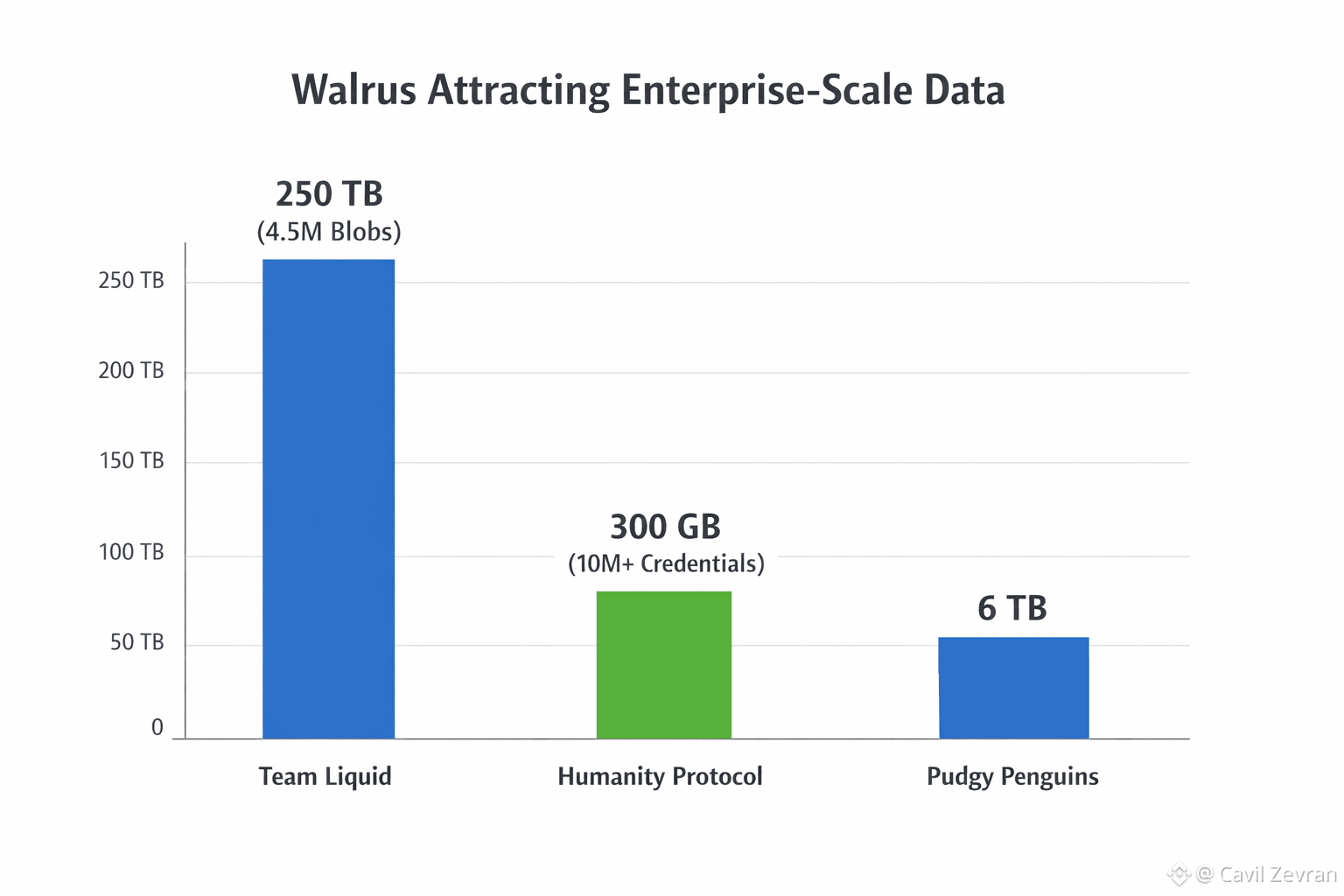
The story doesn’t stop there. Humanity Protocol has shifted more than 10 million credentials (about 300 gigabytes) onto Walrus, pushing network capacity up to 4,167 terabytes and aiming for 100 million by mid-2026. They rely on Walrus’s verifiable custody, locking proofs on Sui without bogging down the chain—ideal for regulated sectors like identity management. Alkimi Exchange? They run 25 million daily ad impressions through Walrus blobs, tapping into Pipe Network’s 280,000+ locations for lightning-fast, enterprise-scale delivery. These aren’t just pilots. They’re live, with Walrus proving it can hit 99.9% retrieval rates, even under stress. Toss in cryptographic proofs and you get all the good stuff from the cloud—plus blockchain perks like tamper resistance and composability.
Developers haven’t been left out. Walrus’s TypeScript SDK makes uploads smoother, especially on shaky networks, and blob objects come packed with metadata, ownership, and lifetime controls—extendable in 30-day epochs. This flexibility fits right into enterprise workflows: slot in io.net for AI compute artifacts, use Yotta Labs for agent throughput (like their January 2026 partnership), or integrate with Talus for AI models that actually make money. The RFP program, launched in January 2026, funds new ideas—like video platforms—drawing more enterprises to Walrus’s chain-agnostic setup. With $140 million from a16z and Standard Crypto, and 43% of its 5 billion WAL supply set aside for the community until 2033, Walrus keeps evolving, driven by enterprise needs and community governance.
Step back for a second—Walrus is hitting enterprise pain points head-on. DeFi protocols are verifying real-time transactions, content companies like Pudgy Penguins are scaling up to 6 terabytes for dynamic assets, and testnet’s 500,000 uploads since October 2024 paved the way. Now, mainnet traction is clear: tools like Walrus Sites are powering decentralized hosting for projects like Flatland and Snowreads. In a world where data drives every decision, Walrus is the infrastructure enterprises are looking for: secure, scalable, sovereign, and free from the old Web2 compromises.
It’s quiet, but Walrus is moving entire industries into Web3—one massive migration at a time. For companies chasing bulletproof data strategies, this isn’t just another blockchain pitch. Walrus is turning the tech into something essential for business.

