
It’s been a year since Dusk Network’s mainnet went live on January 7, 2026, and, honestly, the transformation has been something to watch. While plenty of blockchains lose momentum after that initial burst of hype, Dusk just kept moving forward—quietly and steadily, but always building. Every upgrade over the past year made the network more flexible and ready for whatever comes next in regulated finance. Dusk started back in 2018 with a clear goal: build infrastructure that institutions could actually trust. Now, a year into mainnet, they’ve got the track record to show that slow, steady development really does pay off in an industry full of projects that flame out fast.
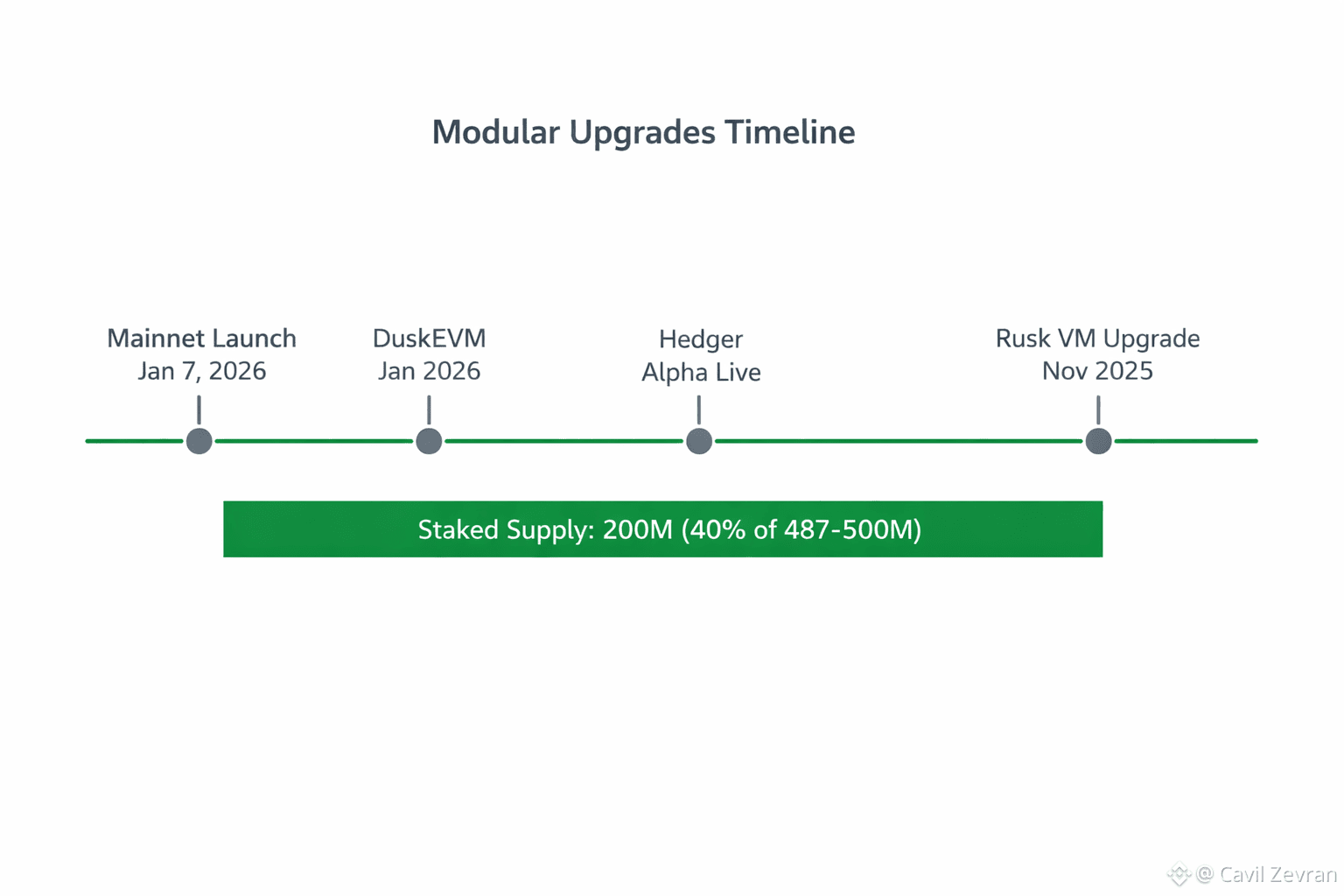
At the heart of Dusk’s progress is its shift to full modularity. Instead of trying to cram everything into one messy layer, Dusk separates pieces out, making the whole thing way more adaptable. The base settlement layer takes care of the heavy lifting—consensus and finality are fast, with sub-10-second blocks and reliable throughput of 100-200 transactions per second. On top of that, there’s the application layer, which jumped up a level in January 2026 when DuskEVM rolled out. Now, developers can launch Solidity contracts that settle directly on-chain—no clunky workarounds. Upgrades are smooth, too. You can bolt on new privacy modules like Hedger (already live in alpha), or tweak network settings through governance, all without pausing the chain. Over the past year, the team kept refining everything: better node monitoring, smarter gas fees, improved APIs. None of this feels random; every move is about making Dusk stronger, more resilient, and easier for developers to work with.
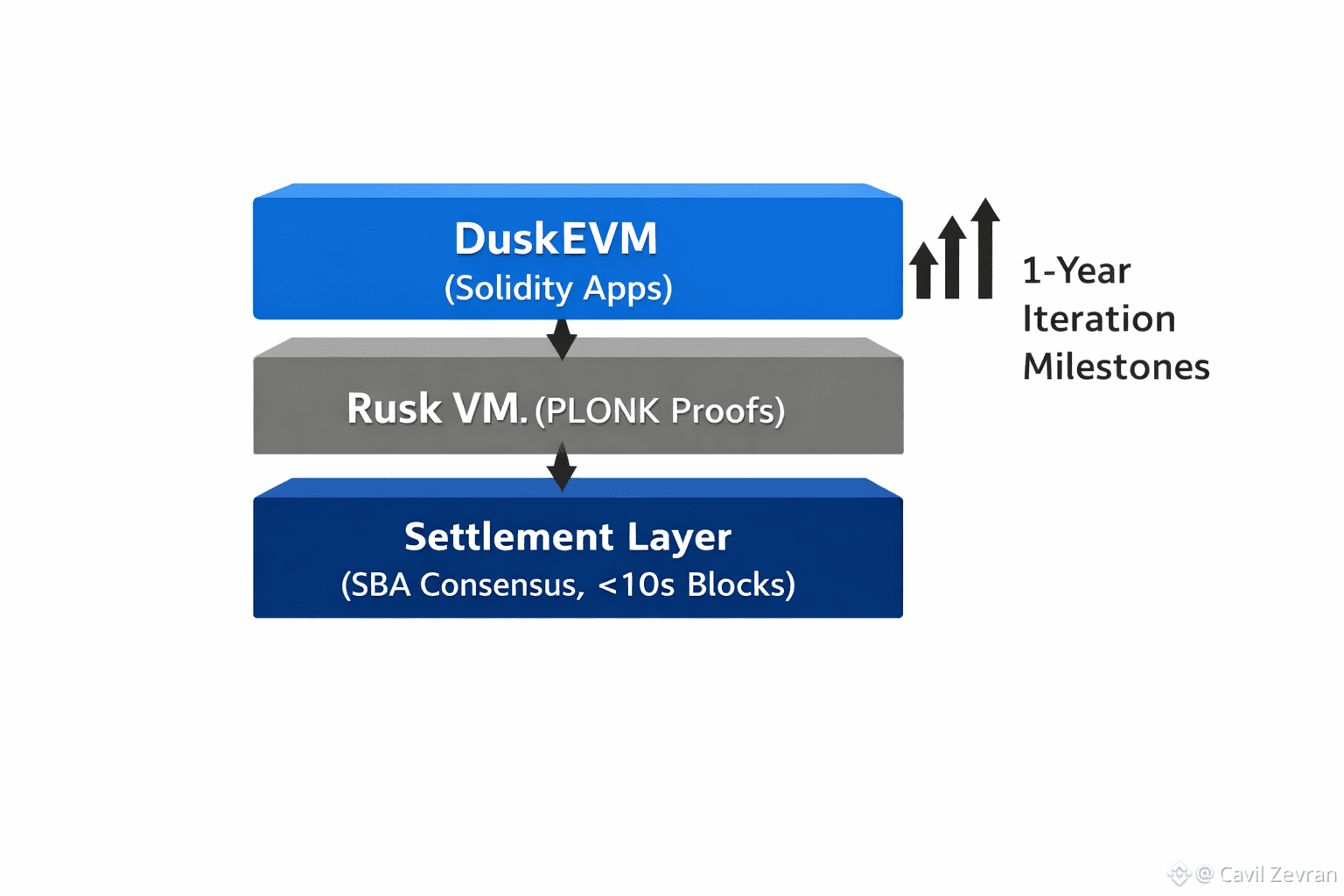
You see this modular approach really shine in real-world projects, like the upcoming DuskTrade platform (waitlist’s up, by the way). DuskTrade will use the stack to bring regulated trading of tokenized securities on-chain, and compliance isn’t an afterthought—it’s baked right into the architecture. The result? Processes that usually bog down traditional systems run smoothly and automatically. Institutions can issue, manage, and settle assets across different layers, all without running into silos or roadblocks. Developers get a straightforward deal: build fast with EVM tools, then anchor everything on the rock-solid base layer. And with the Rusk VM upgrade in late 2025, proof verification got a huge boost, so even complicated stuff like automated corporate actions runs at scale. Over the past year, Dusk hasn’t just kept the lights on—it’s been evolving nonstop. The chain pushes out more than 8,600 blocks daily, and staking participation stays strong.
On the economic side, Dusk’s modular setup makes the whole ecosystem more sustainable. $DUSK powers all the layers, and transaction burns keep inflation in check—hovering around 10% a year and trending down. Circulating supply sits between 487 and 500 million (out of a billion max), with over 200 million staked—about 40% of the network. That’s not just securing the chain; it’s giving the community real influence over upgrades and governance. This way, changes reflect what users actually want, like better bridges or privacy tools, without a handful of people calling the shots. After a year of steady iteration, it’s clear modularity isn’t just a marketing line for Dusk. It’s how they keep adapting to new regulations, like MiCA, and whatever tech comes next.
So here’s where Dusk stands: a year in, and it’s not just another chain trying to ride a trend. By focusing on modular design and constant improvement, Dusk is building the kind of infrastructure institutions can actually rely on—not just for now, but for years to come. If you’re serious about building or investing in on-chain finance, Dusk’s year of relentless progress is proof that slow and steady really does win.
