

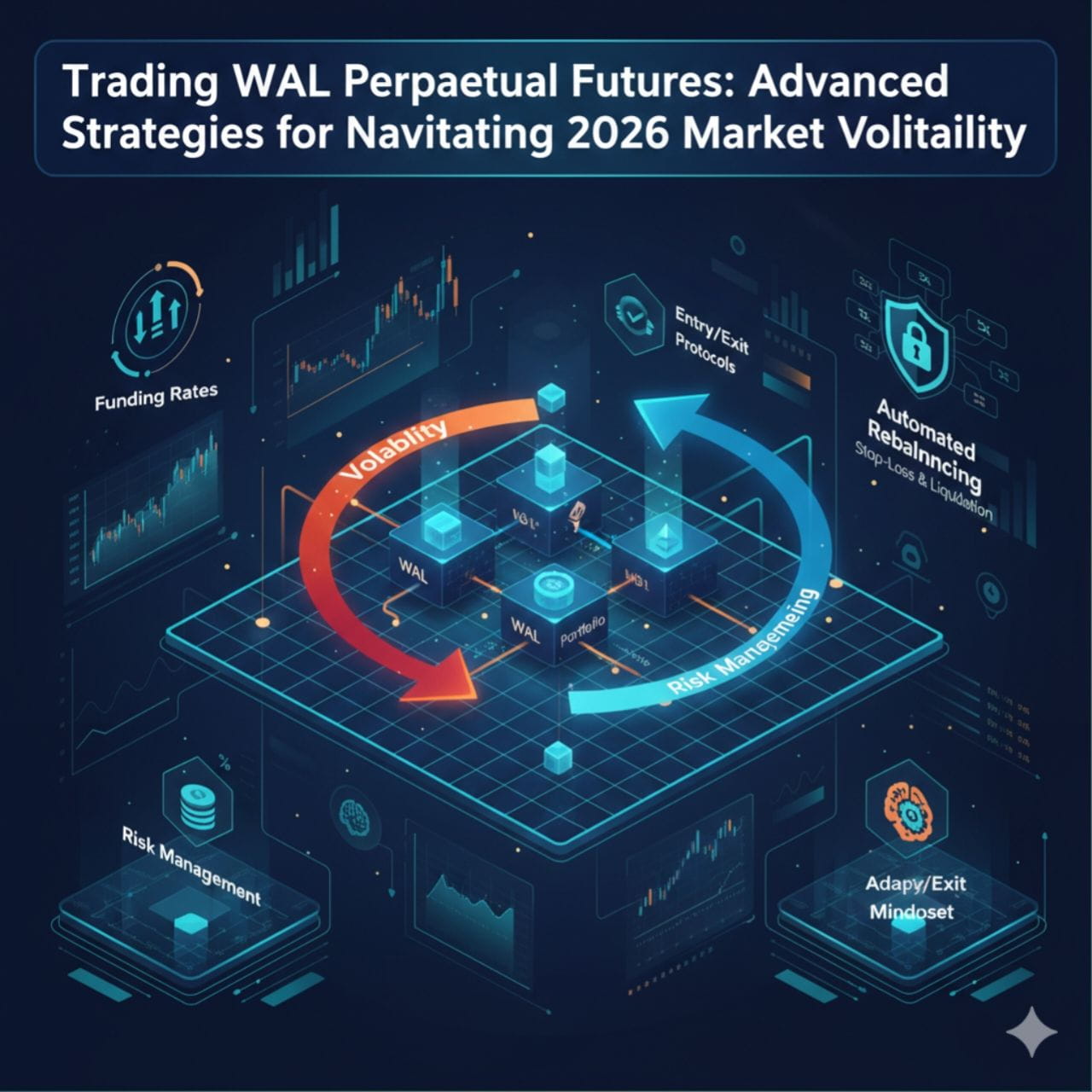
Mastering WAL Perpetual Futures Amid Market Turbulence
In today’s ever-evolving crypto environment, perpetual futures have emerged as essential instruments for active traders. The unique structure of WAL perpetual futures—offering no expiry and the ability to hold positions indefinitely—makes them particularly attractive in volatile conditions. As we approach 2026, the interplay of global macro developments, rapid shifts in liquidity, and heightened trader activity is setting the stage for unprecedented market swings in WAL contracts.
Volatility, while intimidating, can be a powerful ally if approached with skill and preparation. To consistently thrive in these dynamic markets, you need more than quick instincts; you need a robust strategy, disciplined risk management, and the ability to adapt as conditions change.
Understanding WAL Perpetual Futures: Mechanics and Nuances
WAL perpetual futures are derivatives that mirror the underlying WAL asset without an expiration date. The perpetual nature of these contracts means you can maintain exposure for as long as your risk protocols allow. Funding rates—a recurring payment exchanged between longs and shorts—keep the contract price aligned with the spot market. However, these funding rates can fluctuate rapidly, especially in volatile periods, and their cumulative effect can significantly impact profitability over time. Smart traders track both the immediate price action and the evolving landscape of funding payments, recognizing that hidden costs can erode gains or magnify losses.
Strategy 1: Dynamic Position Sizing for Volatile Markets
The first line of defense in a volatile environment is precise control over your position size. Just as a skilled driver reduces speed in hazardous conditions, savvy traders scale down positions when volatility spikes. This conservative sizing minimizes the impact of sudden price moves and reduces the likelihood of forced liquidations. Use volatility indicators—such as average true range (ATR) or implied volatility metrics—to quantify current risk and adjust your exposure accordingly. Remember, surviving a turbulent market often means playing defense, not just offense.
Strategy 2: Predefined Entry and Exit Protocols
Emotion-driven decisions are the Achilles’ heel of many traders, especially when markets turn chaotic. Establish clear rules for entering and exiting trades before you engage. Rely on technical analysis tools: identify critical support and resistance zones, set concrete stop-loss levels, and plan partial take-profits to lock in gains during periods of rapid movement. Backtest your criteria and commit to following them strictly. This approach not only removes emotional bias but also ensures consistency—a key advantage when volatility distorts price action.
Strategy 3: Monitoring and Leveraging Funding Rates
Funding rates are more than a fee; they are a real-time sentiment gauge. Elevated funding rates typically signal overcrowded long positions, hinting at a potential reversal or increased risk of a shakeout. Conversely, negative rates can indicate excessive bearishness. By monitoring these shifts, you can anticipate when to reduce exposure, hedge existing positions, or even capitalize on contrarian setups when crowd sentiment becomes extreme. Consider integrating funding rate analysis into your broader trading framework, using it to time entries or exits and to decide when to step back until conditions normalize.
Strategy 4: Comprehensive Risk Management as a Core Principle
Sustainable trading in perpetual futures hinges on rigorous risk management. High leverage may lure traders with the prospect of outsized returns, but it also magnifies losses and increases the risk of liquidation. Set conservative leverage limits, diversify your trades, and be willing to accept small, controlled losses rather than risking catastrophic drawdowns. Maintain a trading journal to review your decision-making and refine your approach over time. Remember, your primary objective is capital preservation; profits are a byproduct of disciplined execution.
Strategy 5: Adaptive Mindset and Continuous Learning
In fast-changing markets, flexibility is your greatest asset. Regularly review your strategies and remain open to adjusting them as new patterns emerge or market structure evolves. Participate in trader communities, follow relevant macroeconomic and on-chain developments, and leverage analytics tools to stay ahead of the curve. The most resilient traders are those who continuously learn and adapt, rather than relying solely on static strategies.
Conclusion: Longevity Through Discipline and Preparation
Succeeding with WAL perpetual futures in 2026 is not about chasing every price spike or overtrading in hopes of quick profits. It’s about enduring volatility through careful planning, disciplined risk controls, and repeatable strategies. The traders who prioritize capital preservation, remain patient during uncertain periods, and refine their methods are the ones who will not just survive, but prosper as the markets evolve.
Before making your next WAL perpetual trade, take the time to document your entry criteria, exit targets, and risk parameters. If market conditions don’t align with your strategy, exercising patience and waiting for a better setup can often be the most profitable move of all.
Frequently Asked Questions
What exactly are WAL perpetual futures?
These are derivative contracts that track the price of the underlying WAL asset without any expiration date. They use funding rates to keep the contract price closely aligned with the spot price.
Are perpetual futures suitable for new traders?
Perpetual futures are inherently risky and can amplify both gains and losses. Novice traders should prioritize learning risk management principles and gain experience in less leveraged markets before trading these products.
Does increasing leverage guarantee higher profits?
While higher leverage can magnify profits, it also dramatically increases the risk of large losses and liquidation. Effective risk management and prudent leverage use are critical for long-term success.
This extended overview provides advanced strategies and actionable insights for trading WAL perpetual futures during periods of heightened volatility.
Always consult multiple sources and consider your risk tolerance before engaging in derivatives trading.
Disclaimer: Not Financial Advice

