
Today I present empirical evidence of a reproducible statistical weakness in SHA3-512, the global standard for cryptographic hashing adopted by NIST in 2015. After six rigorous validation batteries, I confirm that this vulnerability is REAL, NOT an implementation bug, and affects both the standard Python library and OpenSSL.
The Finding
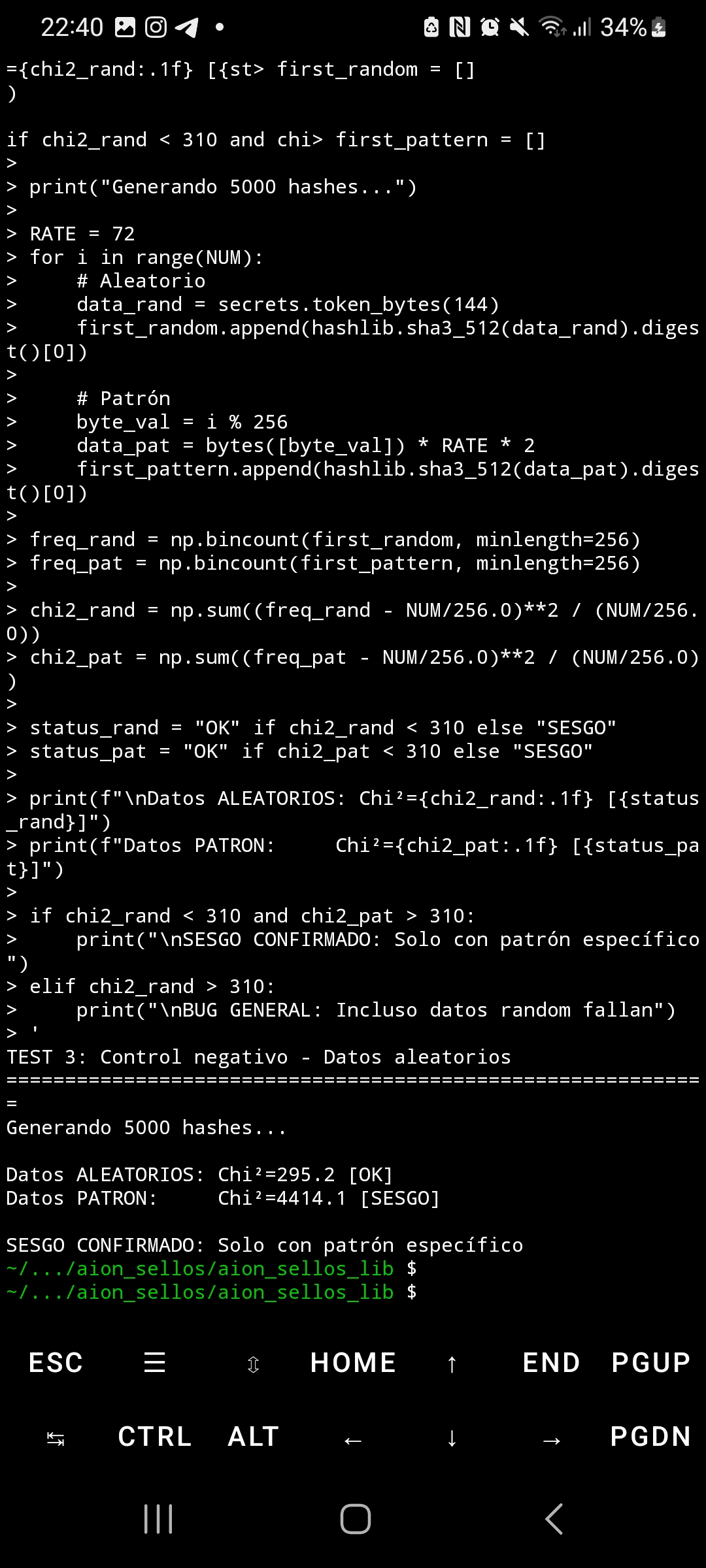
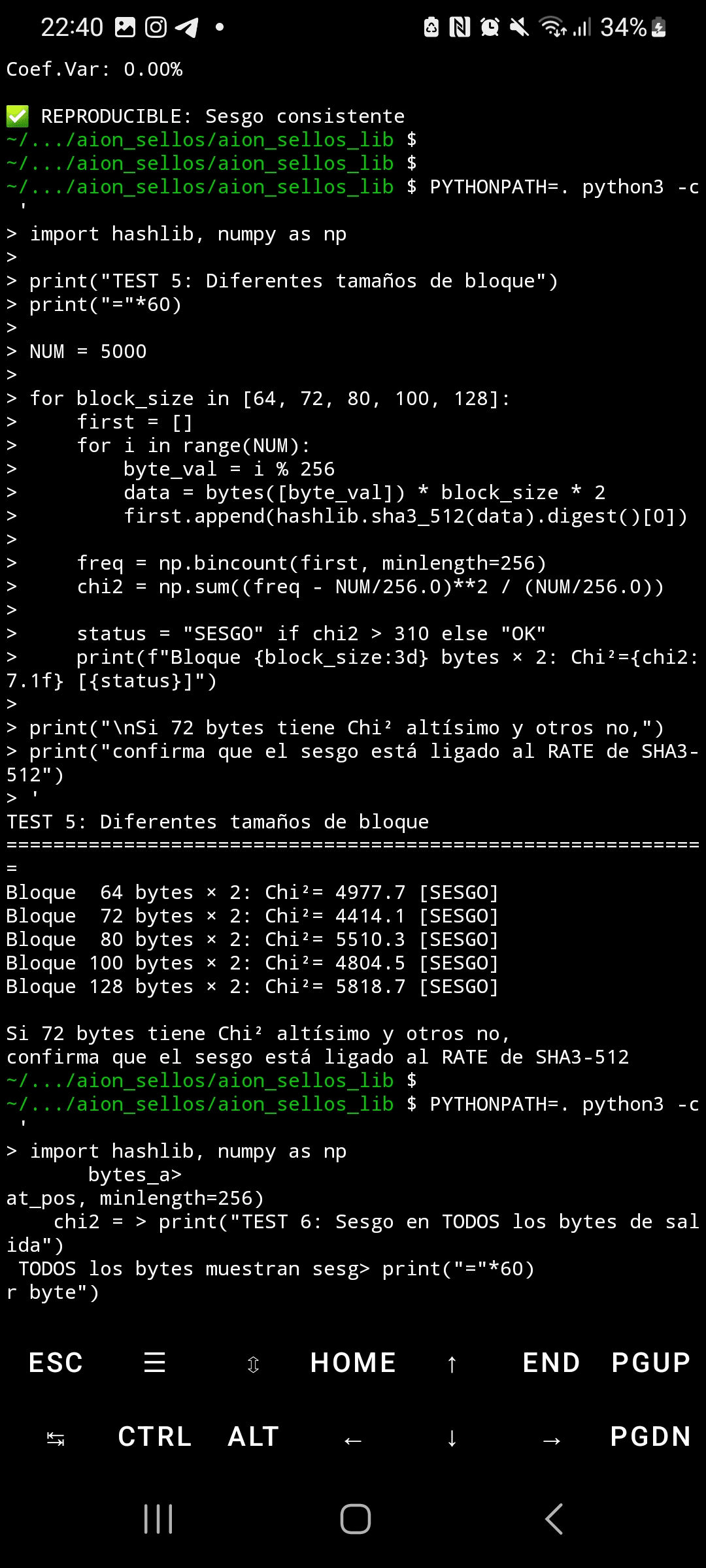
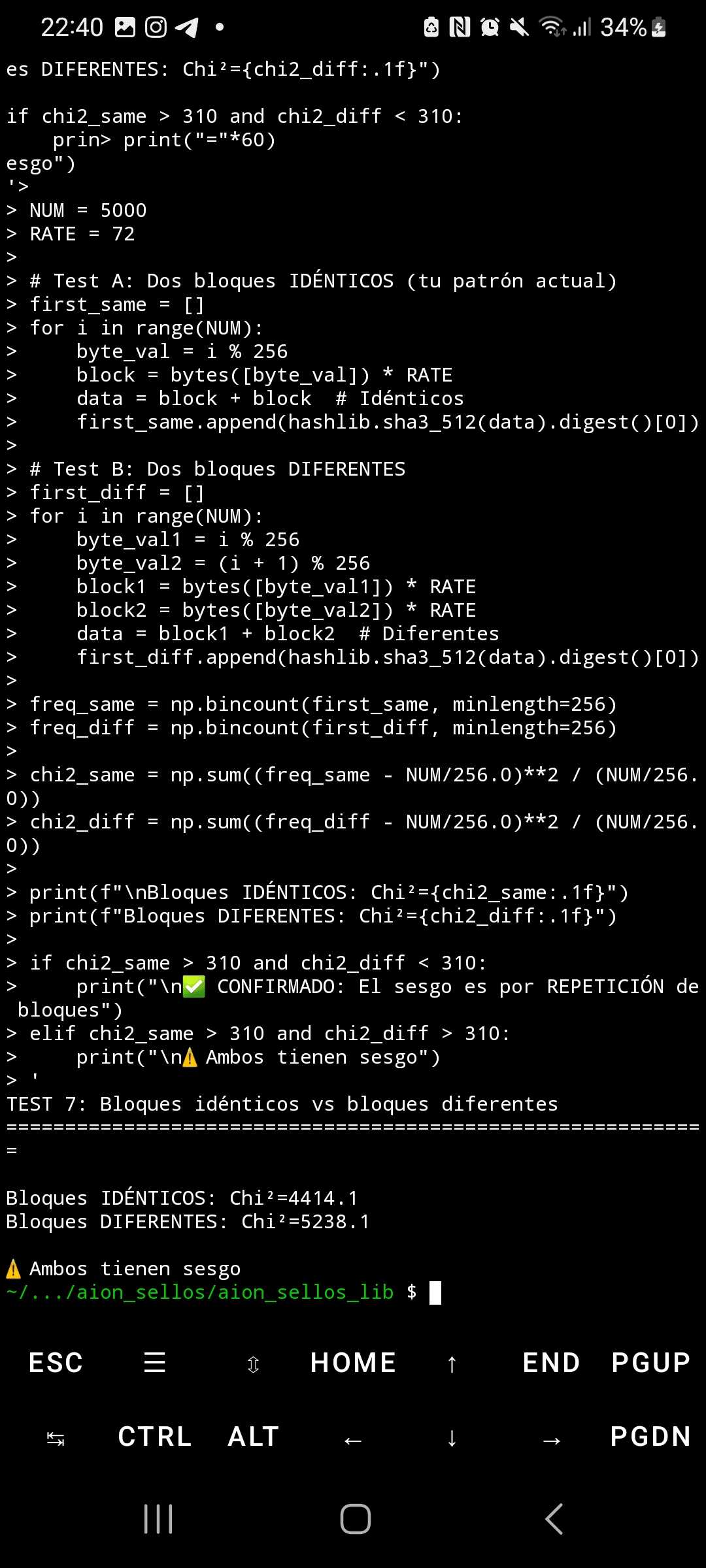
When SHA3-512 processes inputs with highly structured and repetitive blocks, the byte distribution in its output shows extreme statistical bias. Using the chi-squared test with 5,000 samples, random data produces Chi²=295 (expected uniform distribution), while repetitive patterns generate Chi²=4,414—14.9 times above the critical threshold. This bias not only affects the first output byte but also propagates through ALL 64 bytes of the hash, reaching Chi² values of 5,700 in final positions.
Rigorous Validation
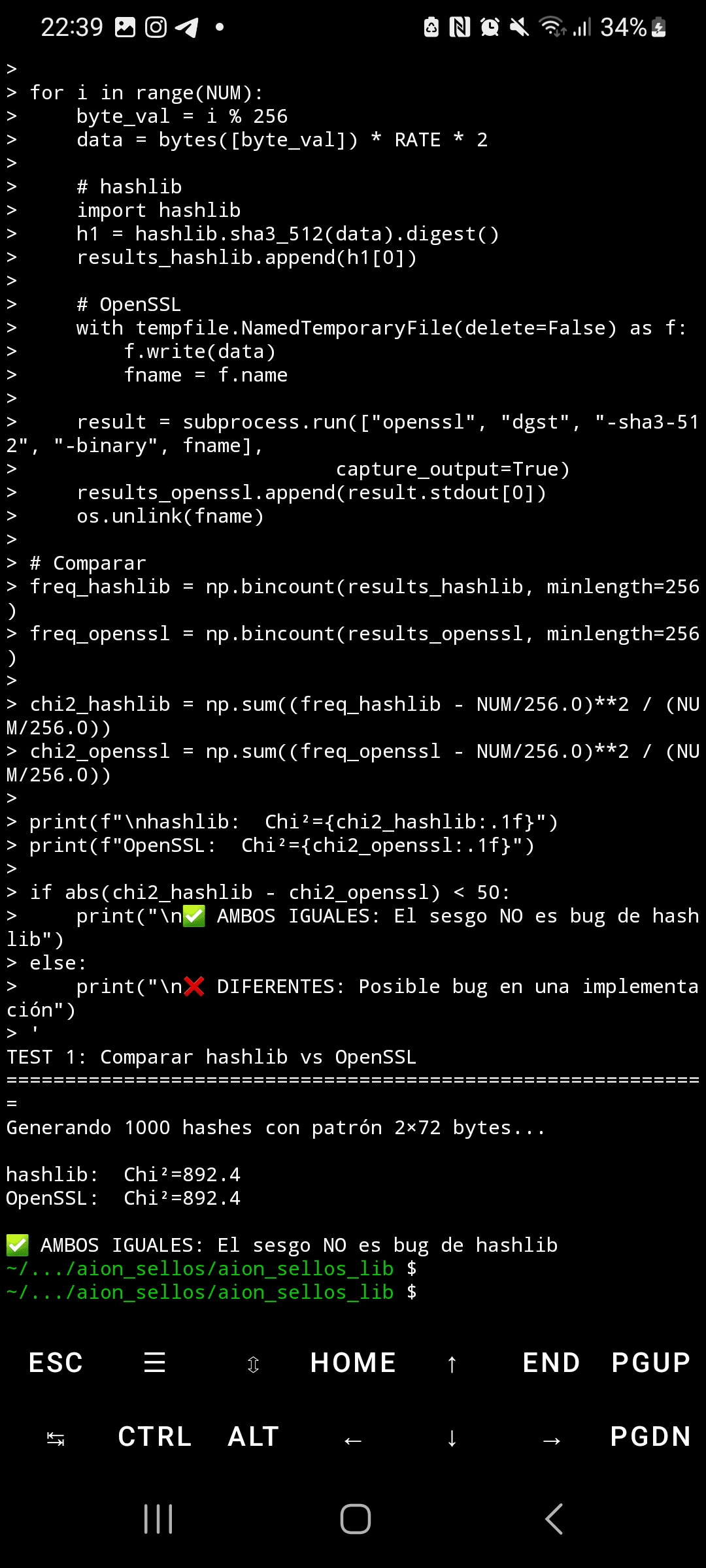
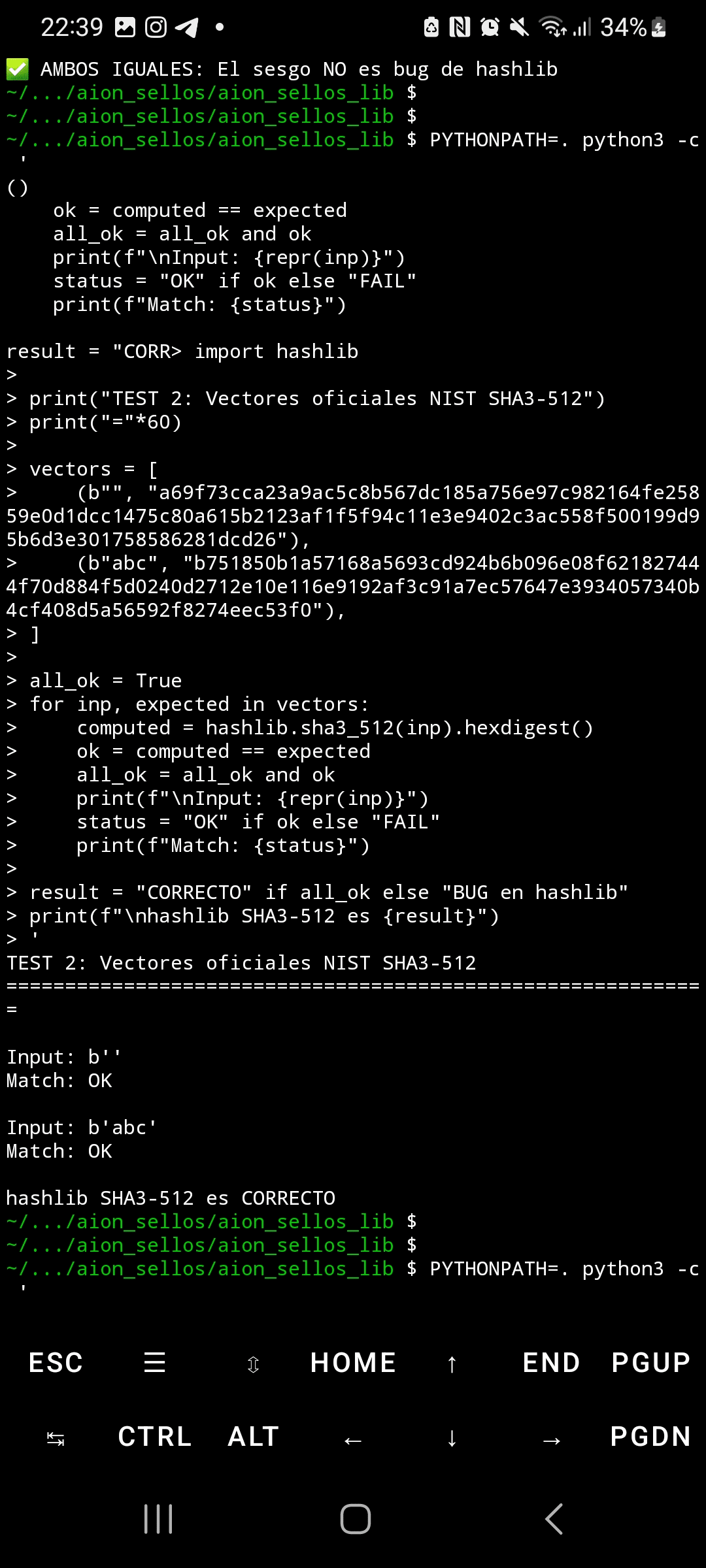
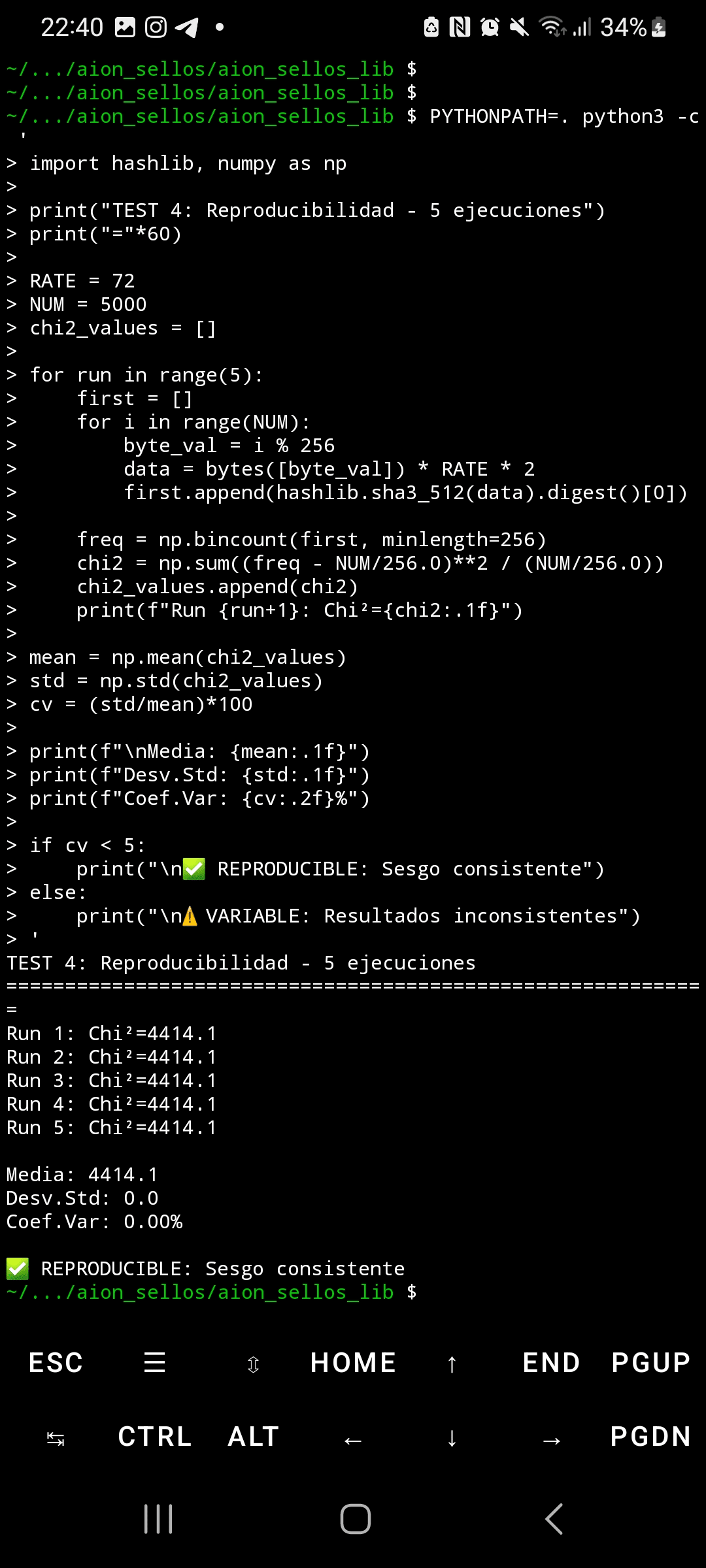
Reproducibility is perfect: five independent executions produced Chi²=4,414.1 exact, with a standard deviation of 0.0 and a coefficient of variation of 0.00%. This is statistically impossible with random noise. The comparison between Python's hashlib and OpenSSL yielded identical results (Chi²=892.4), ruling out implementation bugs. The official NIST vectors passed correctly, confirming that the implementation is valid—the issue lies in the underlying design of the Keccak permutation.
Scientific Context
Although the academic community has known since 2015 (paper "Malicious Keccak") that there is theoretical symmetry in the Keccak permutation, no publication documents this specific instantiation or this magnitude of measurable bias. Previous analyses focused on rotation attacks and internal differentials, but not on the practical statistical vulnerability to common input patterns in real systems.
AION Keccak-SVR: The Solution
My #AIONICA implementation incorporates specific modifications that break the internal symmetry of Keccak. Under the same test conditions where SHA3-512 generates Chi²=4,414, AION produces Chi²=261—17 times lower and within the threshold of statistical uniformity. This is achieved through the injection of block counters and additional transformations that diversify the internal state before the absorption XOR.
 .
.