

Every technological shift has an awkward middle phase where the old metrics stop working, but the new ones aren’t yet obvious. This is usually where the most important infrastructure gets ignored.
Vanar Chain sits squarely in that phase.
In crypto, progress is still measured using familiar signals: throughput numbers, announcement frequency, visible partnerships, and short-term narrative alignment. These metrics made sense when blockchains were primarily financial rails. They make far less sense when infrastructure is being built for autonomous systems, continuous interaction, and long-lived applications.
Vanar doesn’t compete aggressively on those visible axes — and that’s not accidental.
AI-first infrastructure is inherently difficult to showcase early. Its value does not appear in single benchmarks or isolated demos. It appears when systems run uninterrupted for long periods, when behavior remains consistent under unpredictable conditions, and when developers stop worrying about edge cases because the foundation absorbs them quietly.
Those qualities don’t trend well on social feeds.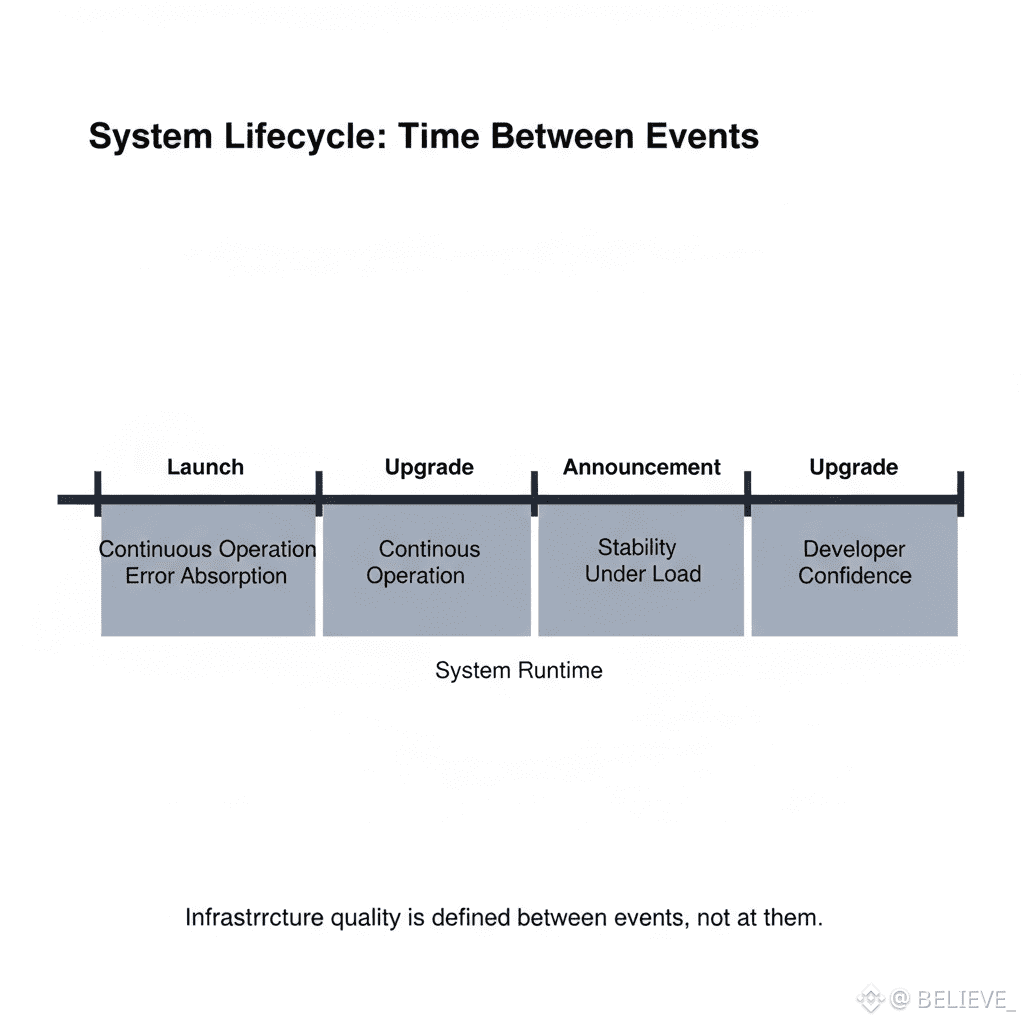
Most chains optimize for moments: launches, upgrades, milestones. Vanar appears optimized for intervals — what happens between announcements, between upgrades, between attention cycles. That design philosophy changes where effort is spent. Instead of maximizing surface-level activity, resources are directed toward removing failure modes that only show up later.
This is why AI-first infrastructure often looks understated. There are fewer dramatic claims to make because the real work happens beneath the interface. Coherence, stability, and execution discipline are hard to market precisely because they are felt only when absent.
Vanar’s restraint also reflects an understanding of how markets misprice readiness. Early markets reward optionality and novelty. Mature systems reward dependability. The gap between those two reward systems creates opportunity — but only for infrastructure built with patience.
Another reason Vanar appears quiet is that it doesn’t rely heavily on forward promises. Many projects communicate in future tense: what they will enable, what they plan to support, what is coming soon. Vanar communicates largely in present tense. The emphasis is on what exists, what runs, and what holds up under use.
That choice reduces narrative flexibility but increases credibility with builders who evaluate platforms not by aspiration, but by friction. Developers do not ask whether a chain will eventually stabilize. They ask whether it already has.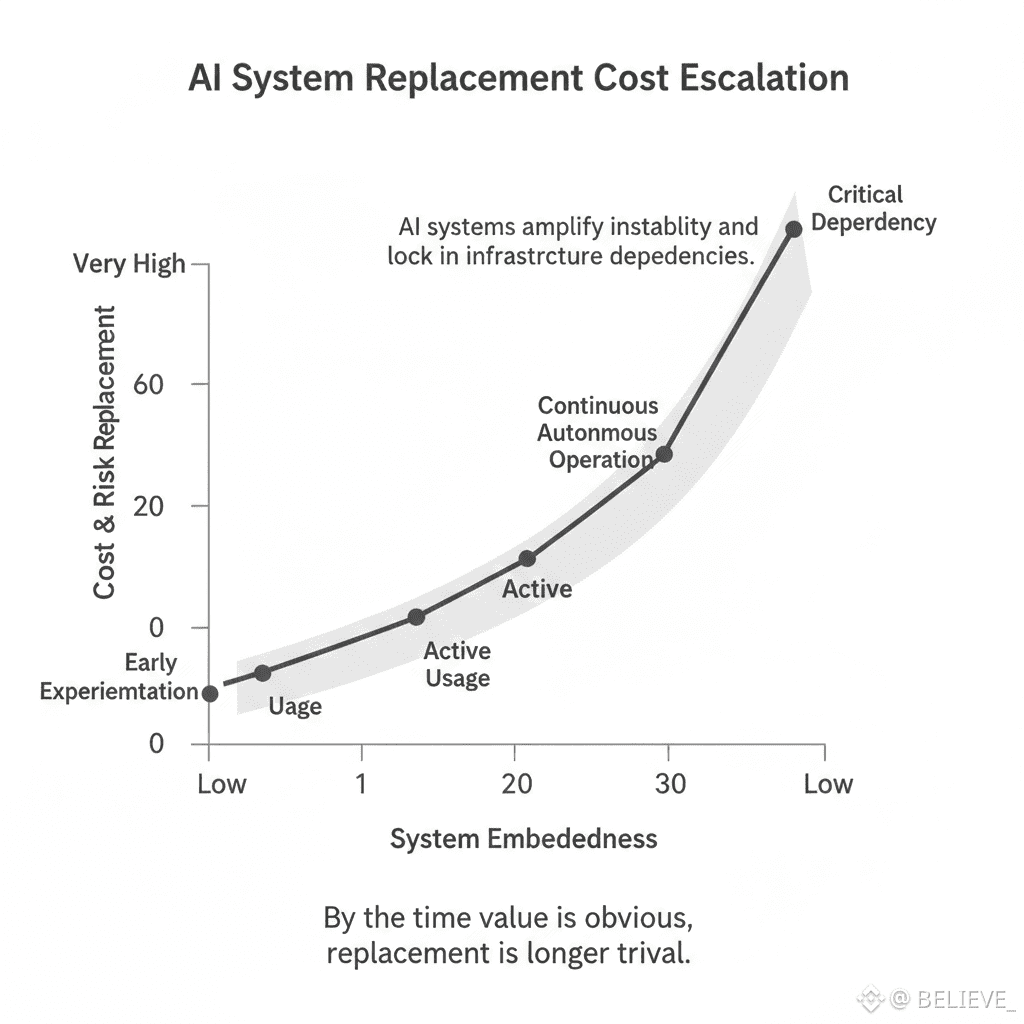
There’s also a deeper reason Vanar resists surface-level optimization: AI systems magnify instability. Human users adapt to imperfect systems. They retry transactions. They wait. They forgive small inconsistencies. Autonomous systems do none of these things. They amplify errors, repeat flawed logic, and propagate mistakes rapidly if the environment allows it.
Infrastructure designed for AI must therefore prioritize constraint and consistency over speed and spectacle. This often produces a paradox: the more carefully a system is designed, the less exciting it looks early on.
Vanar seems willing to accept that tradeoff.
This willingness extends to how the ecosystem grows. Instead of chasing breadth across every possible vertical, Vanar concentrates on environments that naturally stress infrastructure: persistent digital worlds, consumer-facing platforms, and systems where uptime and continuity are assumed rather than celebrated.
These environments act as filters. Infrastructure that survives there tends to generalize well elsewhere. Infrastructure that fails there fails quickly and visibly. Vanar’s focus suggests confidence not in marketing reach, but in architectural resilience.
From an economic perspective, this also influences how value accrues. Infrastructure that is mispriced early often compounds quietly. Usage grows before attention does. By the time the market recognizes the value, replacement costs are high. Switching infrastructure once systems are embedded is expensive, risky, and rarely justified.
This is how foundational layers become entrenched.
Vanar’s design choices — restraint in change, caution in claims, and discipline in execution — point toward this long-term positioning. It is not trying to be the most talked-about chain in every cycle. It is positioning itself to be the chain that does not need to be replaced when cycles end.
That approach frustrates short-term observers. It also protects long-term builders.
In many ways, Vanar reflects a broader maturation in Web3 thinking. As blockchain infrastructure moves closer to real-world usage, the industry’s tolerance for instability decreases. Systems that once survived on novelty alone are now expected to behave like utilities.
Utilities are not exciting.
They are reliable.
Vanar’s understated profile should be read in that context. Not as a lack of ambition, but as a signal of where ambition is being placed. The goal is not to impress quickly, but to endure quietly.
AI-first infrastructure does not announce its value.
It reveals it over time.
And by the time that value becomes obvious, the cost of ignoring it is usually far higher than the cost of having paid attention early.
That is the position Vanar appears to be building toward — not at the center of attention, but at the center of dependence.
