
@Dusk Some creations are not designed to be showcased. They don’t shine in presentations or circulate on social feeds. Their purpose is to carry weight quietly, to stay dependable while daily life moves forward without notice of the precision underneath. This type of infrastructure operates out of view, and creating it demands a way of thinking that runs counter to a culture fixated on speed and attention.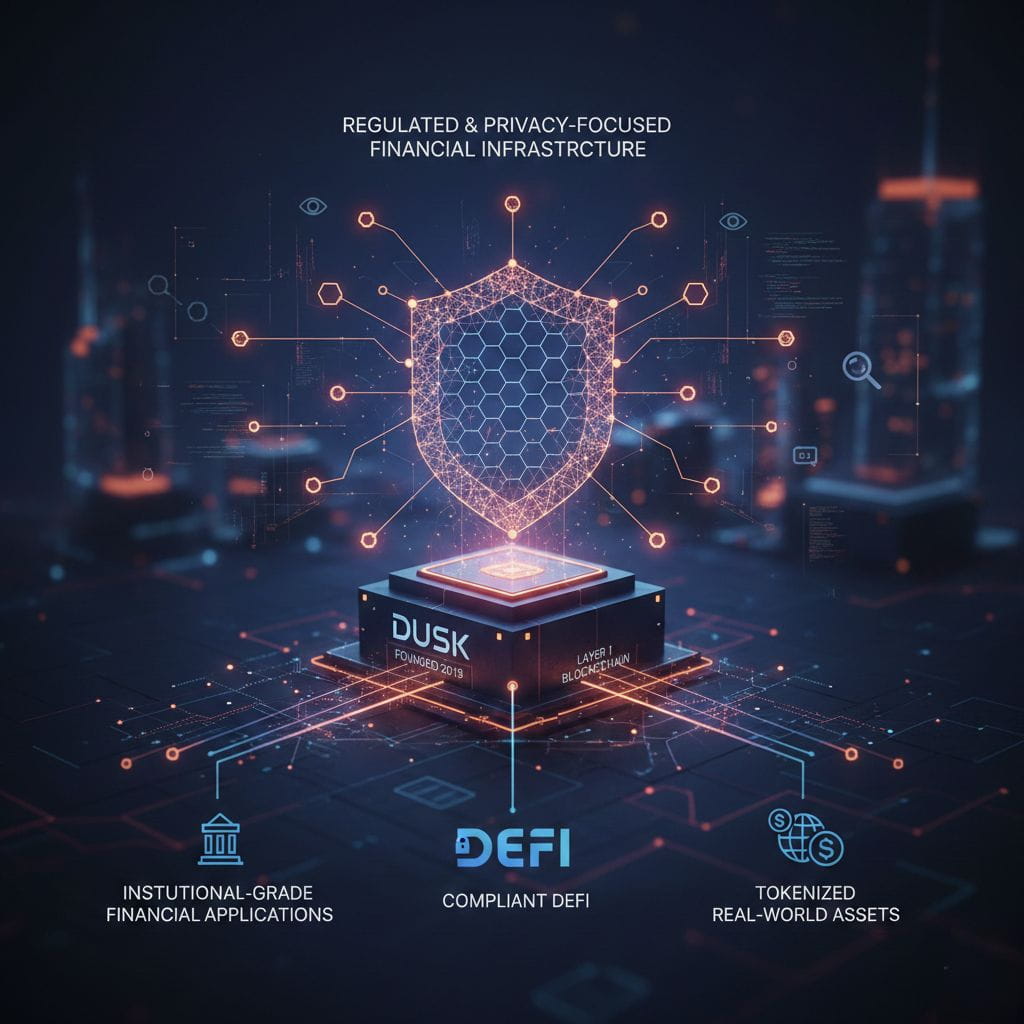
Choosing to work with finance, identity, or sensitive information comes with an unspoken responsibility. What flows through these systems has real value, and mistakes have real consequences. The moment someone entrusts you with something irreplaceable, responsibility becomes concrete. Progress is no longer about rapid releases, but about long-term dependability—whether the system will still hold up tomorrow, next year, and far into the future.
Trust starts with discipline. Privacy is not an optional enhancement added later; it is a line drawn from the very beginning. The most considerate systems minimize what they collect, disclose only what is required, and operate under the assumption that any stored data may eventually face scrutiny, misuse, or attack. Auditability is not the same as exposure—it is about proving correctness without compromising people. Designing for that balance takes intention, patience, and a willingness to accept complexity in exchange for care.
In this setting, decentralization is not a slogan. It is a practical acknowledgment that concentrated control magnifies risk. When authority accumulates in one place, failure becomes devastating and confidence erodes. Distributing responsibility across systems, validators, governance structures, and individuals reduces the likelihood that a single error or actor can unravel everything. This approach introduces friction, but that friction is deliberate. It slows change to protect users from abrupt decisions they never agreed to and could not foresee.
The teams behind invisible infrastructure often reflect the nature of what they build. They prize patience over showmanship and curiosity over certainty. Assumptions are provisional, always open to challenge. Documentation exists not to impress, but to preserve understanding—for future teammates and for moments when pressure distorts memory. Mistakes are neither concealed nor sensationalized; they are studied calmly, with the recognition that planning for failure is part of respecting those who depend on the system.
Much of this effort unfolds asynchronously, across time zones and working styles, in written discussions and detailed design documents rather than constant meetings. That separation forces clarity. Without the crutch of real-time conversation, ideas must be explained fully and honestly. Future readers are taken seriously. As a result, responsibility becomes shared, and the system no longer hinges on any single person.
Ethics here are not abstract statements. They live in defaults, safeguards, and edge cases. They appear in decisions to prioritize safety over convenience, to reject shortcuts that inflate metrics while weakening resilience, and to consider who might be harmed—even if the risk seems remote. These choices rarely attract notice, but together they create systems that feel trustworthy because they consistently act as though someone’s well-being matters.
Trust builds slowly. It emerges through consistency: updates that don’t disrupt, incidents handled openly, improvements made without theatrics. Confidence grows not because it is demanded, but because it is earned over time.
This kind of infrastructure is shaped by a long view. It accepts that some advances cannot be rushed and that endurance itself is innovative. It favors depth over reach, understanding over optimism, and care over cleverness. The payoff is not recognition, but something more enduring: knowing that when the system is needed most, it will be there—quietly working, asking nothing in return.
@Dusk This is the work that remains behind the curtain. Intentionally slow, necessarily modest, and powerful precisely because it does not demand to be seen.
