
Blockchain technology has completely changed the way people think about trust and transactions because it allows agreements to exist without relying on banks lawyers or other middlemen and smart contracts make this possible by running automatically according to code and rules defined by humans rather than intermediaries and they create transparency and fairness while removing friction and cost for millions of users around the world
Smart contracts are powerful tools but as more people started using early blockchain platforms it became clear that scalability issues high transaction fees and slow confirmation times were holding back adoption and users often experienced delays frustration and uncertainty which made them lose confidence in the network and prevented wider usage and growth in real world applications
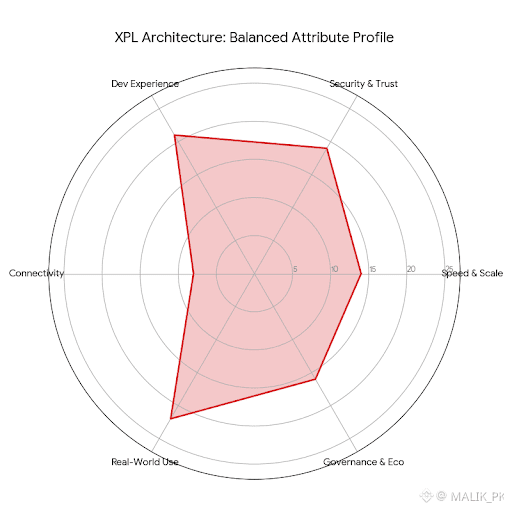
XPL was created to address these challenges and it focuses on providing a blockchain environment that is reliable practical and easy to use for developers and end users alike and it was built from the ground up to balance speed security flexibility and usability while avoiding the hype driven approaches that have limited other platforms in the past and its goal is to create a foundation for the next generation of decentralized applications
The architecture of XPL is modular and performance oriented which allows the network to separate execution consensus and data layers so each component can evolve independently and developers are not restricted to a single execution environment and this means they can write smart contracts in multiple programming languages while maintaining compatibility and security and this flexibility lowers barriers to entry and encourages broader participation from diverse developer communities
Network performance is a central focus for XPL and it uses parallel transaction processing and intelligent scheduling to allow multiple smart contracts to run simultaneously without conflicts and this reduces bottlenecks and increases throughput while predictive gas optimization ensures that transaction costs remain stable and predictable even during periods of high activity so that users and developers can interact with the system confidently and without fear of unexpected fees or delays
Security is built into every layer of XPL and formal verification tools allow developers to mathematically prove that smart contracts will function as intended before they are deployed and contracts run in sandboxed environments that limit the impact of potential exploits and automated monitoring and anomaly detection further strengthen resilience so that user funds data and trust are protected while minimizing human error and reducing reliance on post deployment audits
XPL also prioritizes interoperability and cross chain integration so that smart contracts can communicate with assets data and services on other blockchain networks without relying on fragile centralized bridges and this capability is critical for decentralized finance gaming metaverse and identity systems where users and assets are often spread across multiple networks and it helps create a more unified and accessible decentralized ecosystem that works seamlessly across platforms
The platform provides a developer centric ecosystem with integrated testing tools debugging frameworks deployment pipelines and modular contract libraries that simplify creation and reduce friction so teams can focus on innovation instead of infrastructure and on chain governance mechanisms allow developers and stakeholders to propose vote and implement upgrades ensuring that the network evolves according to community needs rather than centralized decisions which strengthens trust and participation over time
Real world adoption is a key priority for XPL and it supports applications across finance supply chains digital identity and gaming by enabling automated lending insurance and asset management with transparency and efficiency and by verifying product authenticity tracking goods and providing self sovereign identity frameworks and supporting real time asset ownership in metaverse and gaming environments so that blockchain technology moves beyond experimentation and delivers practical scalable solutions that benefit users directly
XPL is also mindful of sustainability and network efficiency and it uses an energy efficient consensus model that reduces redundant computation optimizes validator participation and lowers the carbon footprint while maintaining security decentralization and performance which makes it attractive to enterprises regulators and long term partners that are concerned about environmental impact and want to work with responsible technology providers
Despite its strengths XPL faces challenges like building network effects attracting developers competing with established platforms and adapting to evolving regulatory landscapes and it addresses these with strategic partnerships governance frameworks and continuous innovation and the roadmap includes advanced privacy features AI assisted contract auditing and expanded cross chain infrastructure which will further enhance usability security and scalability over time
In conclusion XPL represents a meaningful evolution in smart contract technology by combining high performance execution strong security foundations interoperability and developer friendly tools it addresses the limitations of older blockchain platforms and focuses on real world utility and long term value and it reflects a shift in the blockchain industry from experimental hype driven systems to reliable digital infrastructure that can support global finance commerce and identity and if it continues to innovate while maintaining community trust it is likely to become one of the key pillars of the next generation of smart contracts

