
After analyzing why institutions still hesitate to deploy capital on-chain. I realized the issue was never blockchain itself but how it was designed. When I analyzed the last five years of blockchain adoption among financial institutions one contradiction stood out clearly. Banks, asset managers and regulated funds actively explore blockchain technology yet they rarely commit meaningful volume to public DeFi models. My research showed this hesitation has little to do with speed, fees or scalability and everything to do with compliance, confidentiality and accountability. Dusk Foundation was created around that exact realization. Founded in 2018 Dusk is a layer 1 blockchain built specifically for regulated and privacy focused financial infrastructure. Instead of treating regulation as an external constraint. Dusk embeds compliance, selective privacy and auditability directly into its core architecture. In my assessment this design philosophy places Dusk in a different category than most layer one networks. While many chains optimize for openness and composability Dusk optimizes for financial realism. That distinction is becoming increasingly relevant as institutional participation moves from experimentation toward deployment.
Why regulated finance needs a different blockchain model?
Traditional finance is built on controlled transparency rather than radical openness. Institutions are required to disclose information to regulators, auditors and counterparties but not to the entire market. When public blockchains made all transaction data universally visible. They unintentionally created friction for regulated capital. According to a 2024 report by the Bank for International Settlements more than 90 percent of central banks now consider privacy preserving auditability a core requirement for digital financial infrastructure. This data point alone explains why fully transparent ledgers struggle to host real financial activity at scale. Dusk approaches this problem using zero knowledge cryptography and selective disclosure mechanisms. Here is how I usually describe it is imagine you have got a locked box full of financial documents. You can prove the box is legit and has not been tampered with but you don't have to show anyone what's inside. Institutions can prove compliance without exposing sensitive positions or strategies.
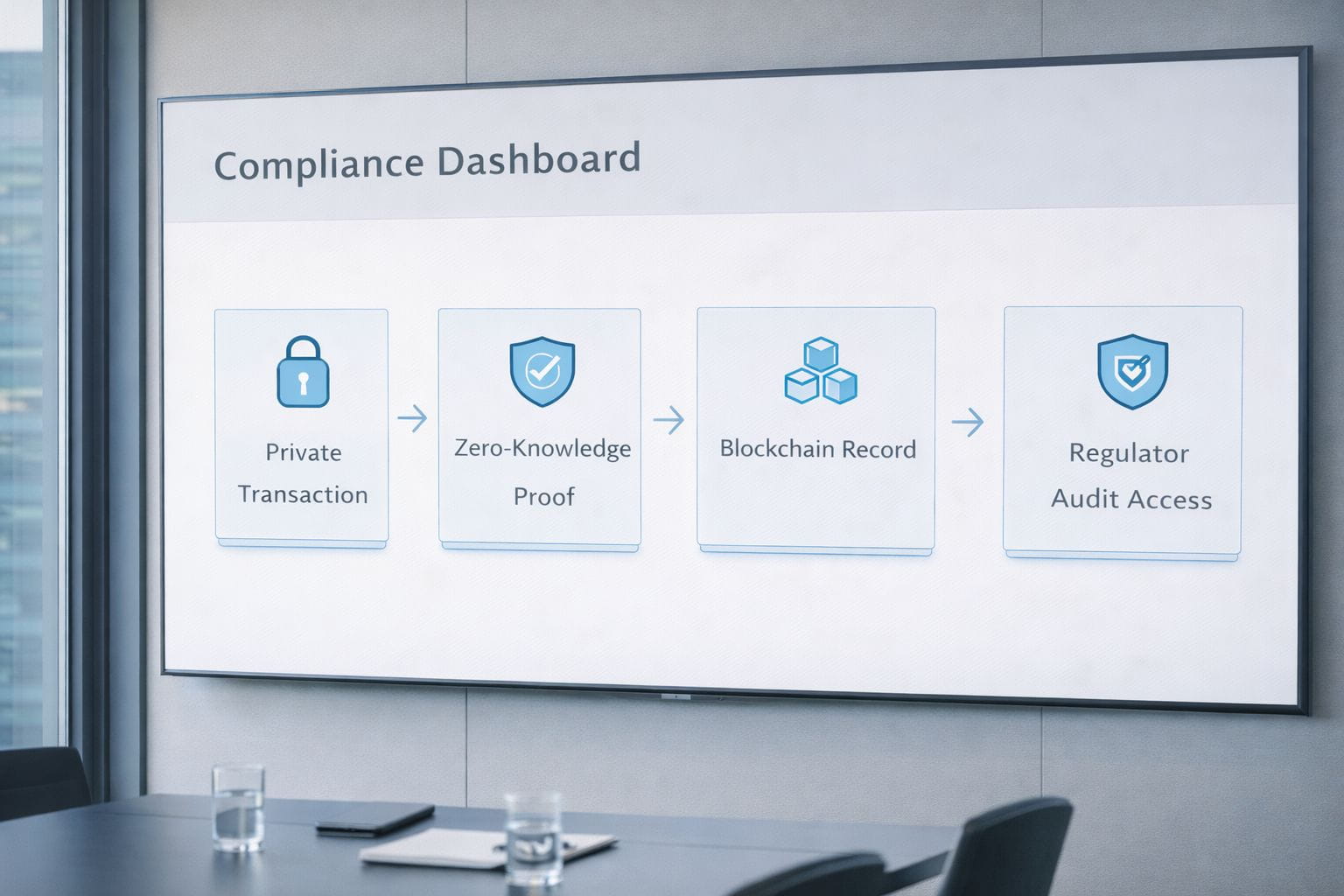
The importance of this approach is reinforced by regulatory trends. The European Securities and Markets Authority keeps stressing that tokenized securities need to stay private but still be open to audits. Dusk's design follows this idea pretty closely especially when you look at how things work under European regulations.
Institutional DeFi and tokenized assets in practice
One of the most compelling use cases for Dusk lies in tokenized real world assets. I have spent a lot of time digging into tokenization and honestly people are excited but not exactly rushing in. A 2023 report from Boston Consulting Group says tokenized assets could hit $16 trillion by 2030. That's a huge number but only if we actually tackle the big regulatory and operational challenges standing in the way. Public DeFi platforms often fail this test. Asset issuers cannot place sensitive ownership data settlement details or investor information on a fully transparent chain. That's where Dusk comes in. It lets assets live on-chain while keeping privacy controls that feel familiar to anyone used to traditional finance. This is where Dusk's modular design really matters. By splitting up execution, privacy and compliance institutions get to use blockchain tech without tearing apart their existing governance. Honestly this kind of flexibility matches how real financial systems grow and change it's not just some idealized vision from the crypto world. A 2024 Deloitte report says building digital asset infrastructure the right way could cut settlement and reconciliation costs by as much as 40 percent but those savings only happen if everyone sticks to the rules. That's where Dusk comes in right where efficiency meets compliance. Let's talk about how Dusk stacks up against other privacy focused networks. People tend to lump all privacy blockchains together but when you dig in. They are after different things. Aleo is all about private computation for developers. Aztec builds privacy rollups for Ethereum users. Secret Network? It encrypts smart contract states at the validator level. Dusk takes a different path. It's built specifically for regulated finance. Privacy here is not about keeping everything secret. It's about keeping transactions confidential while still letting people audit them when it matters. This is a big deal for institutions. They have to prove they are following the rules but they really don't want to give away all their private information. The World Economic Forum summed this up perfectly in a 2023 paper on institutional DeFi. They said regulated on-chain markets need a kind of transparency you can turn on or off selective transparency. Systems that are totally private or totally public just don't cut it. Dusk's approach sits in the middle where institutions are most comfortable operating.
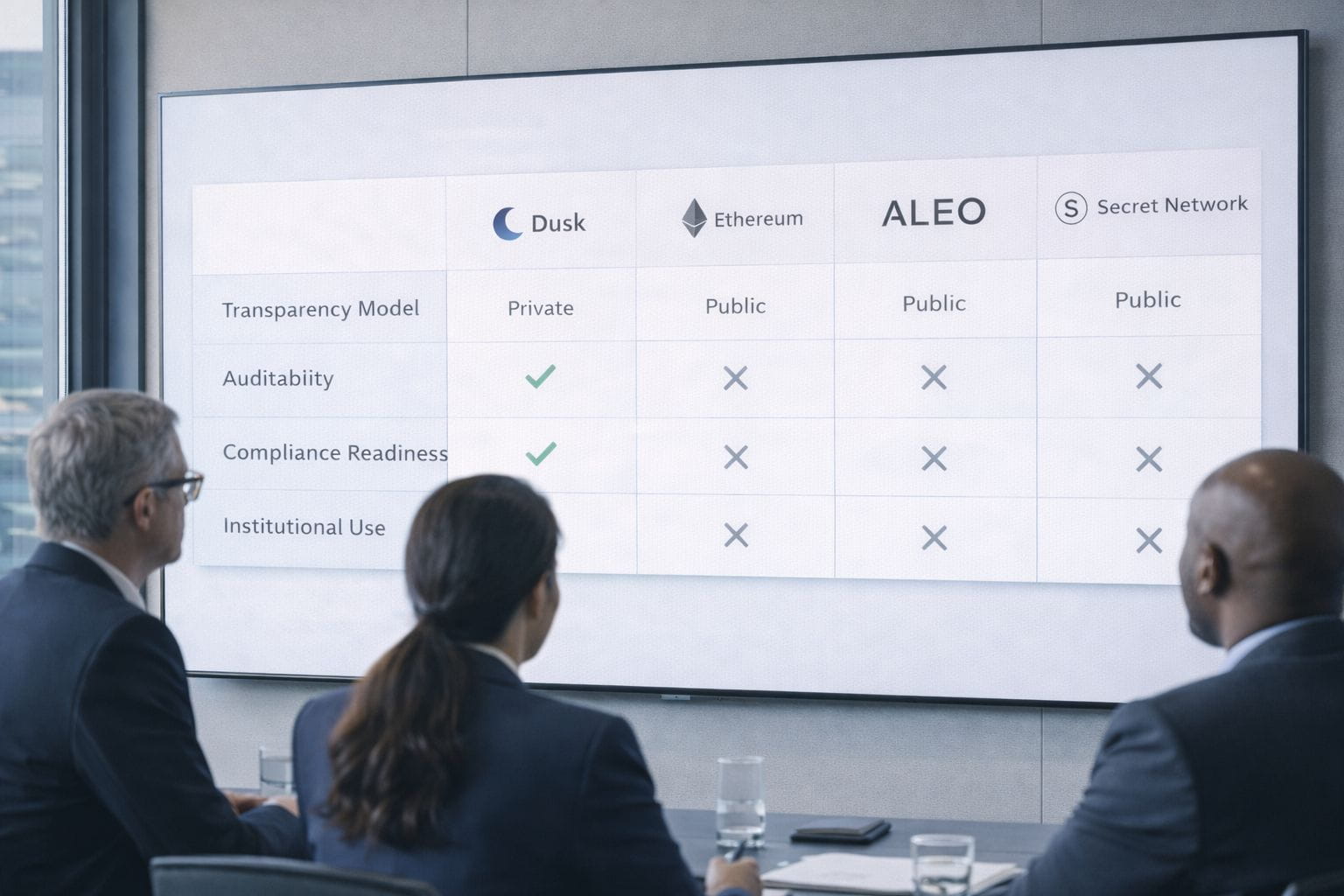
In my assessment this positioning does not put Dusk in direct competition with general purpose layer ones. Instead Dusk sets up a parallel infrastructure layer built just for financial institutions and apps that need to follow the rules. Let's be real there is always some uncertainty here. The biggest challenge for Dusk is how fast people actually start using it. Big institutions don't move quickly and compliance focused infrastructure almost never catches fire overnight. There is also the ecosystem question. Developers usually flock to blockchains with big retail crowds so Dusk's focus on institutions might slow down community driven projects but from what I have seen institutional networks don't grow like grassroots ones. They rely more on partnerships than on random experimentation. Regulation is another wild card. Dusk fits nicely with European compliance rules but global standards are still a moving target. If regulators shift priorities that could push back adoption even if the tech itself is solid.
Visuals that would strengthen understanding
To make this all clearer. I would throw in a chart comparing how Dusk, Ethereum, Aleo and Secret Network handle transparency and disclosure zeroing in on privacy and auditability not just speed. Another chart would show where tokenized assets might go from here matched up with how ready regulators are using data from BIS and BCG. I would also lay out a table that compares blockchains by compliance support, disclosure controls and who they are actually built for. It would show pretty quickly why Dusk stands out among layer ones.
My Final thoughts
After looking closely at how institutions are adopting blockchain one thing is obvious is the future of on-chain finance is not about being completely transparent or totally private. It's about finding a real balance between keeping information confidential and staying accountable. That's exactly what Dusk is going for. When you treat regulation as a design feature not just a box to check you build for real financial markets not just for hype and speculation. In a world where so many projects chase the next big thing. Dusk's long term steady approach might turn out to be its biggest strength.
