

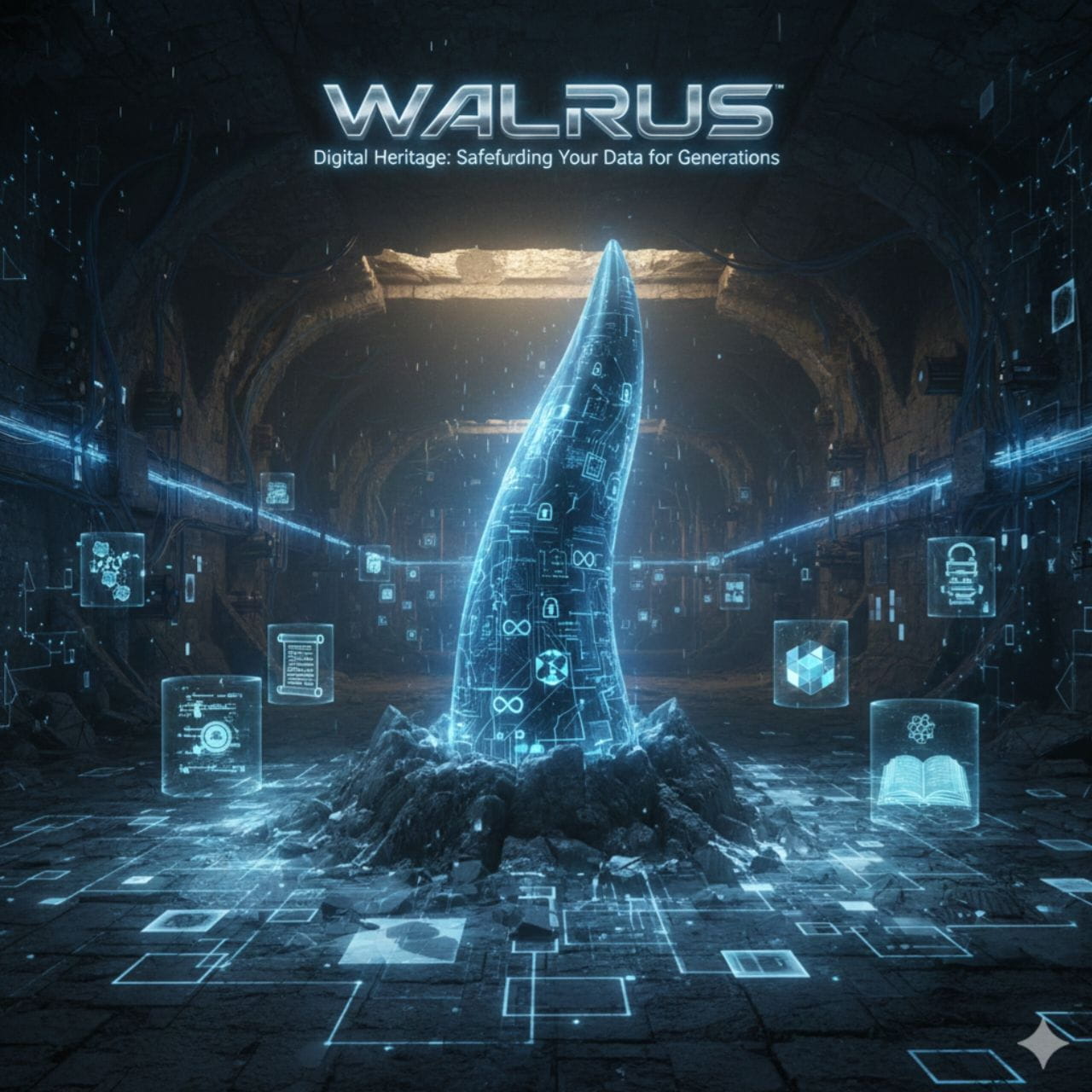
Preserving Digital Memory in a Forgetful Age
Let’s face it—digital information is more vulnerable than we often realize. Websites can vanish without warning, beloved apps and platforms go defunct, and file formats you trusted today may become unreadable tomorrow. Despite living more of our lives online than ever before, the digital traces we leave behind are at constant risk: one change in the tech landscape, and entire histories can disappear. The digital world is fast-moving, but the ways we store and protect our data haven’t evolved to guarantee its survival.
Walrus was created to address this gap—to act as a digital time capsule, ensuring your data endures not just for years but for decades and even centuries. Walrus approaches your files as digital heritage, deserving of the same care and permanence as a family heirloom or a national archive. In a world where “forever” online often means just a few years, Walrus aims to make true digital permanence possible.
The Limits of Traditional Storage
Most people use familiar cloud storage services, believing their files are safe. But centralized storage has a major flaw: it relies entirely on the health and policies of a single company. Companies change hands, pivot strategies, or simply disappear. When they do, the data you entrusted to them can vanish as well. That’s inconvenient for personal photos, but devastating for legal documents, scientific research, or culturally significant materials. When the foundation is fragile, everything built atop it is at risk.
Walrus: A New Approach to Digital Longevity
Walrus fundamentally reimagines how data should be stored for the long term. Instead of relying on one provider, Walrus distributes your data across a decentralized network of independent nodes. This design means no single failure—no company collapse, no server outage, no policy change—can wipe out your records. Your data is protected not just from technical failures, but also from censorship, tampering, and silent deletion.
Think of Walrus as carving your data into digital bedrock. It’s not just saved—it’s protected against loss, alteration, and even the passage of time itself.
How Walrus Ensures Centuries-Long Data Survival
What sets Walrus apart is its commitment to three core principles:
Immutability: Once your data is recorded with Walrus, it’s locked in. Any attempt to alter or remove it will leave an undeniable trace. This creates a transparent, auditable record over time—essential for trust and accountability.
Redundancy: Your files aren’t just stored in one place—they’re replicated across a global network. If one node disappears, others take over. This dramatically reduces the risk of loss due to hardware failure, disaster, or even regional disruptions.
Verifiability: With Walrus, anyone can independently verify that your data is present and intact, without needing to trust a single company or authority. This trustless verification is key for archives, legal evidence, and anything that must stand up to scrutiny.
By combining these features, Walrus offers a platform not just for current convenience, but for true digital endurance. Your data is future-proofed—ready to survive shifts in technology, ownership, and even societal priorities.
Who Benefits Most from Walrus?
Walrus is more than a backup solution; it’s a foundation for digital history. It’s ideal for:
Legal and Regulatory Documents: Contracts, compliance records, and other critical files that must remain unaltered for years.
Cultural and Artistic Archives: Digital art, literature, music, and cultural artifacts that define communities and identities.
Blockchain and On-Chain Evidence: Crypto assets, transaction histories, and decentralized records that form the backbone of Web3.
Academic and Scientific Research: Datasets and publications that need to be reliably referenced by future generations.
Public Records and Government Archives: Civic information, historical documents, and records essential for transparency and democracy.
In every one of these cases, the loss or alteration of information could have lasting consequences—not just for individuals, but for entire societies.
The Urgency of Digital Preservation
As our lives and institutions become more entwined with digital systems, the stakes for data permanence rise. What we create, sign, and share online increasingly defines our culture, our legal systems, and our understanding of history. Losing digital heritage isn’t just an inconvenience—it’s erasing the collective memory of our era. Walrus is part of a new movement to ensure that digital memory is preserved and protected, not left to the whims of short-lived platforms or corporate priorities.
Planning for the Next Century
Whether you’re an artist, a lawyer, a researcher, or simply someone who cares about the future, the question is no longer whether to save your digital legacy, but how. Walrus empowers you to ensure your data remains available, intact, and outside the control of any single authority. It’s about building for the long term—so that what matters today is still accessible and trustworthy tomorrow, and for generations to come.
Questions You Might Have
What is the main purpose of Walrus?
Walrus is designed to store your data with maximum durability and integrity, using decentralized technology to keep it accessible and verifiable for the very long term.
Is Walrus only for blockchain or crypto projects?
Not at all. While Walrus is ideal for on-chain records, it’s equally valuable for legal documents, cultural works, academic research, and any digital material you want to preserve beyond your own lifetime.
Why does long-term storage matter more now than ever?
Because digital records are no longer just personal—they’re the foundations of our culture, our laws, and our collective memory. Ensuring their survival is essential for future generations to understand where we came from and how we lived.
Disclaimer: Not Financial Advice.

