

Confidential smart contracts are designed to execute on-chain logic without exposing sensitive data. While this concept addresses important privacy concerns it also introduces technical trade-offs that differ significantly from traditional transparent smart contracts. Understanding these trade-offs is essential when evaluating privacy-oriented blockchain architectures.
In public smart contract systems verification is straightforward because all inputs and state changes are visible. Confidential contracts replace this transparency with cryptographic proofs. Instead of checking data directly validators verify that a contract followed predefined rules without seeing the underlying information. This preserves confidentiality but increases reliance on proof systems making correctness and verification logic more critical to network security.
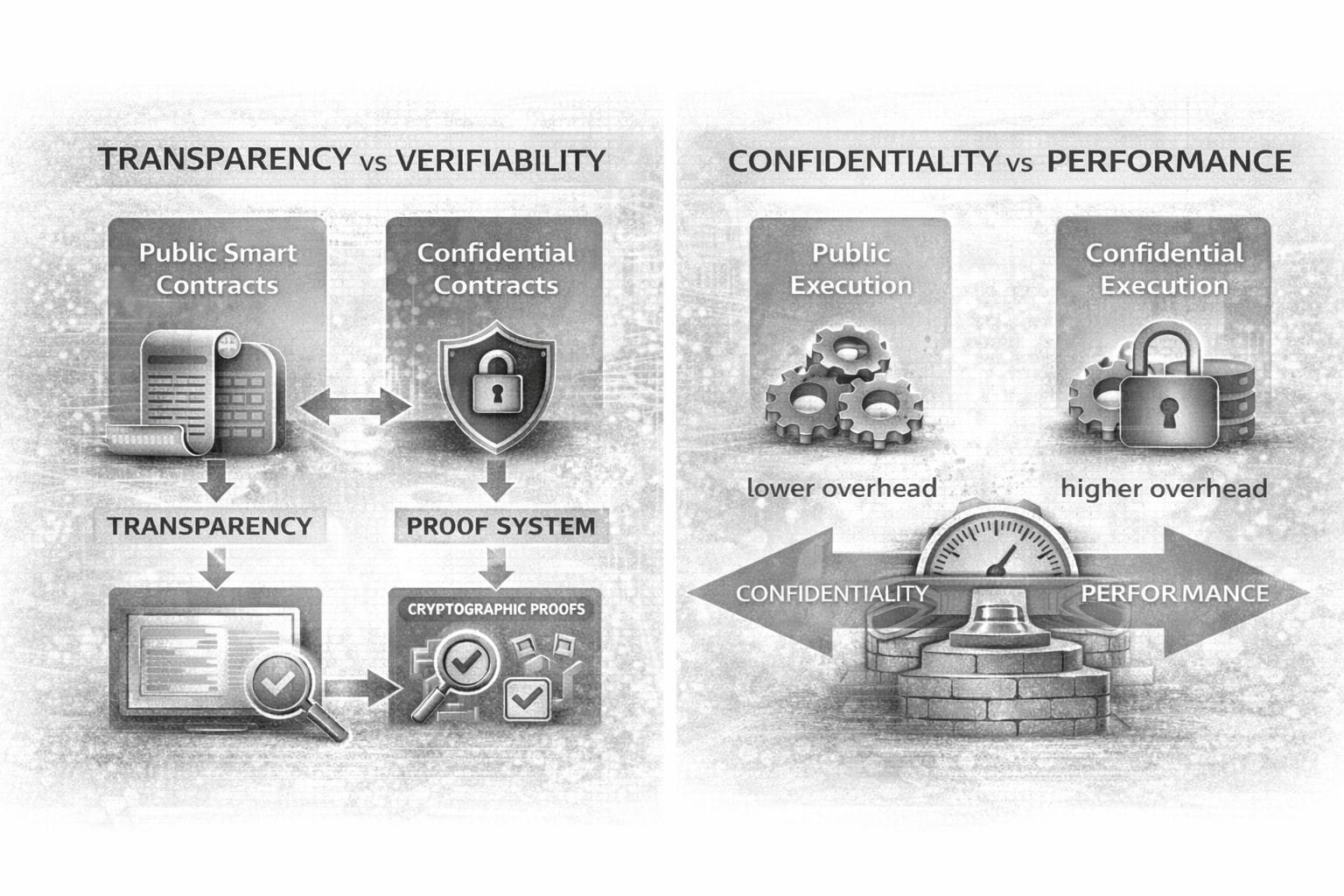
Performance is another area affected by confidentiality. Cryptographic operations required for private execution are computationally heavier than standard transaction processing. To manage this, Dusk separates private data handling from consensus verification. Validators focus on confirming outcomes rather than processing sensitive inputs. This approach limits the impact of privacy features on network consensus though it does not eliminate the added computational cost entirely.
Developer workflow also changes in confidential environments. Contract design must account for what can be proven rather than what can be observed. This shifts complexity from execution transparency to proof construction and validation logic. While users benefit from stronger privacy guarantees developers must adopt stricter design and testing practices to avoid logical errors.
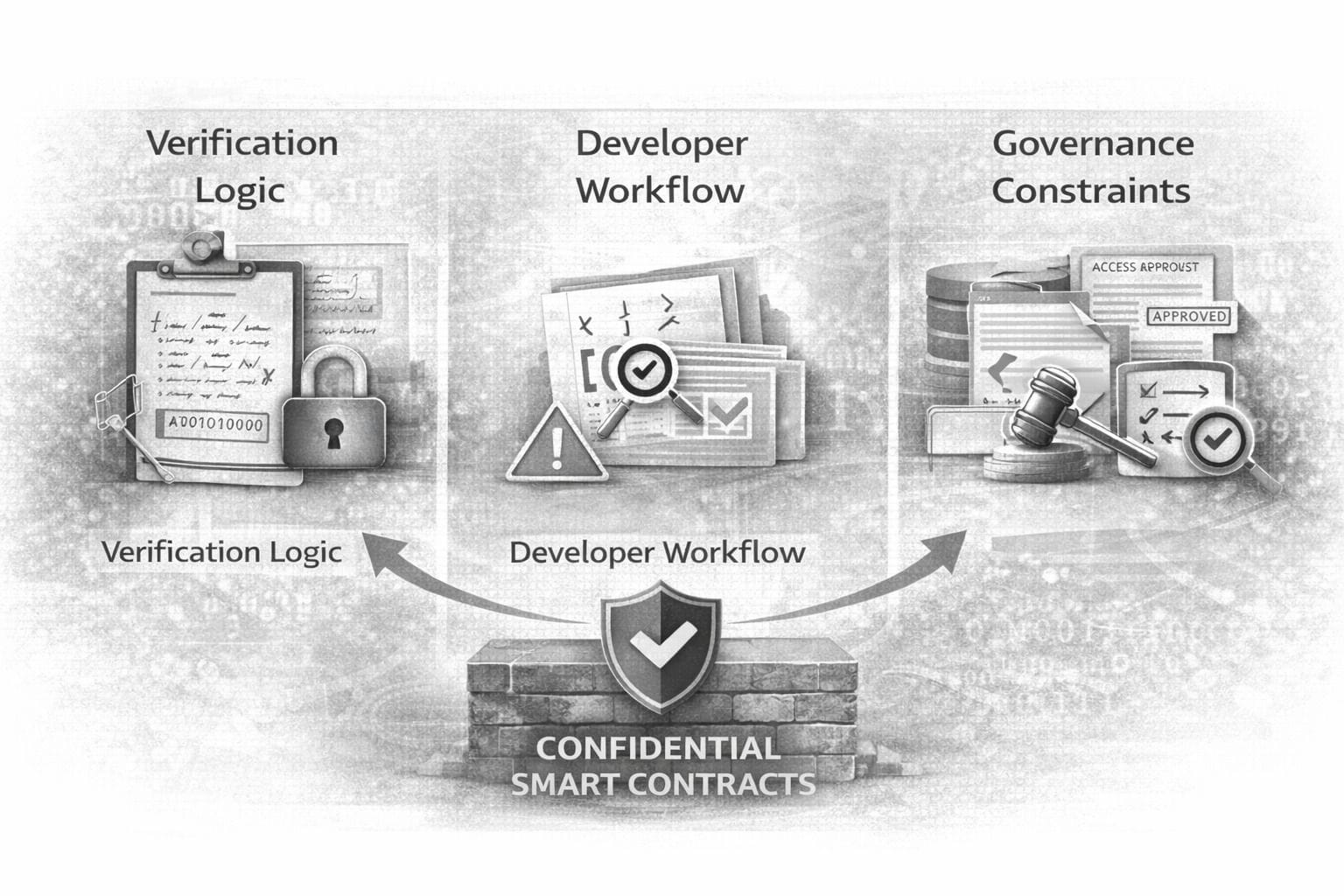
Finally, confidential smart contracts raise governance questions. Systems must define when and how proofs can be disclosed in cases such as audits or disputes. Dusk addresses this through selective disclosure allowing limited verification without full data exposure. This adds policy and access-control complexity but reflects real-world operational requirements.
Confidential smart contracts therefore represent a trade-off between privacy complexity and verifiability. Examining these constraints helps clarify how privacy-focused blockchains differ from fully transparent systems.
