

The dream of Web3 is a user-controlled internet, where data is not in the hands of centralized companies. But storing big data is still a challenge. The WAL token has come up with a solution to this problem. This token built on the Walrus Protocol has elevated blockchain technology to new heights.
Walrus Sui works on the blockchain, which provides high throughput due to the Move language and object-oriented model. Walrus stores "blobs" (large binary data) efficiently. It is better than solutions like IPFS or Arweave because it is programmable, meaning we can apply smart rules on the data.
Contribution of WAL in DiFi
DiFi stands for Decentralized Finance, the next level. Here, the WAL token combines liquidity, storage, and security. For example, a DeFi protocol where users want to store large NFT collections or trading history, Walrus does it more cheaply and securely. Payments in WAL keep fees low and strengthen the network.
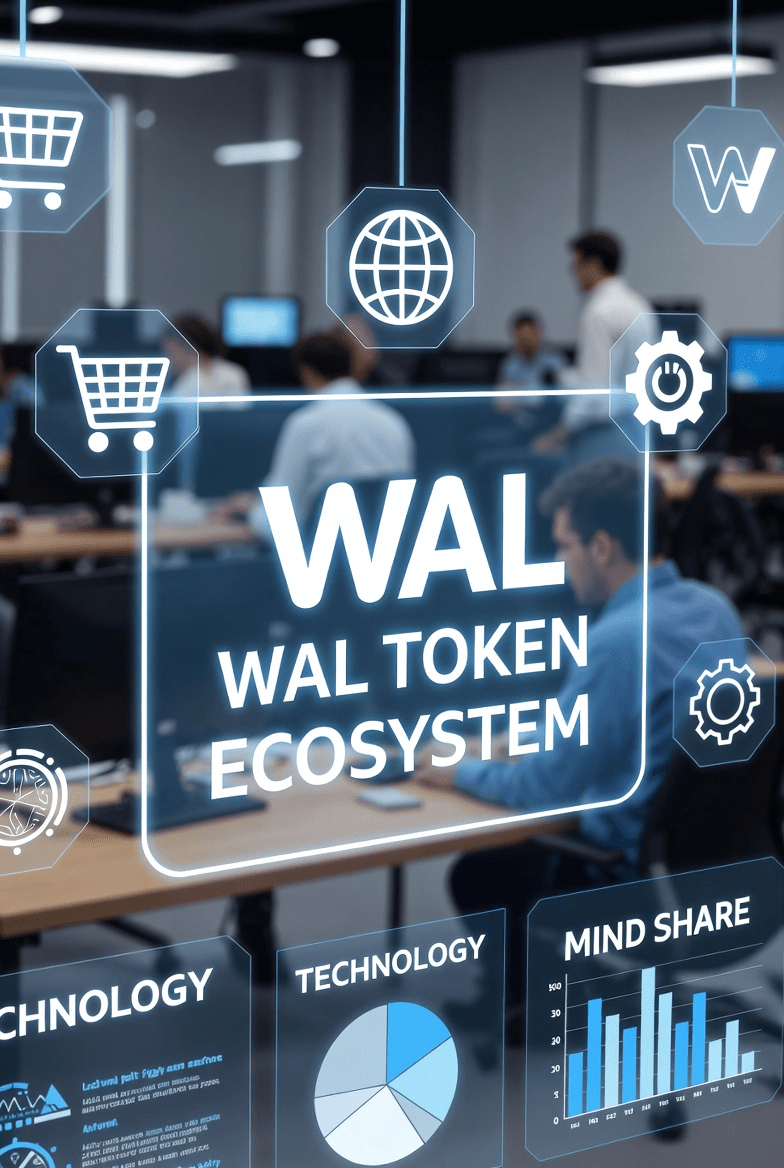
Many projects are integrating WAL. For example, AI agents that learn from on-chain data or gaming platforms where asset data is always available.
Features of technology
Decentralized storage: No single point of failure.
Stable cost mechanism: The cost in fiat remains fixed based on the supply and demand of WAL.
Staking rewards: Holders earn passive income.
Governance: The community makes decisions.
Factors that increase mind share
The Walrus Foundation is active. They provide grants to developers and organize hackathons. Discussions on X refer to WAL as the "data backbone for AI." Its ranking in the market is good, and trading volume is increasing.
Web3 users are now focusing on infrastructure. Where Filecoin and Arweave were, Walrus Sui is ahead with its speed. This is rapidly increasing its mind share.
In the future, WAL will bridge DeFi, AI, and Web3. If you are investing or building in Web3, you cannot ignore the WAL ecosystem. It is the part of technology that is truly useful and scalable.

