


Introduction to Liquidity Fragmentation
In the world of finance, liquidity refers to how easily assets can be bought or sold without significantly affecting their price. However, one persistent challenge in traditional financial markets is liquidity fragmentation. This occurs when trading activity is spread across multiple exchanges, platforms, or venues, leading to dispersed liquidity pools. As a result, investors often face higher transaction costs, wider bid-ask spreads, slower execution times, and difficulty in accessing the best prices. Fragmentation is exacerbated in areas like securities trading, where assets are siloed in different systems--think stock exchanges, over-the-counter markets, and private placements--making it inefficient for institutions, issuers, and retail users alike.
This issue isn't just a minor inconvenience; it contributes to systemic inefficiencies, increased risks during market stress, and barriers to entry for smaller players. Enter blockchain technology, which promises to unify these fragmented pools. Among the innovators in this space is Dusk Network, a privacy-focused blockchain designed specifically for regulated decentralized finance (DeFi). By leveraging on-chain tokenization and advanced protocols, Dusk aims to consolidate liquidity and streamline financial operations.
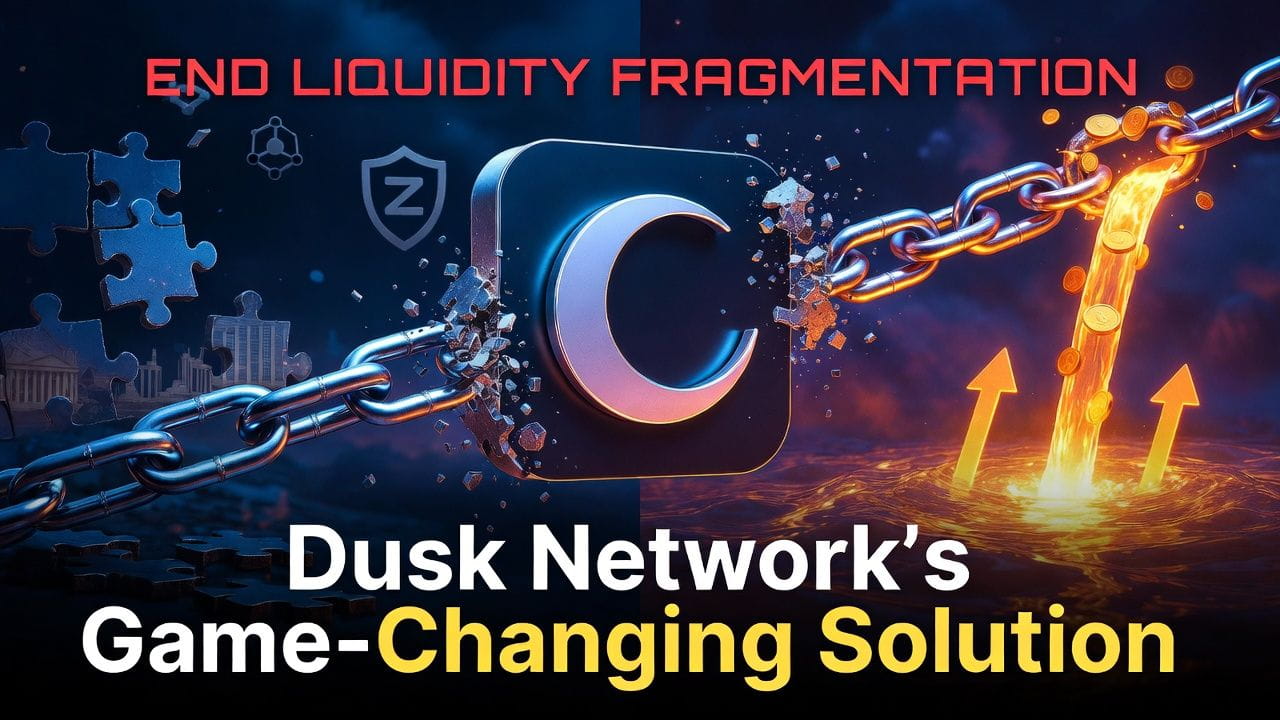
Dusk Network is a Layer-1 blockchain platform that bridges the gap between traditional finance (TradFi) and DeFi. Launched with a focus on privacy, compliance, and efficiency, it enables the tokenization of real-world assets (RWAs) such as securities, bonds, and even property deeds. Unlike general-purpose blockchains like Ethereum, Dusk is tailored for institutional use cases, incorporating features like zero-knowledge proofs for confidential transactions and automated compliance checks. This makes it suitable for regulated environments where data privacy is paramount, such as in securities trading or cross-border payments.
At its core, Dusk shifts finance from an institution-centric model--where custodians and intermediaries dominate--to a user-centric one. Users can access assets directly from their wallets with self-custody, while issuers benefit from global reach. The platform's native token, DUSK, powers the ecosystem, facilitating staking, governance, and transaction fees.
How Dusk Network Tackles Liquidity Fragmentation
Dusk Network employs several mechanisms to reduce fragmentation, primarily by bringing assets and trading onto a unified, decentralized ledger. Here's a breakdown of its key approaches:
On-Chain Tokenization of Securities
Traditional assets like stocks or real estate are often locked in fragmented systems, limiting their tradability. Dusk enables the tokenization of securities, converting them into interchangeable digital tokens (bytecode) on the blockchain. This process unlocks liquidity by allowing assets to be traded seamlessly in a single ecosystem, rather than across disparate venues.
For example, a home ownership deed or corporate bond can be tokenized and fractionalized, making it accessible to a broader pool of investors. This consolidation reduces the silos that cause fragmentation, as all trading happens on-chain, creating deeper liquidity pools. Businesses and institutions gain access to global markets, turning illiquid assets into highly tradable ones.
Instant Clearance and Settlement
In traditional finance, settlement can take days (e.g., T+2 for stocks), tying up capital and exacerbating fragmentation as funds are stuck in limbo across systems. Dusk provides instant on-chain finality, meaning trades settle immediately upon confirmation. This atomic settlement eliminates the need for intermediaries and reduces counterparty risks.
By automating clearance through smart contracts, Dusk ensures that liquidity is not fragmented by time delays or custodial holds. Institutions can manage liquidity more effectively, as capital is freed up instantly for reinvestment. This is particularly beneficial for high-frequency or cross-border trades, where fragmentation often leads to inefficiencies.
Privacy-Preserving Protocols and Compliance
Privacy is a double-edged sword in finance: too much transparency can deter institutional participation, while too little invites regulatory scrutiny. Dusk uses zero-knowledge technology to enable confidential transactions without compromising compliance. This allows regulated assets to be traded in a DeFi-like manner, attracting more participants and consolidating liquidity.
Automated protocols ensure adherence to global regulations (e.g., KYC/AML), reducing the barriers that keep markets fragmented. Users retain self-custody, accessing services directly from wallets, which democratizes participation and pools liquidity from both retail and institutional sources.
Automated Trading Across Platforms
Dusk's infrastructure supports cross-platform trading with centralized liquidity, even as it remains decentralized. Productized smart contracts handle financing, trading, and automation, creating a "single source of truth" via bulletin boards. This means liquidity isn't split across multiple exchanges; instead, it's aggregated on Dusk, boosting transaction speeds and reducing costs.
For instance, in DeFi for securities, Dusk enables innovative use cases like collateralized lending or derivatives, all on one chain, further enhancing liquidity depth.
Benefits of Dusk's Approach
By reducing fragmentation, Dusk offers several advantages:
Lower Costs: Unified pools mean tighter spreads and fewer fees from intermediaries.
Increased Accessibility: Retail users can tap into institutional-grade assets, while SMEs gain easier capital access.
Risk Reduction: Instant settlement minimizes systemic risks, such as those seen in market crashes.
Innovation Boost: Tokenization opens doors to new financial products, fostering a more dynamic ecosystem.
Global Reach: Privacy and compliance features enable cross-border liquidity without regulatory hurdles.
These benefits position Dusk as a key player in the convergence of TradFi and DeFi, potentially transforming how capital markets operate.
Liquidity fragmentation has long plagued financial markets, but platforms like Dusk Network are paving the way for a more unified future. Through tokenization, instant settlement, privacy tech, and automated protocols, Dusk consolidates liquidity on a secure, compliant blockchain, making finance more efficient and inclusive. As adoption grows, we could see a shift toward truly global, decentralized capital markets. For institutions and users alike, Dusk represents not just a technological upgrade, but a fundamental rethinking of liquidity in finance.
