
Family, who understands? My wife insisted on buying gold before, and I didn't agree. She secretly bought 50,000 worth of gold at a unit price of 1000/g! After I found out about this, I scolded her! I told her she was investing recklessly. Later when the market dropped, I told her to sell, and she said it was a normal correction. Today, the price per gram has risen by over 100, while the gold I bought at 148 has now dropped to 122. What caused the decline of 'digital gold', and what has made precious metals trending again? 'Follow me'
How to choose between safe-haven assets and risk assets?

1. Gold and silver: driven by safe-haven and industrial demand, prices soar to historical peaks
The latest real-time data (January 26, 2026, spot market) shows:
Gold: Has strongly broken through the psychological barrier of $5,000/ounce, with the latest quote hovering in the $5,080-$5,096 range. The daily increase is about 1.9%, with a monthly surge of over 17%, and an annual cumulative increase of over 85%! This marks gold continuously refreshing historical highs and officially entering a 'super bull market' phase.
Silver: Has performed even more explosively, with the latest price stabilizing at a high of $106-$110/ounce, a daily increase of over 3%, a monthly surge of nearly 47-50%, and an annual increase exceeding 250%!
Several analysts and institutions agree that this round of precious metals super cycle is supported by the following core factors:
Global safe-haven demand has exploded: Geopolitical tensions continue to escalate (such as threats of trade tariffs, potential government shutdown risks, etc.), with funds flooding into timeless safe-haven assets. CoinDesk analysis points out that since January 18, gold has risen significantly while Bitcoin has fallen 6.6%, highlighting Bitcoin's failure to fulfill its role as 'digital gold' in terms of safe-haven.
Long-term inflation and monetary policy uncertainty: The market's divergence over the Federal Reserve's path has increased, but inflation expectations remain stubborn, leading to a surge in demand for hard asset allocations.
Silver industrial demand has exploded: Strong pull from photovoltaics, new energy, electronics, and other fields, with silver's increase far exceeding that of gold, while the gold-silver ratio continues to compress. Several institutions predict that silver is transitioning from 'the shadow of gold' to an independent bull market, with future targets far above current levels.
Institutions such as CFI Trade emphasize that both gold and silver hit record highs in January, mainly due to safe-haven demand.
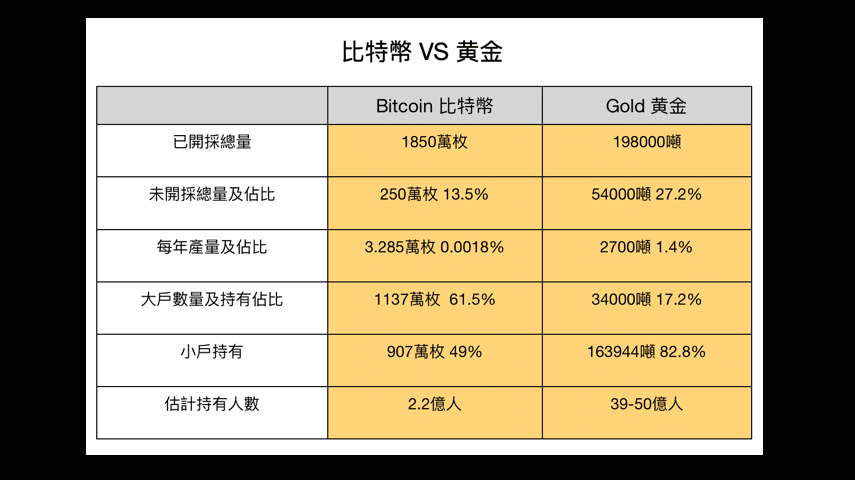
2. Bitcoin's sharp drop: Falling back more than 10% from a recent high of nearly $100,000, is the $80,000 mark in jeopardy?
In contrast, Bitcoin's situation has taken a sharp turn for the worse. As of January 26, the price has fallen back to the $86,500-$87,500 range. It has dropped about 1.8-3% within 24 hours, more than 10% from the recent peak (around January 15 near $97,000-$98,000), and the market is generally worried about whether it will soon breach the key $80,000 integer level. The multiple reasons for this round of Bitcoin's pullback are supported by data and opinions from the industry as follows:
Profit-taking + leveraged liquidation chain reaction: After a rapid rise from the end of 2025 to early 2026, a large number of short-term profit positions exited at high levels, forcing high-leverage positions to be liquidated, creating selling pressure. Reddit communities and CryptoPotato analysis state that the recent decline was mainly driven by 'profit-taking, ETF redemptions, liquidations'.
Risk assets are being abandoned, with capital rotating to safe havens: Amid increasing geopolitical + macro uncertainty, funds are withdrawing from high-beta risk assets and turning to gold/silver. CoinDesk bluntly states that Bitcoin is 'failing its role as a 'digital gold'', lagging behind gold by over 30%. FXEmpire analysis: Gold continues to break through $4,900+, while Bitcoin is still far below its 2025 peak.
Federal Reserve pre-meeting panic: With this week's monetary policy meeting approaching, there is significant divergence in the market's expectations for interest rates, inflation, and economic soft landing, leading to increased volatility during the low trading volume over the weekend.
Technical breakdown + low sentiment: Falling below the $88,000-$90,000 support triggered stop-loss orders. On-chain data from Santiment indicates weak network growth and poor liquidity conditions, exacerbating short-term downward pressure.
Decoupling of narratives and shaken confidence: In the past, Bitcoin was promoted as an inflation hedge/safe-haven tool, but this cycle has completely failed to synchronize with the gold market. DL News reports that investors are rapidly withdrawing from ETFs to hedge risks, leading to continued price pressure. Some predictions even warn that if liquidity continues to worsen, Bitcoin may further drop to the $75,000-$60,000 range (views from Fundstrat, YouTube analysts).
However, several optimists (like Pantera Capital, BeInCrypto) believe that this is still a normal pullback in a bull market and a 'consolidation phase', rather than a trend reversal. Historical cycles show that January is often an accumulation period.

3. Can gold continue to rise? Has Bitcoin already turned bearish?
From the current mainstream institutional forecasts, it is highly likely to continue rising, and may even create new highs! But it will not be a mindless straight-up increase, but rather a continuation of the 'super bull market' accompanied by fluctuations and periodic pullbacks. Current gold price (real-time January 26, 2026)
International spot gold price: About $5,041 - $5,080 / ounce (Trading Economics shows $5,041.39, having recently broken through the $5,000 barrier and continued to surge).
In RMB terms: about 1130-1140 yuan per gram (converted at current exchange rates, basic gold price + a small premium).
Why can it continue to rise? Institutional data supports that several top investment banks have recently raised their target prices for 2026, with a consistent core logic:
Goldman Sachs: Raises the target for gold prices at the end of 2026 from $4,900 to $5,400 / ounce (an increase of about 10%), citing strong private sector demand, emerging market central banks continuing to diversify reserves, and long-term high levels of safe-haven sentiment.
J.P. Morgan: Expects an average of $5,055 / ounce in the fourth quarter of 2026, nearing $5,400 by the end of the year, even higher. Overall bullish to over $5,000.
Bank of America: More aggressive, predicting that gold prices will soar to $6,000 / ounce in the spring of 2026 (over 20% higher than current levels).
Other consensus: Institutions like Metals Focus expect the peak in 2026 to be around $5,500. The overall atmosphere is 'entering a new super cycle', driven by factors including:
Ongoing geopolitical uncertainty (tariff threats, government shutdown risks, etc.) continues to drive up safe-haven demand.
Central bank buying + inflation hedging + low interest rate expectations.
Silver and other precious metals are synchronously strong, amplifying the attractiveness of gold.
Short-term risks: If the Federal Reserve unexpectedly becomes hawkish or geopolitical risks suddenly ease, a pullback may occur. However, in the medium to long term (for the entire year of 2026), most analysts believe the probability of continued increases is much higher than declines, with target ranges generally around $5,000-$6,000.
What will be the future trend of Bitcoin? Has it entered a bear market?
It is currently not in a bear market, but a normal high-level oscillation + pullback phase in a bull market. The overall trend for 2026 still leans bullish, but short-term pressure is evident, and volatility will be greater.
Current Bitcoin price (January 26, 2026)
About $86,500 - $86,800 (Yahoo Finance shows around $86,802, recently down more than 10% from the peak of over $97,000).
Why hasn't it reached a bear market yet? Overview of mainstream predictions
Bernstein: Maintains a 2026 target of $150,000, peak of $200,000 in 2027, believing the institutional buying cycle has extended and the bull market is not over.
Changelly / CoinDCX: May oscillate in the $95,000-$105,000 range in early 2026, and if support holds, it will not quickly turn bearish.
CoinDesk / Schwab: The overall 2026 will be a 'positive year for bitcoin', but it will be more 'boring' (mainly oscillating), rather than explosive growth.
Mudrex / Amberdata: Unless it consistently falls below $65,000, it cannot be considered entering a bear market. 2026 will not directly enter a 'crypto winter', but rather the tail end of a bull market or a consolidation period.
Some pessimistic voices: Reddit communities and some analysts worry that if liquidity worsens + macro risks intensify, it may drop to the $70k-$80k or even $50k-$60k range, but this is still a 'bull market pullback' rather than a confirmation of a bear market.
The main reasons for the current pullback: profit-taking, leveraged liquidation, capital rotation into gold as a safe haven, and panic ahead of the Federal Reserve meeting. However, historically, bull markets after halving typically last for 1-2 years, and 2026 is still in the latter part.
So as of now: Safe-haven assets vs. risk assets in the short term are led by safe-haven assets, while in the long term, risk assets are already carrying high returns.

