


At this year's World Economic Forum main venue, tokenization and stablecoins have become two important topics, and Binance founder Zhao Changpeng was invited to participate in a discussion themed 'New Era for Finance'. Unlike the free discussions on CT, the speeches of Web3 representatives in such a large setting were noticeably more restrained, but still did not overshadow the ambition that 'Web3 will change the world'.
So what did the big names specifically say at the 2026 Davos Annual Meeting, where Crypto was recognized as mainstream by traditional finance with a scale of hundreds of billions of dollars?
Zhao Changpeng: 'If banks do not change, we will change banks'
The last time a well-known entrepreneur complained about banks at a major economic and financial conference was probably back at the Bund Financial Summit in 2020. Everyone should know who it was, right?
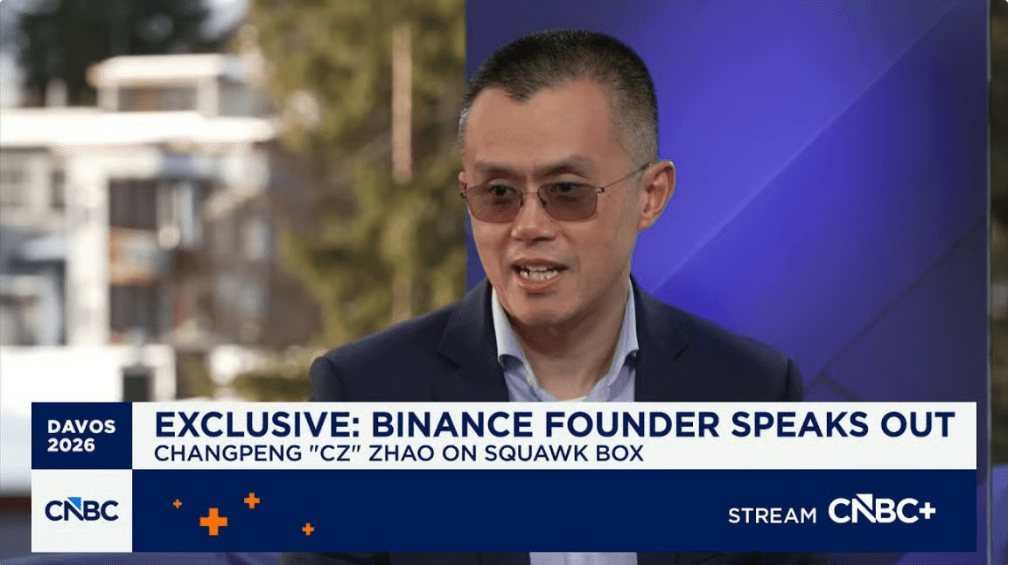
CZ participated in the main forum roundtable themed 'New Era for Finance' at this year's Davos Annual Meeting, and also accepted media interviews including CNBC.
Overall, CZ's point is not to 'replace banks', but to believe that banks should embrace blockchain infrastructure, and the two are complementary. His main points include:
The reserve system of banks is the root cause of liquidity crises, making it difficult to handle withdrawals on the scale of billions of dollars in a short time without issues, while the 100% reserve model of cryptocurrency exchanges is safer and more reliable. Traditional banks have their value, but they should embrace blockchain as their infrastructure to improve efficiency and reduce costs; (Supplement: The reserve ratio of mainstream bank deposits is generally less than 10%)
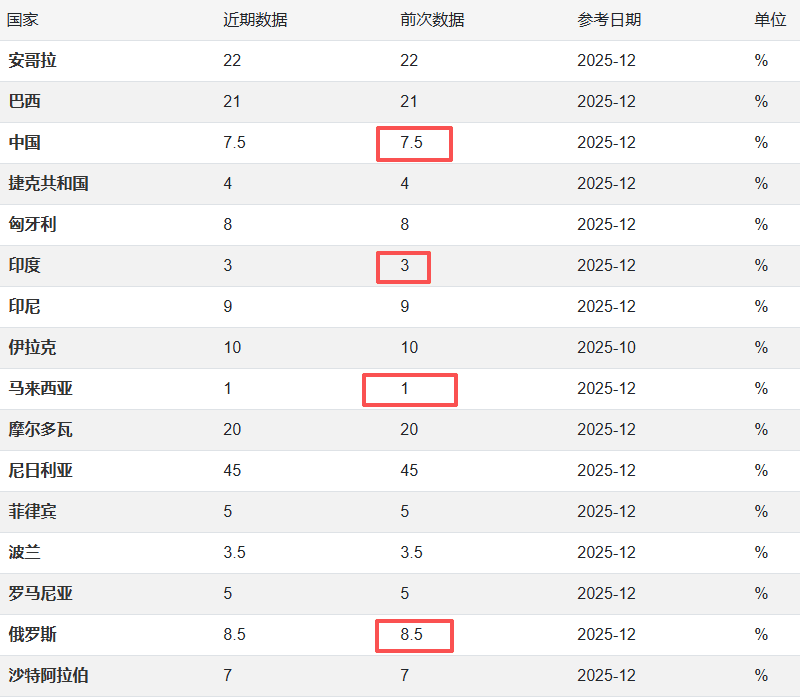
CZ is currently discussing national asset tokenization with governments from over ten countries (such as Pakistan, Malaysia, Kyrgyzstan, etc.), including infrastructure, real estate, commodities, government bonds, etc. Tokenization can avoid debt problems and improve liquidity, attracting a broader range of investors;
The four-year cycle of Bitcoin will be broken, and 2026 will be Bitcoin's 'super cycle'. Meme tokens are similar to previous NFTs and the metaverse, carrying extremely high risks and being highly speculative. Meme tokens with cultural value may exist long-term, but most meme tokens will disappear.
Traditional payments are merging with crypto payments, but risk awareness is needed. AI agents will use cryptocurrency as a native payment method, and in the future, AI will rely on blockchain for real-time, reliable payments; cryptocurrency will become the 'fuel' of the AI economy.
The crypto industry needs to focus on risk management and regulatory realities, rather than blind optimism, balancing innovation and compliance.
In summary, CZ states that financial security (reserves), application scenarios are just getting started, the BTC leading cycle is still fundamentally sound, AI will help facilitate a convenient economy, and regulation will run parallel. In fact, these several major directions have already determined the future height of Binance, and that Binance is not just a trading software, but can aid the economy and bring inclusive finance to many developing countries, achieving faster economic infrastructure development. This indeed aligns with the rapid development of domestic mobile internet from 2015 to 2019, and Binance has great potential for the future!
It may bring more convenient payment and wealth management experiences to billions of users, leading to a growth of billions of users for web3, and the world will have to pay attention. In short, the future is here; if you still think the future is just trading, then your understanding of web3 is too one-sided!
During a discussion themed 'Is Tokenization the Future', Coinbase founder Brian Armstrong repeatedly interrupted the speech of François Villeroy de Galhau, the governor of the Banque de France, and rebutted his views on the returns of Bitcoin and stablecoins.
The views expressed by François Villeroy de Galhau include:
Strongly oppose private companies paying interest to holders of their issued stablecoins, believing this threatens monetary sovereignty and financial stability;
Emphasize that trust in currency must come from democratically authorized public institutions (central banks), not private issuers;
Criticize stablecoins and private currencies like Bitcoin for potentially causing systemic risks, promoting the digital euro as a tool to maintain sovereignty;
Warn that without improving financial literacy, tokenization could turn into a 'disaster'.
Brian Armstrong's 'counterattack' includes:
It is argued that Bitcoin has no issuer, and its decentralized characteristics make it more independent and more resistant to inflation than traditional currencies;
It is advocated that users have the right to earn returns from stablecoins and that allowing interest on stablecoins is part of national competitiveness;
It emphasizes that Bitcoin and central banks should engage in 'healthy competition', and that the public's choice will become the strongest accountability mechanism for fiscal deficits, promoting more responsible behavior from central banks;
It is rebutted that stablecoins are fully backed by reserves, which is different from bank deposits;
Tokenization can solve financial efficiency problems, achieve real-time settlement, reduce costs, and 'democratize investment access', providing investment channels for 4 billion adults who cannot access brokerage services, and it is expected that significant progress will be made in this technology by 2026.
In addition to the much-anticipated clash between 'old finance' and 'new finance', Brian Armstrong also stated in interviews or other occasions that an executive from a global top ten bank expressed to him that cryptocurrency has now become the 'number one priority' for their bank, and is even regarded as a 'matter of life and death'. Armstrong noted that many financial leaders he encountered at the conference not only had an open attitude towards cryptocurrency but were also actively seeking ways to enter the market.
This debate also reflects the anxiety of mainstream traditional institutions, facing the increasing impact of stablecoins and BTC, a problem that traditional financial institutions can no longer ignore and must confront!
Web3 industry representatives signed (Davos Declaration 2026)
The declaration emphasizes that when embracing powerful technologies such as blockchain and AI, the following principles must be followed to ensure that technology serves human welfare:
Inclusivity: Let more people (especially those in developing countries and marginalized groups) benefit from Web3 technology.
Decentralization: Uphold the core values of Web3 and avoid power concentration.
Sustainability: Promote environmentally friendly, long-term viable innovations.
Accountability and Trust: Emphasize compliance, transparency, and responsible development.
Long-term value creation: Shift from 'hype' to practicality, regulatory friendliness, and institutional-grade infrastructure.
In short, the giants of web3 are increasingly emerging at mainstream economic summits. Web3 is no longer just simple trading; our global connections in the future cannot be disconnected from web3. For the billions of developing countries that cannot afford to build vast infrastructure for inclusive finance due to low costs, blockchain in web3 will undoubtedly be their only most convenient way!
The future has arrived, and this revolution over the next 10 to 20 years means you must ensure you are on board; a once-in-a-lifetime opportunity is enough!


