
As the bubbles of concepts like the metaverse and decentralization gradually dissipate, the Web3 industry is facing a brutal return to value. The once revered 'narrative-driven' model has faltered amidst ongoing market sluggishness—investors are no longer willing to pay for hollow white papers, and project teams are forced to confront the ultimate question: apart from token speculation, what real business value can Web3 create?
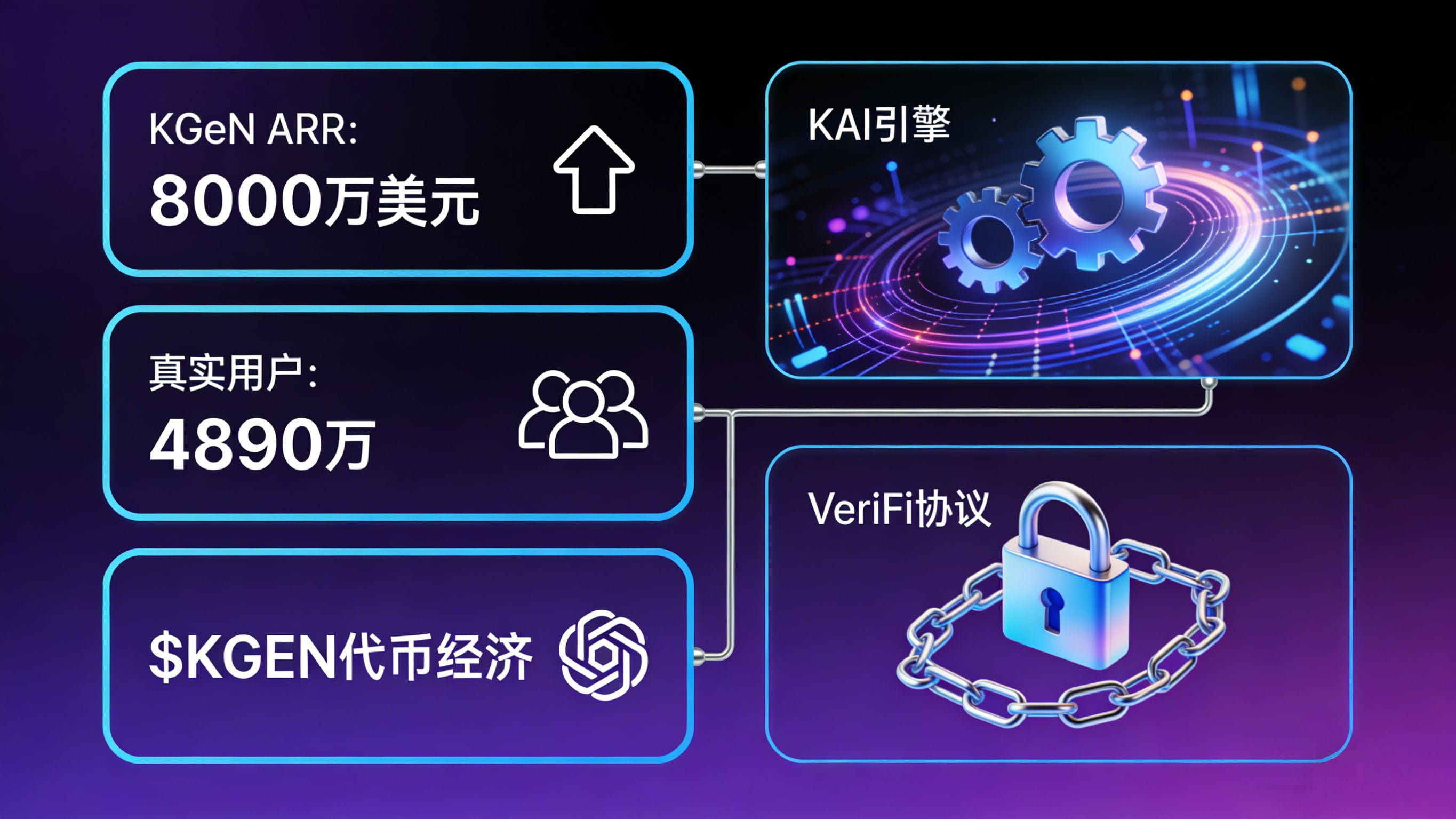
In this major industry reshuffle, KGeN has opened a breakthrough path with a hardcore answer: by January 2026, its annual recurring revenue (ARR) surpassed 80 million USD. This figure is by no means a fantasy lingering on a roadmap, but rather tangible business revenue; from 48.3 million USD in August 2025, to 70 million USD by the end of the year, and then to 80 million USD at the beginning of the year, the steeply rising ARR curve outlines a rare 'doer's trajectory' on the Web3 track filled with speculation and bubbles.
Core to the breakthrough: using real users to shatter the fatal paradox of Web3
The fateful dilemma of traditional Web3 projects lies in falling into a vicious cycle of "seeking users but struggling to discern authenticity." Bot traffic, witch attacks, and fake interactions have long been industry ailments, resulting in massive marketing expenses going to waste. The so-called "million communities" are nothing more than a string of cold wallet addresses, unable to convert into real commercial value. The key to KGeN's breakthrough lies in its self-developed VeriFi protocol, which directly addresses the industry's pain points through the POGE (Proof of Genuine Participation) framework.
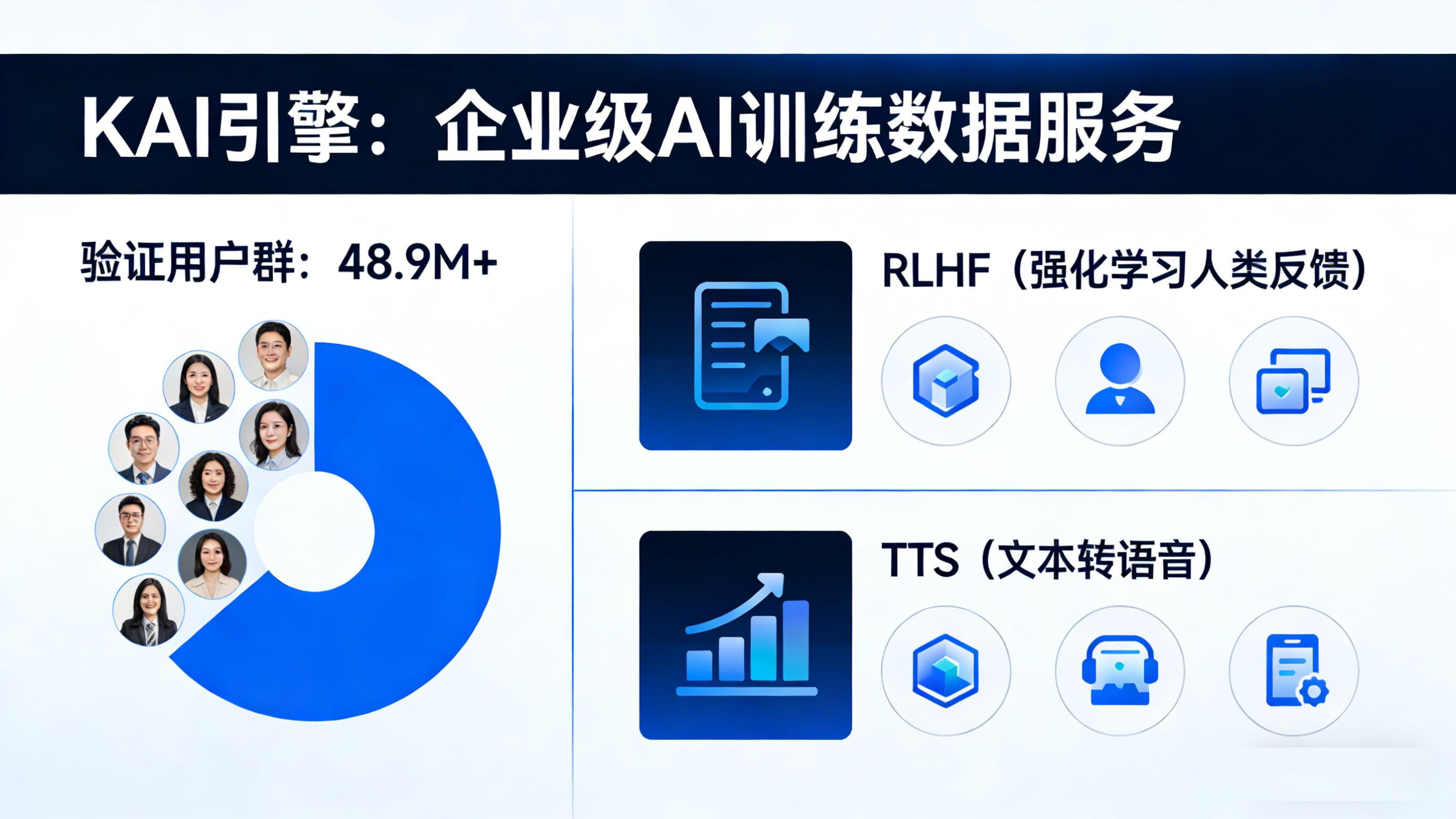
Unlike simple human-machine verification, the POGE framework constructs a comprehensive real identity and behavior verification system by aggregating 1.12 billion user attribute data points. It can not only prove that "users are human" but also verify the authenticity of users' gaming skills, commercial behaviors, social interactions, and other core value dimensions. As of January 2026, KGeN has accumulated 48.9 million rigorously verified active users - these users are not attracted by airdrops but are genuine individuals who actively open applications, complete tasks, and generate continuous value, which has become the cornerstone of KGeN's commercial closed loop.
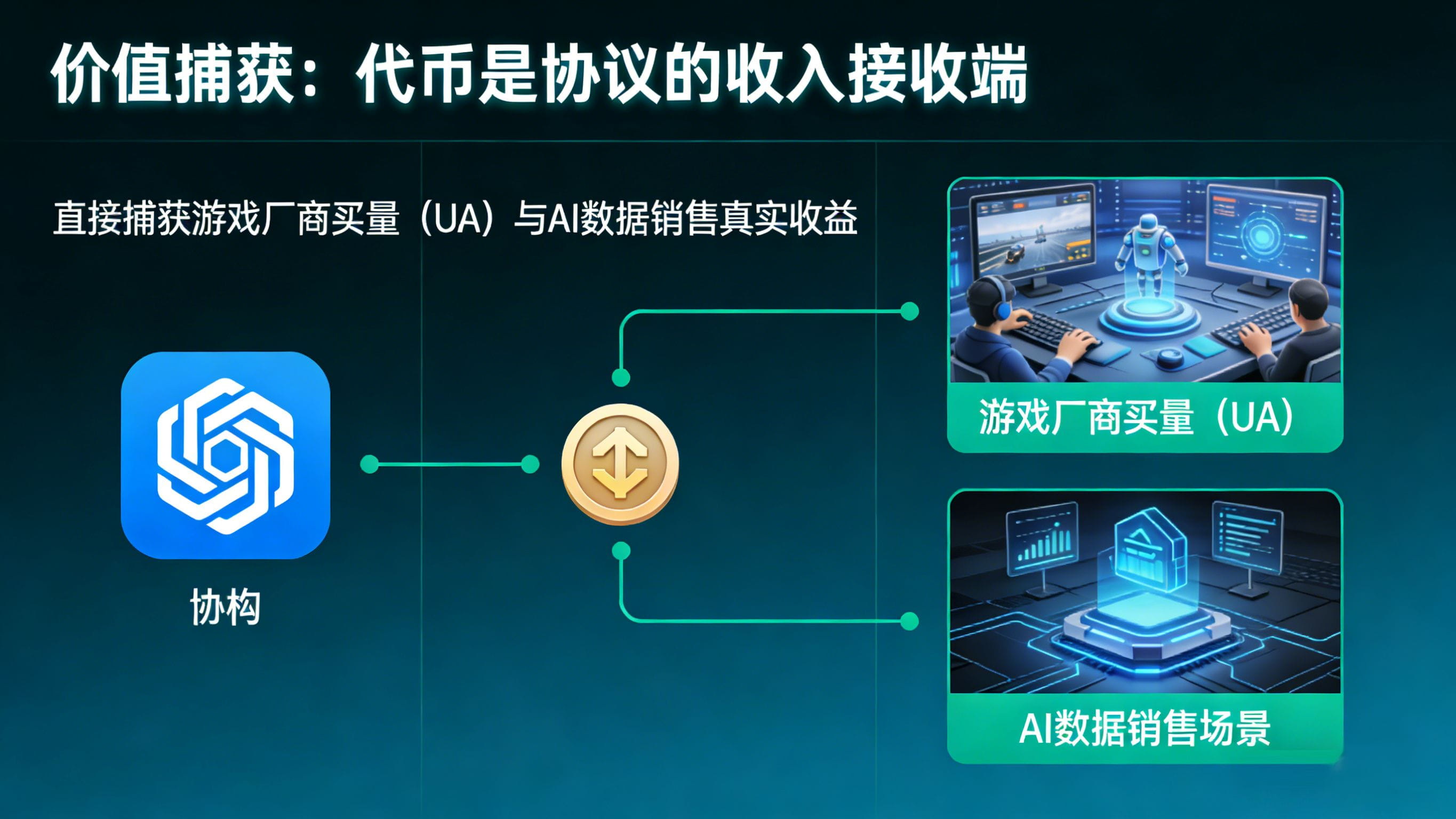
Based on this core user asset, KGeN has built a dual-driven business engine. In the game user acquisition (UA) field, over 200 game manufacturers have precisely reached target users through its verification protocol, completely avoiding the waste of bot traffic. When players complete key behaviors such as registration, recharging, and retention through KGeN recommendations, game manufacturers will pay corresponding service fees, and this revenue flows directly to the protocol ecosystem and token holders, forming a positive cycle of "real users-commercial payments-value feedback."
Differentiation trump card: KAI engine positions itself at the core demand of the AI era
If real user verification is the foundation of KGeN, then the KAI engine is its core weapon to widen the industry gap and seize future dividends. Amid the industry's pursuit of AI applications, KGeN has not followed the trend to create superficial AI tools but has precisely cut into the underlying pain points of the AI industry chain - the scarcity of high-quality human feedback data.
Whether it's RLHF (Reinforcement Learning from Human Feedback), TTS (Text-to-Speech), or multi-modal data labeling, the iterative upgrade of AI models relies heavily on large amounts of accurate and trustworthy human input data. Tech giants and AI startups are willing to pay high costs for this type of data but struggle to find enough providers who meet the quantity and professional capability standards and can be trusted. KGeN's KAI engine happens to fill this market gap.
Currently, the KGeN platform has gathered 1 million professionals verified by the POGE framework, covering over 60 countries and more than 20 languages, involved in various vertical fields such as programming, healthcare, law, and design. These professionals are not ordinary part-timers but high-quality resources that have accumulated verifiable skills and professional reputations through an on-chain reputation system. They provide services such as response generation, data labeling, and model evaluation for AI projects, with each data point undergoing multiple on-chain verifications, far exceeding the quality of traditional crowdsourcing platforms.
This core capability has transformed into stable commercial income: from search engine optimization, translation quality assessment, to code review and medical information labeling, the KAI engine has become a core data supplier for many well-known technology companies. This type of B2B business features high customer unit price, strong renewal rate, and stable growth, which is the core driving force behind KGeN's ability to achieve an ARR of $80 million, and has created an irreplaceable differentiation barrier in Web3 projects.
Token value closed loop: allowing tokens to carry real commercial profits
One of the common ailments of Web3 projects is the disconnect between tokens and business, reducing them to mere speculative tools. KGeN has fundamentally broken the "airdrop token" curse through the mechanism design of $KGEN, allowing the token to genuinely carry the commercial value of the protocol.
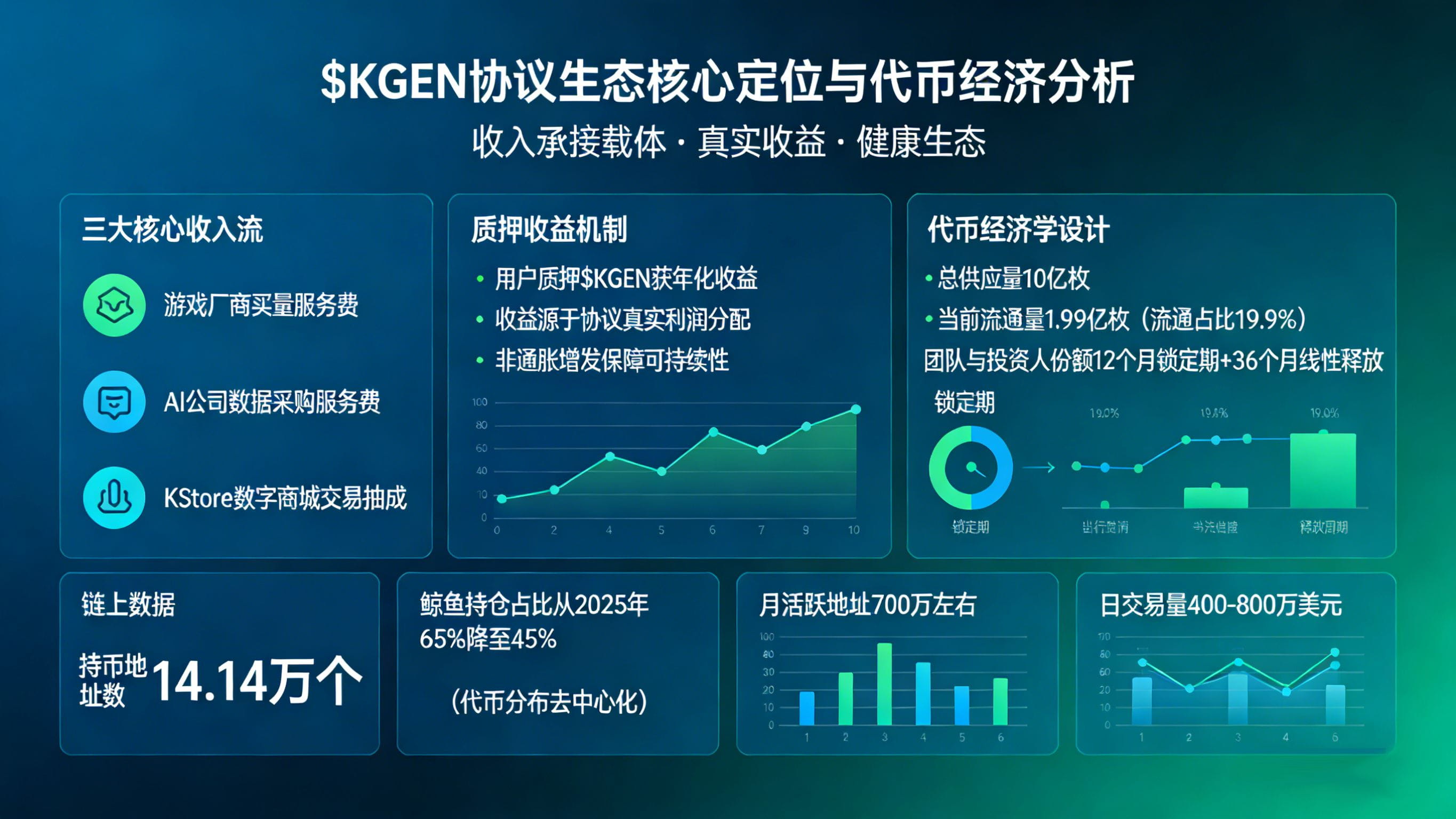
The core positioning of $KGEN is as the revenue-bearing vehicle for the entire protocol ecosystem, with three core revenue streams all converting into real demand for $KGEN: user acquisition service fees paid by game manufacturers, service fees paid by AI companies for data procurement, and transaction commissions from the KStore digital mall. Users can earn substantial annualized returns by staking $KGEN, and this income is not reliant on inflationary issuance but originates from the protocol's real profit distribution, fundamentally ensuring the sustainability of returns.
From the perspective of token economics design, $KGEN also demonstrates healthy ecological attributes: a total supply of 1 billion coins, with a current circulation of only 199 million coins (circulation ratio of 19.9%); the team's and investors' shares are set with a 12-month lock-up period, followed by a linear release over 36 months, effectively avoiding the impact of early selling pressure on the market. On-chain data further corroborates its ecological vitality: the number of holding addresses has reached 141,400, with the whale holding ratio dropping from 65% in 2025 to 45%, and the token distribution becoming increasingly decentralized; monthly active addresses remain stable at around 7 million, with daily transaction volume maintained in the range of $4-8 million, reflecting the genuine participation of the community rather than a short-term speculative frenzy.
Strategic foresight: a comprehensive layout from emerging markets to technical moats
KGeN's success not only stems from precise business positioning but also benefits from its forward-looking strategic layout. In market selection, it has stepped out of the homogeneous competition of Web3 projects clustered in North America and Europe, focusing on the Global South - regions such as India, Southeast Asia, Latin America, and Africa. These areas have large young populations, widespread mobile internet, and a booming Web2 gaming market, while the Web3 penetration rate remains low, offering tremendous incremental space.
To meet the needs of emerging market users, KGeN has created a "value realization closed loop" through the KStore digital mall: users can earn KCash (in-platform currency) by participating in platform tasks, which can then be exchanged for coupons, gift cards, physical goods, and other real benefits. So far, over 25 million coupons have been redeemed. This "participation-driven monetization" model precisely aligns with the needs of users in emerging markets, driving the platform user base from 38.9 million in August 2025 to 48.9 million, an increase of 25.6%, with user retention rates consistently remaining high, forming a stable user growth flywheel.
On the technical level, KGeN has also built a strong moat. The protocol is deployed on both Binance Smart Chain (BSC) and Aptos, and achieves cross-chain interoperability through LayerZero's OFT standard, which reduces single-chain risks and expands user coverage. More forward-looking is the application of zkML (Zero-Knowledge Machine Learning) technology: when providing data services for AI companies, it achieves "data usable yet invisible" through zero-knowledge proofs, ensuring user privacy while meeting the AI industry's demand for data quality, in line with the global privacy regulatory trend. The upcoming launch of VeriFi 2.0 in Q1 2026 will further upgrade multi-chain support and API interoperability, continuously strengthening technical barriers.
Capital and ecological resonance: the acceleration of pragmatism
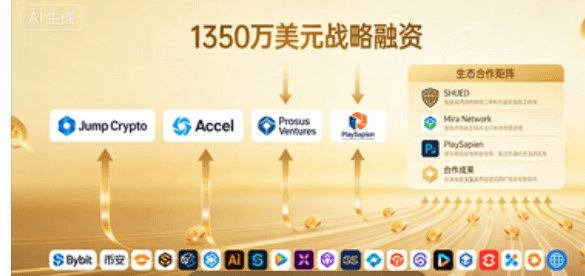
KGeN's commercial value has already been recognized by top-tier capital. In September 2025, it completed a strategic financing of $13.5 million, led by industry giants such as Jump Crypto, Accel, and Prosus Ventures. The value of this financing lies not only in the capital infusion but also in resource empowerment: Jump Crypto's advantages in crypto trading and market making, Accel's success in consumer internet, and Prosus' deep layout in emerging markets have all transformed into KGeN's core competitiveness.
In terms of ecological collaboration, KGeN adheres to the principle of "pragmatic implementation," refusing superficial collaborations "for the sake of collaboration." Collaborating with SHIELD has reduced the fake account rate to 0.2%, partnering with Mira Network has strengthened AI capabilities, and joining forces with PlaySapien has developed decentralized AI training tasks - each collaboration directly addresses business pain points, continuously improving protocol functionality and application scenarios. Furthermore, $KGEN has been successively listed on major exchanges such as Binance, Bybit, and OKX in October 2025, and will complete the token migration from rKGEN to $KGEN in January 2026, shifting the incentive mechanism from periodic airdrops to continuous dividends, marking the project's transition from "cold start" to the mature stage of "stable operation."
The next stop for Web3: pragmatism reigns
KGeN's rise provides a clear answer for the confused Web3 industry: the value of Web3 lies not in telling grand narratives but in finding the intersection between technology and real commercial needs. Game manufacturers need real users, AI companies need high-quality data, and users in emerging markets need tangible incentives - KGeN connects these three major demands, constructing a complete commercial closed loop of "verification-service-monetization," proving the pragmatic power of Web3 with $80 million in annual revenue.
Some may question that data crowdsourcing, game user acquisition, and other businesses are not exclusive to Web3, and Web2 companies can also get involved. However, KGeN's differentiation lies in significantly reducing the trust cost of cross-entity collaboration through an on-chain reputation system, enhancing user and partner participation willingness through token incentives, and achieving borderless global collaboration through decentralized architecture. These improvements may not be "revolutionary" but are practical enough to create sustainable commercial value.
As the bubble fades, the Web3 industry is bidding farewell to the "narrative era" and entering the "pragmatic era." The sample significance of KGeN lies in the fact that it proves that Web3 is not an air castle detached from reality, but a tool that can root itself in real commercial demands and create tangible income. In the future, only those pragmatic projects that abandon speculative fantasies and focus on value creation can survive the industry's reshuffle.
Stand firm and truly drive Web3 towards the mainstream.#KGENRising #KGEN #KgenToken #Aİ
$KGEN
My personal opinion is:
In the post-bubble era of the Web3 market, venture capital logic has long shifted from "chasing narratives and speculating on concepts" to "anchoring real income and valuing capital efficiency". These two indicators have become the core benchmarks for me to judge whether a project has vitality. And KGeN has shown me a solid path to break the deadlock - it uses traditional internet-level profitability as its foundation, steadily supporting the forward-looking network architecture and value distribution model unique to Web3, completely breaking the inherent prejudice in the industry that "innovation and profitability cannot coexist."
In my view, it is by no means a speculative project riding the "AI + Web3" hype, but rather precisely positioned at the core value point where two major waves intersect, firmly seated in front of the "payment counter" of commercialization. The network of 48.9 million rigorously verified real users is its strongest moat, fundamentally avoiding the common industry problem of fake traffic; the annual recurring revenue continues to rise to $80 million, providing continuous fuel for ecological iteration, completely freeing it from dependence on token speculation; more critically, the design that deeply binds protocol income with $KGEN token value makes me believe it has the potential to become one of the few assets in the next industry cycle that can withstand bull and bear markets based on solid fundamentals.
Ultimately, KGeN has allowed me to see a perfect model of Web3 transitioning from "speculative utility" to "real utility." It may not have the flashy narrative of the metaverse or decentralized social networks, but through its solid business closed loop and continuously growing revenue capability, it demonstrates a hard-core strength that penetrates the industry's restlessness. In this digital world where authenticity is hard to discern and bubbles frequently appear, I firmly believe that "realness" itself is a business with a very high ceiling - it is counter-cyclical, has high barriers, and as the industry gradually returns to its value essence, it will only become scarcer and more valuable.