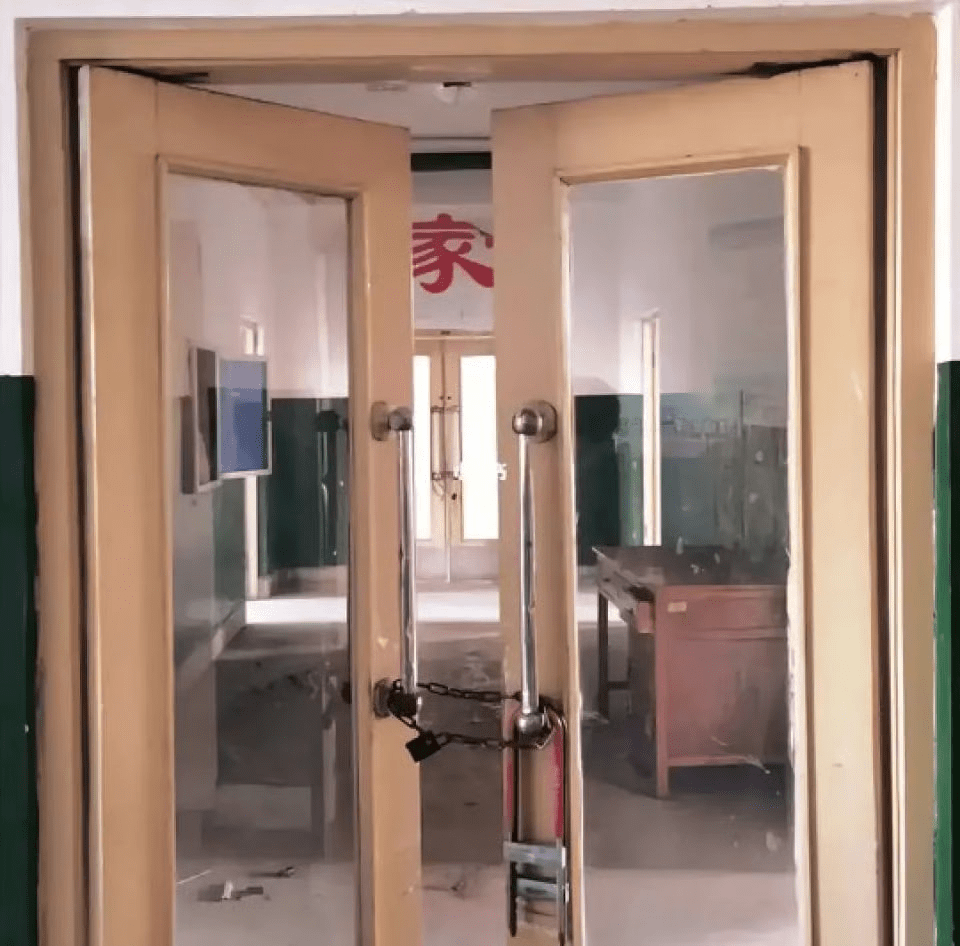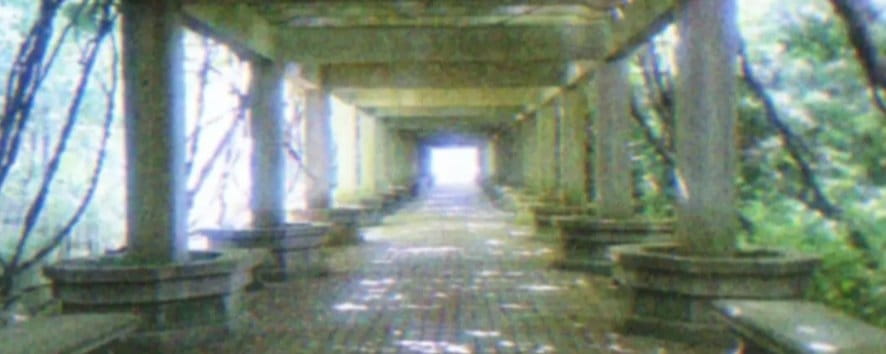
The so-called 'dream core' refers to a certain core collective memory fragment that can create a dream-like feeling in people. This memory fragment can be embodied in an object or a scene. Today, let's try to break it down; not having lived abroad, interpreting foreign perspectives can feel somewhat forced, so I will only discuss the (Chinese) style dream core.
A series of photos that suddenly became popular, the theme is various real scenes from around the year 2000, such as schools, shopping malls, bedrooms, and residential areas, characterized by being blurry, low fidelity, and lacking people. At first glance, it feels familiar and intimate, but after a while, it can evoke a sense of inexplicable unease.
I first saw such images about a year or two ago, when I stumbled upon them on Douyin. Just like most comments said, my first feeling was very familiar because they resembled some scenes from my childhood, the most obvious being the blue glass + white walls; I don't know who designed this style, but it looks so alternative now, and there are many similar examples.
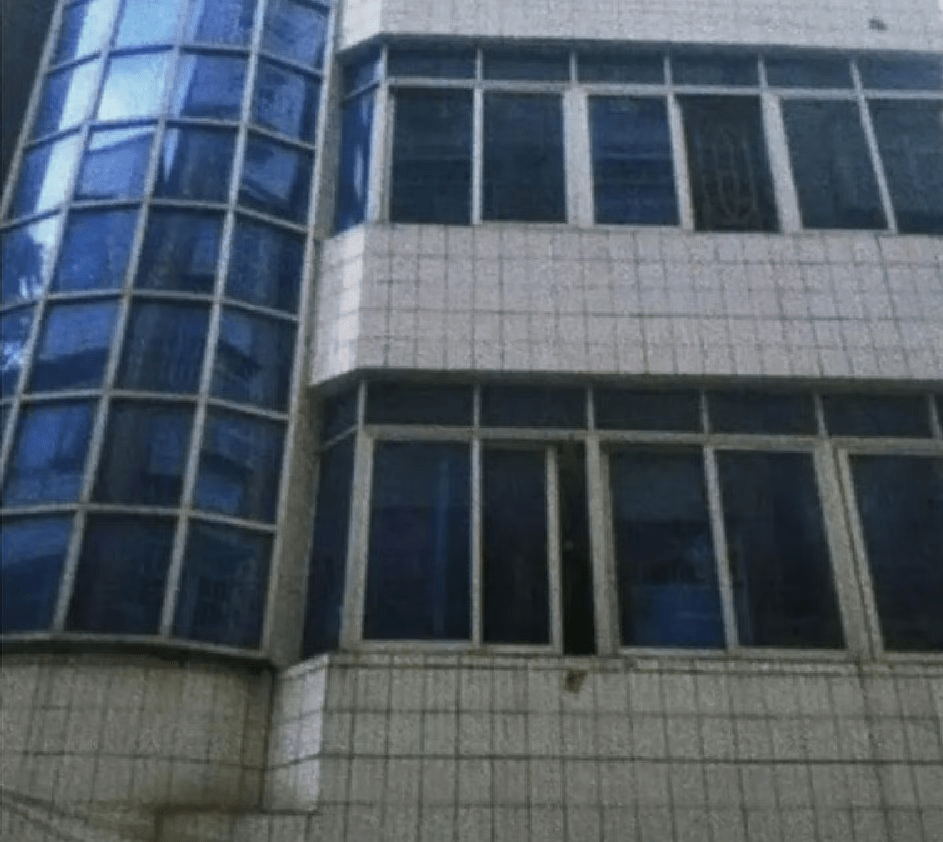
At first, there would be a sense of immersion, as if returning to that time; but after a while, there would be a sense of unease, a bit of sadness, and a hint of fear. As for the specifics, I initially couldn't understand it at all; it doesn't have the sudden shock of a horror movie, but the feeling of unease is very real.
When talking about horror, it's important to distinguish; some people classify videos/images with obvious horror tones as Dreamcore, which is actually incorrect.
Related to Dreamcore, there are two similar concepts: the first is the Backrooms, that pseudo-documentary that exploded on YouTube in 2022, and Fartcoin/GOAT also used the Backrooms concept; this can be considered the origin of the 'core' series, but it doesn't count as Dreamcore—it's a self-contained branch.
The second one is Weirdcore. This feature is very obvious, it deliberately creates horror, like giant eyeballs, winged monsters, etc. In short, the first impression of the video/image is scary, and this does not belong to Dreamcore. The fear of Dreamcore is never about surface elements but rather the deep emotions within.
1. Why the Millennium?
Let's roughly understand the categories, then continue discussing Dreamcore. The first question is, why are the images related to Dreamcore all from around the millennium? If it's limited to nostalgic themes, why can't it be from the 1980s? If it's not nostalgic, why can't it be from around 2060?
Looking back at the 2000s, I remember being in elementary school, writing essays about my fantasies of the future, like flying cars, space travel, etc. I truly believed that China would be like this in twenty years; as for myself, I thought I would be a scientist or something, able to invent and contribute to the country. In short, everything felt infinitely beautiful, and I could never have imagined a '996 life without marriage or children', but it indeed happened.
The environment at that time was overall upward; whether it was the economy, technology, or people's livelihood, everything was flourishing, belonging to a rare 'all-member acceleration period' in domestic history. Joining the WTO, successfully bidding for the Olympics, internet development, Shenzhou going into space, and so on, everything looked vibrant from top to bottom.

At that time, people had hope for life, as long as they worked hard, better days were ahead, and no one would doubt that. Meanwhile, many landmarks with memories were silently demolished; the alleys at home turned into wide roads, courtyards became commercial housing, and the grocery store from childhood became the garage of Wanda Plaza. Looking back now might seem a bit cruel, but at the time, this was the new appearance after 'updating and replacing'; no one would worry about not having a place to live or work, and people believed in an infinitely beautiful future.
However, today, twenty years later, people are starting to notice something is wrong. The beautiful future once imagined has not been realized; the flying cars I looked forward to in childhood have not appeared, and society has not developed as we expected when we were young. Not only that, but it has even backtracked, with endless 996 work hours, skyrocketing housing prices, and stagnant wages, various contradictory problems follow one after another. For a moment, I too would fall into a daze; is this the future I dreamed of as a child?
British theorist Fisher proposed a concept called 'slow cancellation of the future': when development falls into stagnation, people will continuously consume the past in various ways rather than create the future. When people today find that the future is a fog, their hearts will drive them to give up looking forward and turn to review the past, because the past is certain, and the millennium was full of hope.
Dreamcore provides people with a choice to rest. When you first see Dreamcore, your entire brain immerses in the 'beautiful past', free from stress and worries, full of hope, with the burdens of mortgages, car loans, and loneliness disappearing, leaving only the purest freedom; but after looking for a long time, you will realize that everything is false, not only did the beautiful expectations of the past not materialize, but reality is even worse.
More importantly, the old buildings that once existed were flattened in the 'millennium's expectation for the future'. Not only can time not be reversed, but even the physical remnants of those memories have disappeared in the wind, leading to feelings of helplessness and loneliness.
You stand in the light, thinking that the future will only be brighter, but a heavy blow from reality shatters all the fantasies of childhood. The so-called 'bright future' is like a corpse, forever remaining in your memory; the you who once yearned for the future is eternally trapped in the millennium.
2. Threshold Space
After discussing time, let's talk about the issue of space—threshold space. What does this term mean? Simply put, it refers to places where people 'come and go', like amusement parks, corridors, malls. These places should normally have a lot of foot traffic, but in most Dreamcore images, although there are many similar scenes, not a single person is present; even if there is, it's mainly blurry silhouettes.
Let me give a few examples: for instance, in a sunny park, there isn't a single person wandering around; in a classroom filled with books, the fan is still spinning, but not a single student is present; in an empty mall, the advertisement screens are flashing, yet not a single person is there.

Time has not stopped, machines are still running, ripples are rising on the lake surface, everything is progressing normally, but the only thing missing is the presence of people. Imagine, isn't such a scene a bit eerie? Those who should be there seem to have been erased. The more you see, the more unease and fear will arise deep within, which is also an important reason why many people find Dreamcore terrifying. Why specifically? There are a few points.
First of all, the most important point touches on the primal instincts of humans as animals. When animals find no living creatures in familiar territory, they will immediately become highly alert. Because this usually means either a huge crisis has occurred here, all the animals have died or fled; or there are stronger predators nearby, so no animals dare to show themselves. Regardless of the reason, it represents danger, which is the most direct fear.
The second issue is our brain's mechanism. Under normal circumstances, we would expect to see crowds in these places, but all Dreamcore images, without exception, have no people. The brain cannot explain this contrast, and the strong cognitive dissonance forces the brain to crash instantly, leading to unease or fear, and then escape. This is essentially a self-protection mechanism. It's similar to a situation where when people think about death, the brain will forcibly cut off the thought process because death means a reset; the brain cannot fathom a situation without a brain.
I've tried to think about this many times before. I often wonder what the world will be like after death, but every time I end up with nothing and just stop. I can feel my thoughts being interrupted, but I can't put my finger on why. The answer is actually quite simple—because my brain is protecting me from collapsing.
The third point is somewhat abstract. Imagine, slides, malls, offices—these things were created for people to use; what if people no longer existed? If no one sits in a chair, is it still a chair? What difference does it have from a stone? If a mall has no one in it, what is it different from a pile of steel and concrete? The value of all objects comes from the people who give it meaning, but if people disappear, what is the significance of the object's existence? Is it just to serve as a background?
At that moment, you too will doubt the authenticity of the entire world, just like Truman. In the face of pure nothingness, all that remains is psychological fear.
3. Perfection Beneath the Blur
After talking about space, let's talk about another characteristic of Dreamcore images, which is blur; all Dreamcore images are unclear. Why are they all so blurry? At first, I thought, with image restoration technology being so advanced now, isn't it easy to make old photos new?—that's not the point, the blur is the key point of Dreamcore; high definition just doesn't fit.
First is the obvious issue of texture. Now, you can casually take a 4K HD photo with your phone, but that is too new. Memory itself is gradually fading, and the millennium in your mind is constantly losing color; at this time, if you show a high-definition photo from 2003, you will only feel it is abrupt and too fake; conversely, a bunch of low-quality photos can make people feel more real and intimate, as if the scenes in memory are just like that.
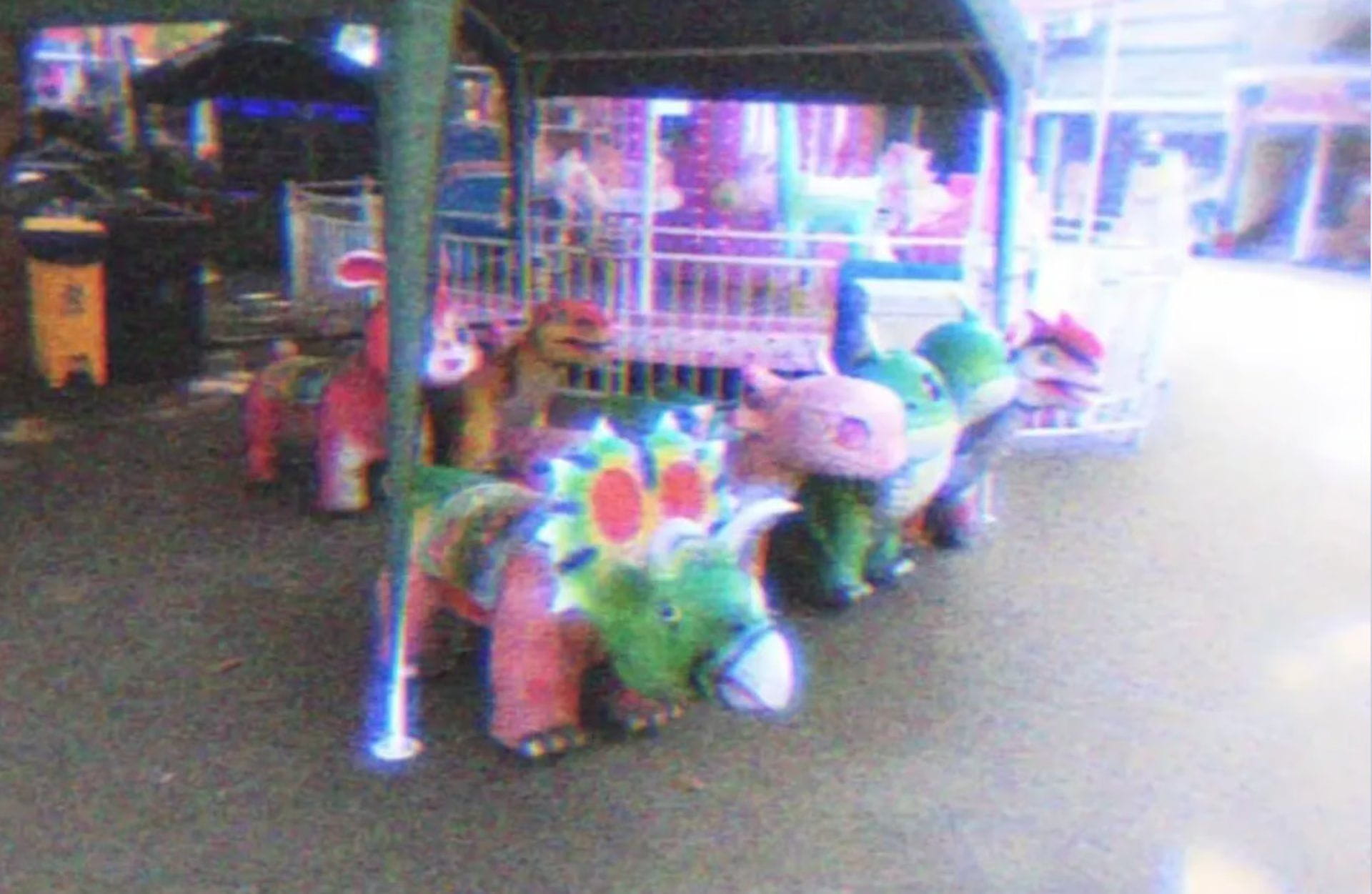
Moreover, a more important reason is that perfection can only be achieved beneath the blur.
Let's think about a question: while many people like to say childhood was beautiful, was there really no pain in childhood? The pressure of exams, parental scolding, financial difficulties—real childhood comes with 'thorns', not simply one-sided beauty. However, no one wishes to remember various unpleasant and sad things when looking back at the past. The reason for reminiscing is precisely that one has encountered an insurmountable obstacle in the present, hoping to find a brief respite in a pure piece of memory.
The brain itself has the function of 'automatic filtering', helping you skip uncomfortable memories, while the blurriness of Dreamcore further isolates people from some negative information, leaving only pure beauty. The 'perfect childhood' we long for is actually synthesized by the brain and has never truly existed.
Muttering
Before writing this article, I asked several friends about their understanding of Dreamcore. Some had delved deeply into it before and gave me some reference materials; some had never seen it and gave me feedback after looking at it—feeling obviously uncomfortable but not knowing how to express it. This 'Hard to tell' is exactly why I think about this culture.
Milady, Shamate, NEET, Dreamcore—these terms cannot be easily summarized in one sentence; they each have their own historical background, cultural evolution, and online dissemination. If we attempt to approach different groups and understand certain emotional expressions, we should do so with an ignorant mindset, going into corners and squatting down to see what happened here before, rather than dealing with it with an arrogant attitude—'Isn't this just a bunch of internet terms? What's the narrative?'
With this mindset, I re-examined Dreamcore. I attempted to break it down, not to label it academically, but to clarify a few whys. In this 'technologically advanced, peaceful, and affluent' era, why are some people interested in a few blurry old photos? Why specifically around the year 2000? Why does staring at them for a long time create an indescribable unease?
The happy part is that I found the answer; the unhappy part is that the answer is right there but unsolvable: what touches us is not just the beauty of the past, but also the confidence that 'tomorrow will be better'—which forever died in the millennium.