
In the world of blockchain, many projects promise revolution, but few offer a practical model that can be applied within the real financial system. Among this small group, the Dusk Network project stands out as one of the most focused on solving the most important issue in the industry: how do we integrate blockchain with traditional finance without sacrificing privacy or breaking laws?
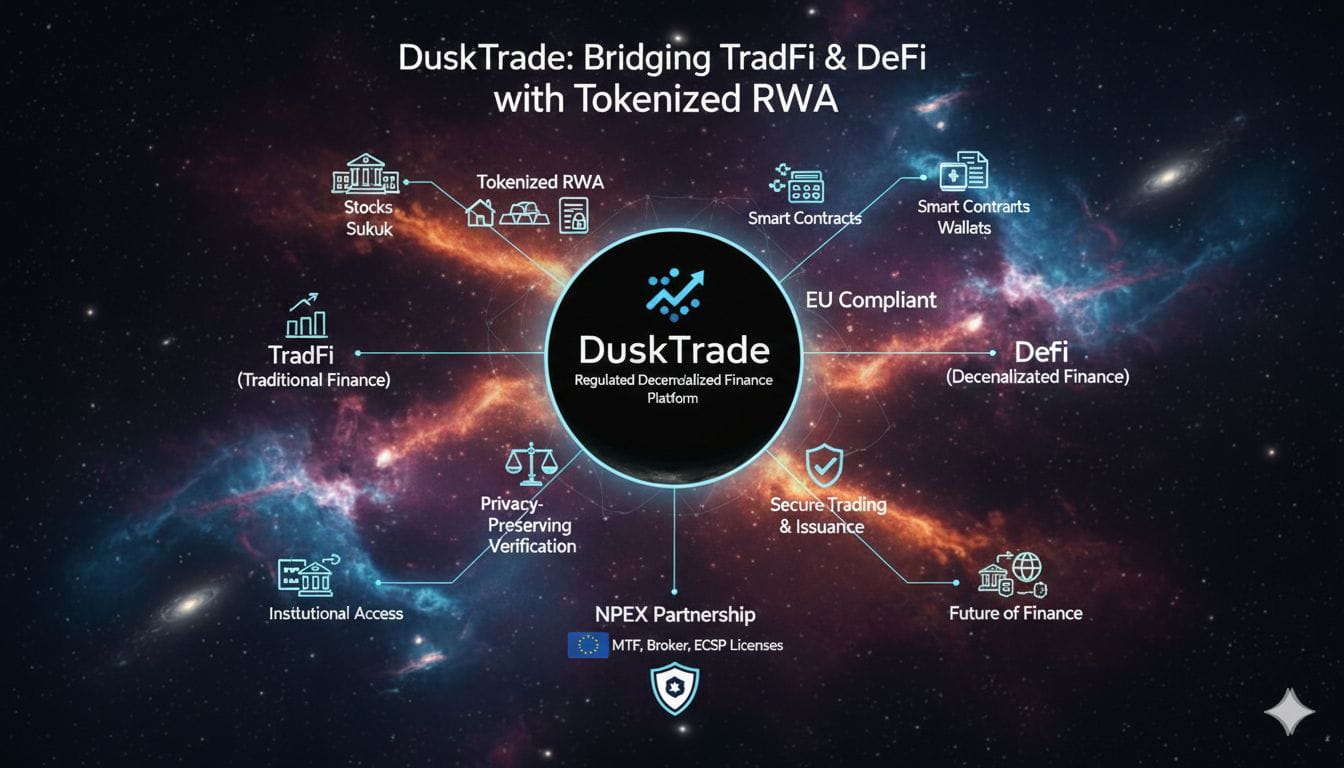
Dusk is not a traditional public blockchain but a network specifically designed to serve regulated financial markets. From the beginning, the project has set a clear goal: to build infrastructure that allows for the trading of digital and real assets within a legally compliant environment that respects regulatory requirements while protecting the data of investors and institutions.
The cornerstone of Dusk's philosophy is the concept of verifiable privacy. This means that a user or institution can prove compliance with laws and regulations without disclosing their sensitive data on-chain. This idea represents a qualitative leap compared to public blockchains that expose all transactions, which is unacceptable in the world of banks and regulated markets.
The transition from theory to practice became clear with the launch of DuskTrade, the first real application of the concept of tokenized real assets (RWA) on the Dusk network. This platform was not built in isolation but resulted from a strategic partnership with the Dutch NPEX platform, which is a regulated platform holding MTF, Broker, and ECSP licenses, making it legally qualified to manage trading and investment within the European Union.
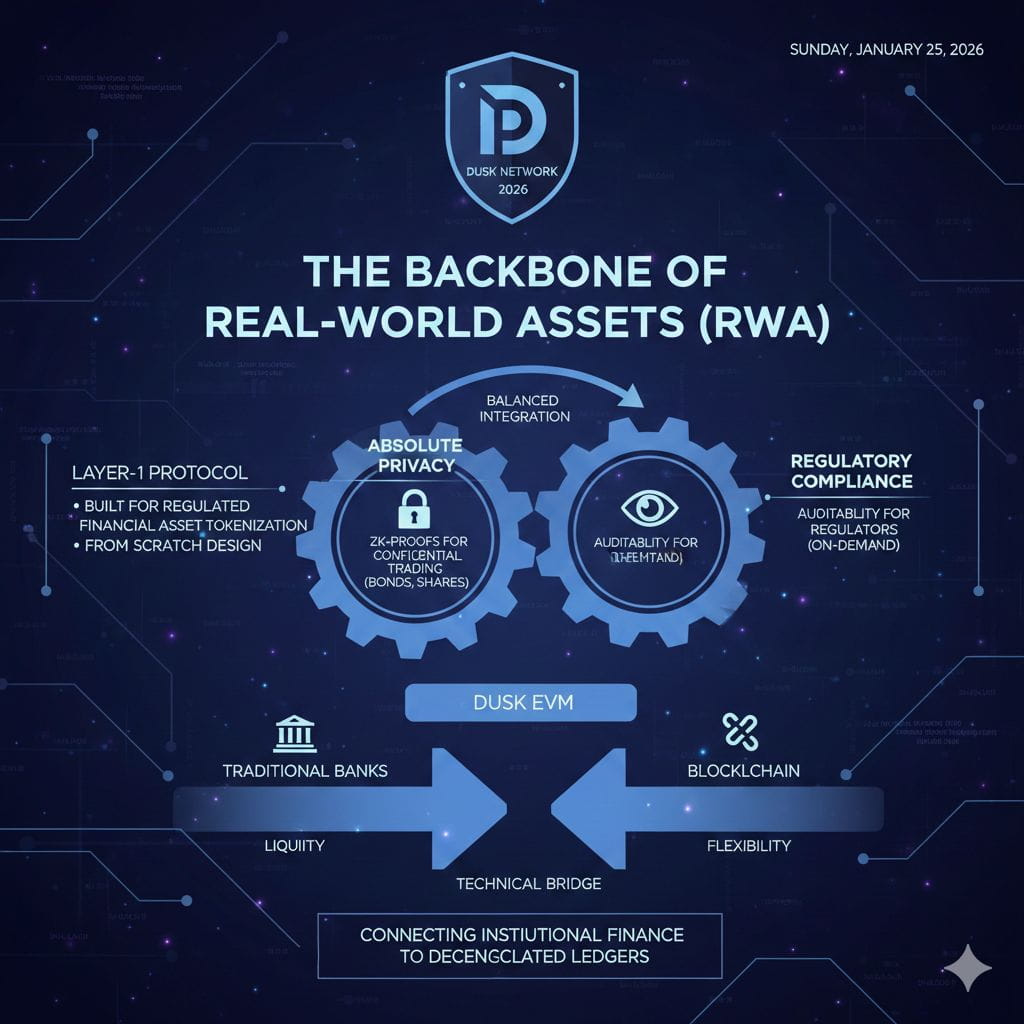
The importance of this step lies not only in launching a new product but in representing a direct bridge between traditional finance and blockchain. DuskTrade is designed as a trading and investment platform fully compliant with European laws, allowing the issuance and trading of tokenized assets such as stocks, bonds, and sukuk within an officially recognized legal environment.
In this platform, advanced encryption techniques are used to conduct verification and compliance without disclosing sensitive data. Regulatory authorities can ensure the integrity of operations, while investors and institutions retain their privacy. This equation was missing in most crypto projects, which gives Dusk a rare competitive advantage.
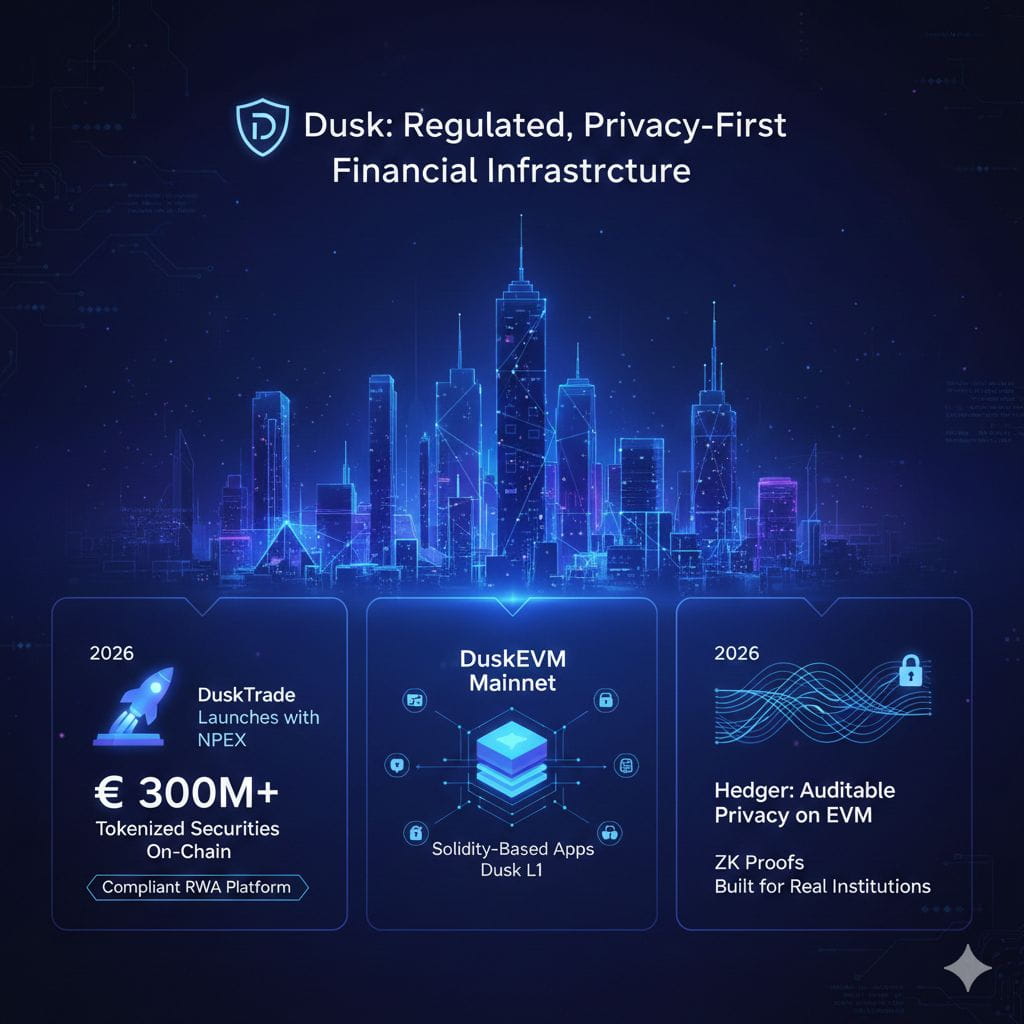
The partnership with NPEX carries a strategically significant dimension. The presence of a licensed party opens the door for large financial institutions, not just individual users. This means that Dusk is not only targeting the speculative market but aspires to be the infrastructure layer relied upon by banks and regulated markets to bring real assets into the world of blockchain.
Technically, Dusk relies on a proof-of-stake protocol with advanced privacy mechanisms that allow for the creation of compliant smart contracts, usable in highly regulated environments. This architecture makes the network suitable for issuing digital securities, managing financial identities, and executing institutional trading operations on-chain.
In the context of the global shift towards tokenizing real assets, where central banks and institutions seek to bring stocks, bonds, and real estate into the blockchain world, Dusk emerges as one of the few projects truly ready for this role. It does not just provide technology, but also offers a legal framework, regulatory partnerships, and a clear vision for building an integrated digital financial market.
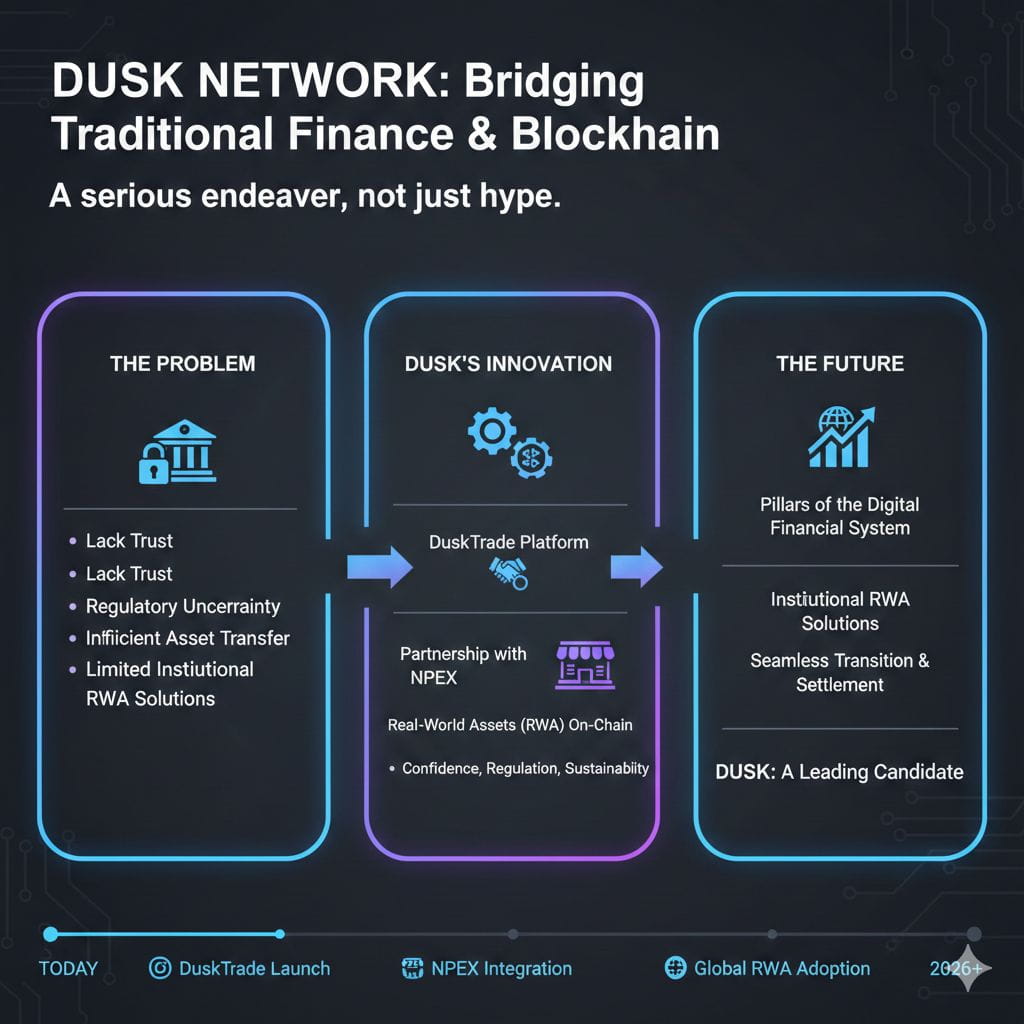
In summary, Dusk Network is not a promotional project, but a serious attempt to redefine the relationship between blockchain and traditional finance. Through DuskTrade and its partnership with NPEX, it offers a practical model for how real assets can confidently, regulatedly, and sustainably transition to the chain. In a world searching for institutional solutions for RWA, Dusk appears to be a candidate to become one of the pillars of the upcoming digital financial system.
