

Here on the Dusk Network, we built a special system called a native data availability layer on DuskDS. Think of it as the thing that makes sure everything that happens, like transactions, updates, and smart contract stuff, is reliably put out there, kept safe, and easy to get to for everyone on the network. It’s super important because it backs our privacy features and keeps things running smoothly and by the rules. It makes sure that anything that happens on the blockchain can be checked and proven to be true.
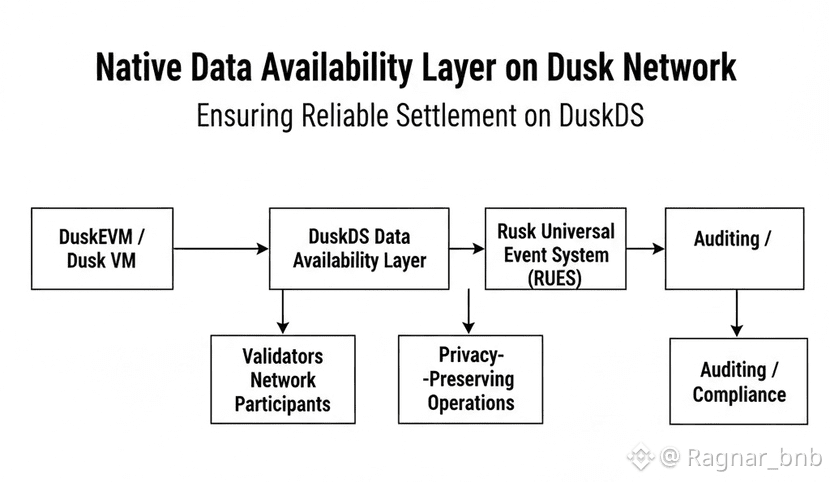
The cool thing about the DuskDS data availability layer is that it splits up the doing from the finalizing. It’s designed so that it can handle stuff from DuskEVM, Dusk VM, or even system-level contracts, with the data then committed to DuskDS. Then it stores this data all over the place, on a peer-to-peer network with Kadcast. This way, all the provisioners(**validators**) get copies of the data they need to validate blocks and agree on stuff.
This data availability layer also helps privacy. So, even though some transaction details are hidden, the layer makes sure that the proofs and encrypted data needed for validators to check things are still available. This stops situations where some nodes think a transaction is okay, but others don’t because they’re missing data.
Plus, the layer is tough against censorship and data tampering. Since DuskDS spreads the transaction data across many nodes, no single node can stop or change the data. This is really key in the financial world, where things have to be settled quickly and correctly.
It all works great with smart contracts and asset protocols too. Whether it’s transfers, staking, or even Confidential Security Contract (XSC) transactions, they all trust the data availability layer to securely spread proofs and state changes. By handling the data separately from the doing, DuskDS lets smart contracts work without sacrificing correct validation.
The Rusk Universal Event System (RUES) works with the data availability layer to send out verifiable updates for every action. The data layer makes sure the raw transaction data is around, and RUES gives structured logs that can be audited and checked. So, you get both transparency and privacy.
Also, this data availability layer is fast and can handle a lot, which is just what you need for things like tokenized securities and regulated marketplaces. By handling data in a fast, reliable way, DuskDS lets the network process transactions quickly, while making sure everything is consistent across all nodes.
And if we need to add new features or asset types, the data availability layer can grow with us without messing up how consensus or settlement works. This way, the network can keep up with new rules and the market.
Data availability helps with compliance since it makes sure all transaction proofs and state changes are easy to get. This lets regulators and auditors check if rules are being followed, without seeing transaction information they shouldn't. Selective disclosure lets you reveal data when you have to while maintaining privacy where possible.
Basically, the native data availability layer on DuskDS is a super important part of the puzzle. It makes sure transaction data is real, available, and verifiable. It backs privacy and keeps everything on the up-and-up. It’s a foundation that makes the Dusk Network a solid choice for institutional-grade and privacy-focused blockchain apps.
