

Nigeria’s government has sharply increased revenue from digital payments, and regulators are now extending that tax regime to cryptocurrency withdrawals, a clear signal that Africa’s largest crypto market is firmly on the fiscal radar.
According to official data, collections from the Electronic Money Transfer Levy (EMTL), a fee applied to qualifying digital transfers, rose to about $276 million in the first 11 months of 2025, up from roughly $133 million over the same period in 2024.
That represents more than a 100% year-on-year increase.
The levy, now reclassified as stamp duty under Nigeria’s 2025 Tax Act, has become a predictable revenue stream for the federal government, which projects annual collections could exceed $321 million from 2026 onward.
TAXATION | How Kenya Collects More Taxes than Nigeria
Expanding the Tax Net to Crypto
Previously limited to bank and fintech transactions, the stamp duty regime has now been extended to crypto-to-fiat withdrawals, effectively closing a gap that allowed digital asset activity to operate outside direct transaction-level taxation.
Several Nigerian crypto platforms, including Quidax, Palremit, and JuicyWay, have notified users that a $0.04 stamp duty will apply to eligible Naira withdrawals beginning in early 2026.
FUNDING | Nigerian Fintech, JuicyWay, Raises $3 Million to Provide FX Exchange Using Stablecoins
Some platforms are also bundling the levy with additional service charges and VAT, pushing total withdrawal costs slightly higher for users.
Quidax has emphasized that the stamp duty is a government-mandated tax, not a platform fee.
REGULATION | KuCoin to Charge 7.5% Value Added Tax (VAT) on Crypto Transactions in Nigeria Following ‘An Important Regulatory Update’
While a four-cent charge per withdrawal may appear insignificant, its implications are broader:
High-frequency traders and P2P merchants operating on thin margins may adjust their behavior or move off centralized platforms.
Long-term users view the fee as marginal compared to volatility or on-chain transaction costs.
A few platforms, such as Tirra (formerly Azawire), are temporarily absorbing the tax to remain competitive — a move that pressures already narrow margins.
Crypto is Now Fully Inside Nigeria’s Tax Framework
The withdrawal levy is part of a broader regulatory push. Under the 2025 Tax Act:
Crypto profits are subject to personal income tax
TAXATION | Crypto Profits Will Be Subject to Personal Income Tax, Reveals Chairman of Nigeria Tax Reforms Committee
Accounts may be linked to national identity and tax IDs
REGULATION | Nigeria Starts Implementing CARF Requirements by Tying Crypto Transactions to Tax and National IDs
Non-compliant service providers face enforcement penalties
REGULATION | SEC Nigeria Raises Minimum Capital Requirements, Sets Higher Bar for Crypto, Fintech, and Capital Market Operators
With Nigeria recording over $92 billion in crypto transaction volume between July 2024 and June 2025, authorities are increasingly treating digital assets as a mainstream revenue base, not a fringe activity.
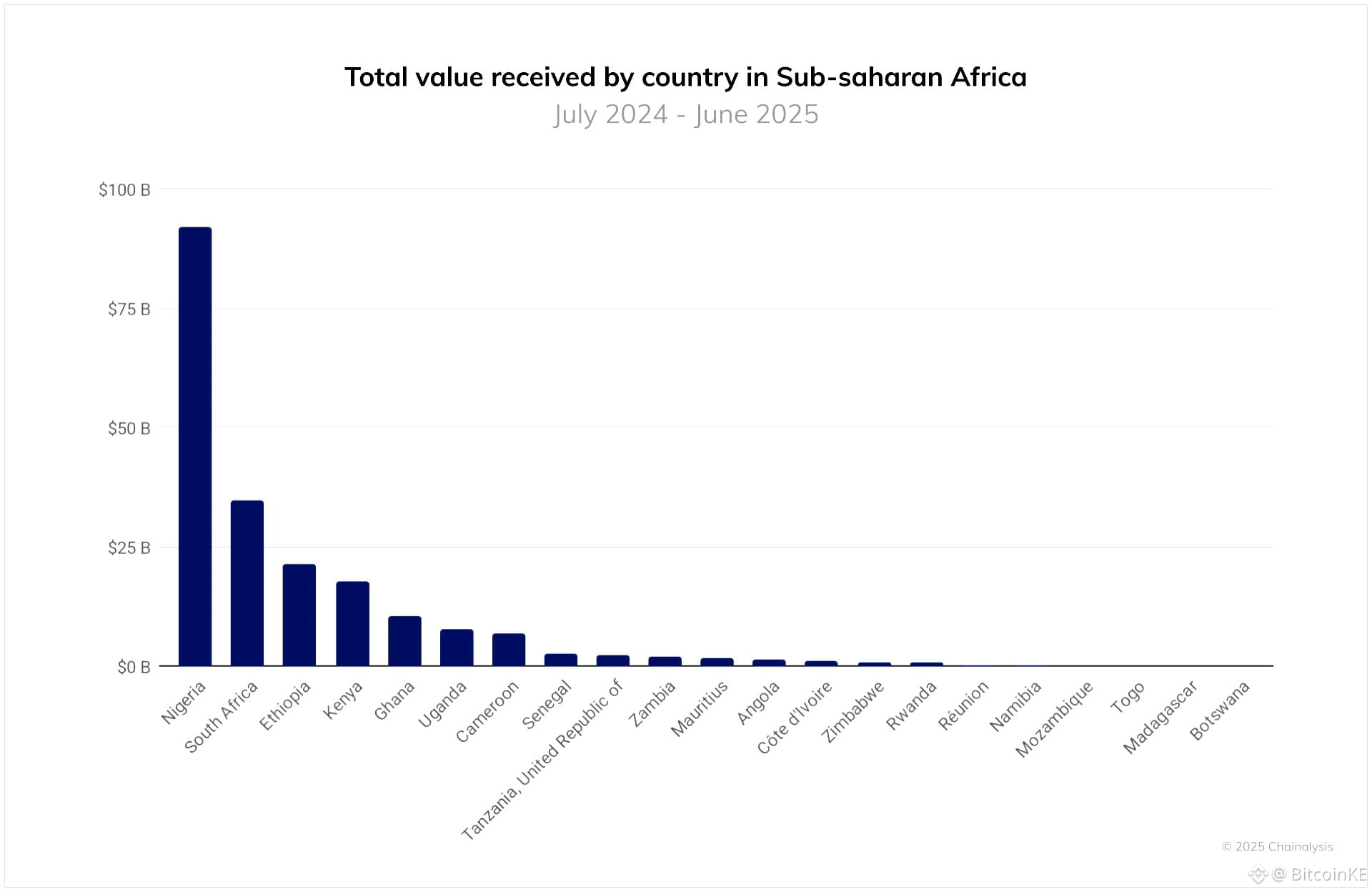
Nigeria’s approach mirrors a wider African trend: as fintech and crypto mature, governments are moving to formalize, tax, and integrate digital finance into national revenue systems.
For crypto platforms and users, compliance strategy is quickly becoming as important as product or pricing.
REGULATION | Nigeria Starts Implementing CARF Requirements by Tying Crypto Transactions to Tax and National IDs
Sign up for BitKE updates for the latest crypto updates from across Africa.
Join our WhatsApp channel here.
Follow us on X for the latest posts and updates
Join and interact with our Telegram community
_______________________________