
Have you ever watched something that looks perfect on paper… and then felt it fall apart when you try to use it for real money? That’s been blockchain for big finance. It’s shiny until banks, regulators, and auditors show up. Then… it stumbles.
Most chains try to patch privacy here… compliance there… like sewing buttons on a jacket that wasn’t meant to have any. It sorta works until it doesn’t. Users notice. Developers sigh. Institutions stay on the sidelines.
Then comes Dusk not loud, not flashy but built from the ground up for the messy world of real finance. And it feels different.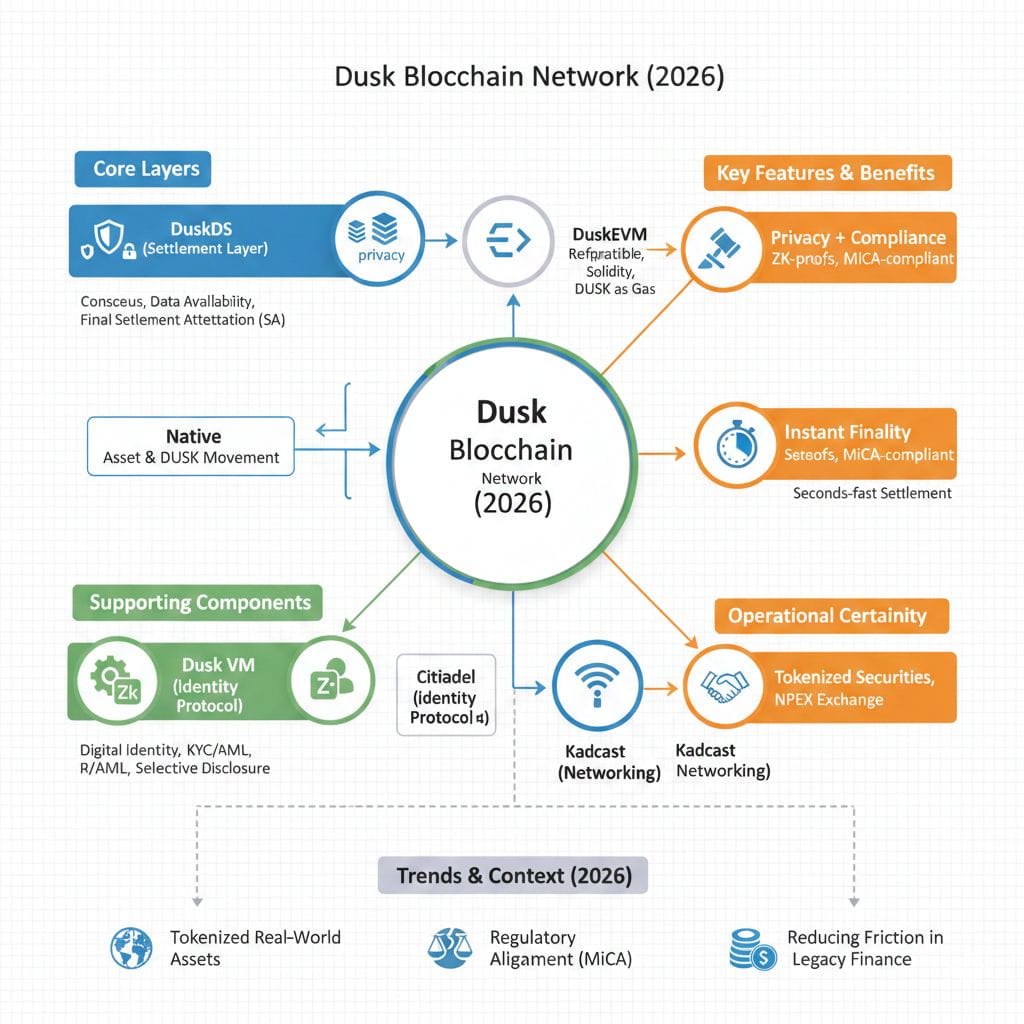
Pause… and think about settlement that actually settles when it should. Not later. Not maybe. Final. That’s where DuskDS lives. This layer handles consensus, settlement, and data availability all together. It’s like the backbone of the network strong, steady, reliable. Recent upgrades even combine settlement with data storage more efficiently, cutting costs and reducing friction. That matters when every saved millisecond and saved dollar counts.
Now… on top of that sits DuskEVM an execution environment that feels familiar. Developers can write smart contracts with tools they already know. Hardhat. MetaMask. Solidity. But here’s the twist those contracts still settle on DuskDS. So you get familiar tooling and the privacy + compliance foundation underneath. That’s not something you find everywhere.
And connecting these layers? A native bridge. Not with wrapped tokens. Not with middlemen. Just trustless movement of value. It’s simple in concept, but powerful in effect. All these pieces flow together without discomfort, without awkward gaps.
There’s also a part of Dusk that feels quite human Citadel, the identity and access control system. Real finance needs privacy. But it also needs accountability. Citadel lets institutions handle KYC/AML in a way that protects user data and still satisfies regulators. It doesn’t feel like surveillance. It feels like respectful visibility, if that makes sense.
And let’s talk now about where the world is heading. Right now, tokenized real‑world assets aren’t some distant fantasy. They’re being piloted. Exchanges like NPEX are working with compliant chains to bring regulated securities on‑chain. Projects are pushing for systems that can handle identity, liquidity, regulation and privacy all at once. Dusk’s modular stack fits exactly into that trend. It’s not trying to force new markets into old molds. It’s building something that actually works with how markets already operate.
Of course and let’s be honest nothing is without challenges. Institutions move slow because trust is earned, not rushed. Regulations change. New paradigms take time to shake off old habits. And every upgrade has to be tested and proven in real environments before it can be truly trusted.
But here’s the part that really gets me emotionally, as someone who watches this space closely: Dusk feels grounded, not gimmicky. It doesn’t chase every trend. It doesn’t promise moonshots. It patiently, thoughtfully builds. That’s rare. And that’s why it feels like a real contender for the infrastructure layer that actual regulated markets can use.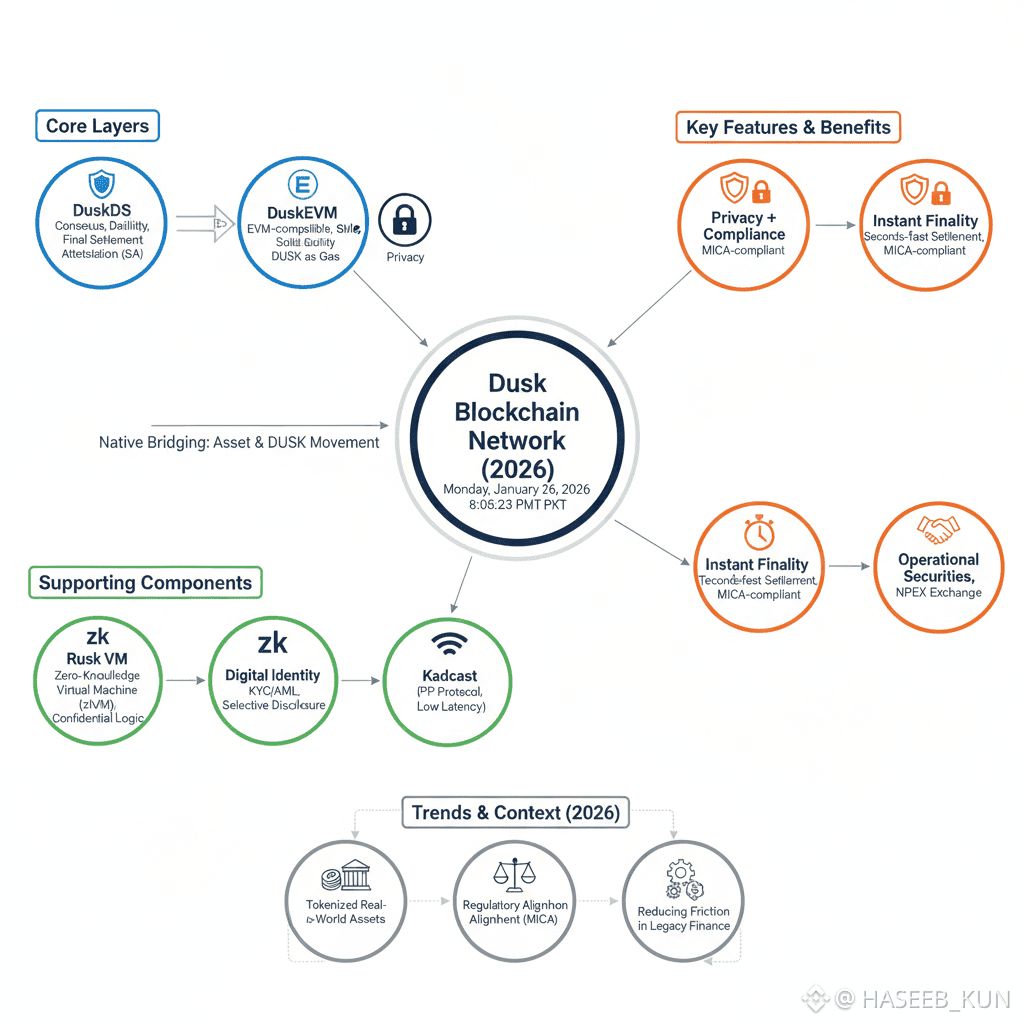
If blockchain is going to grow beyond hype and become something institutions can actually trust with real value, it needs layers that make sense. Not patched on features. Not half‑solutions. But design that starts with privacy, compliance, and real settlement at the core.
And from where I’m sitting… Dusk feels like a step in that direction. It feels like infrastructure with intention.
