
For a long time, I assumed stablecoins were already “good enough.”
They didn’t swing wildly in price. They held their peg. You could move them across chains. From the outside, it looked like the problem was solved. If anything still felt broken in crypto, it probably wasn’t the stablecoin part.
That’s what I thought, anyway.
Using Plasma made me realize something I hadn’t fully noticed before: stablecoins themselves might be stable, but the experience around them still wasn’t. There was always friction hiding in the background. Small things, but constant things. Enough to remind you, every single time, that you were still dealing with crypto.
Plasma doesn’t announce this problem. It doesn’t frame itself as fixing some grand narrative. It just quietly removes those reminders. And once they’re gone, it’s hard not to notice how much work they were doing before.
Stablecoins Were Never Just About Not Losing Value
In everyday life, money isn’t impressive. It’s forgettable.
You don’t prepare yourself before sending it. You don’t explain the system behind it. You don’t pause to make sure you’re holding the right thing just to complete a basic action.
Crypto stablecoins never quite felt like that.
You still needed gas.
You still needed timing.
You still needed attention.
Plasma feels like a system built around the idea that stablecoins should stop behaving like crypto assets and start behaving like money.
Not louder. Not flashier. Just simpler.
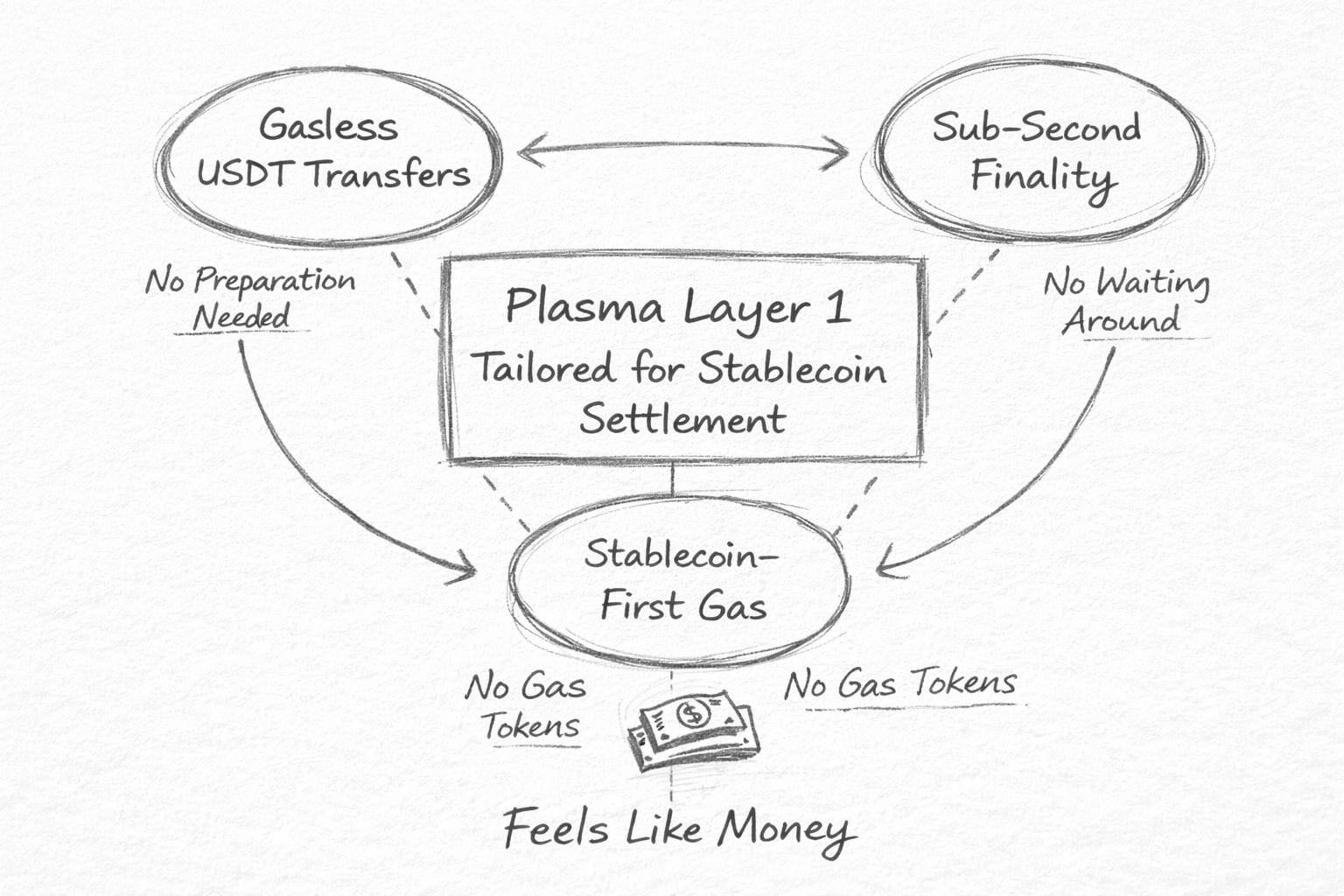
A Layer 1 That Starts With Stablecoins, Not Ends With Them
Most Layer 1s support stablecoins as one of many assets. Plasma is designed around stablecoin settlement from the start.
Gasless USDT transfers aren’t an optional feature. Stablecoin-first gas isn’t a UX experiment. These choices define how the network behaves. You’re no longer required to hold something volatile just to move something stable.
On most chains, stablecoins adapt to the network.
On Plasma, the network adapts to stablecoins.
That inversion changes how the entire experience feels.
Finality That Ends the Conversation
Sub-second finality under PlasmaBFT sounds like a performance detail, but it changes behavior.
On slower systems, there’s always a pause after you send a transaction. You wait before taking the next step. You refresh an explorer. You leave a tab open “just in case.”
Plasma shortens that pause until it barely exists.
By the time you think about checking, the transaction is already finished. The system answers the question before you finish asking it.
Finality stops being something you verify.
It becomes something you feel.
Gasless USDT Isn’t About Fees It’s About Headspace
Gasless USDT transfers remove more than cost. They remove mental steps.
No checking balances.
No swapping tokens.
No second-guessing timing.
You send the stablecoin. It settles. You move on.
Over time, that simplicity compounds. You stop bracing yourself before sending money. Stablecoin transfers stop feeling fragile.
They start feeling ordinary.
EVM Compatibility Without the Chaos
Plasma’s full EVM compatibility through Reth lowers integration friction, but it doesn’t turn the network into a playground for unpredictability.
Execution stays consistent. Outcomes stay predictable. For settlement systems, knowing exactly when something is final matters more than being able to do everything at once.
Plasma prioritizes reliability over novelty a choice that fits payments better than speculation.
Bitcoin Anchoring and Why Neutrality Matters
Plasma’s Bitcoin-anchored security design isn’t about branding. It’s about grounding trust externally.
Payment and settlement systems depend on neutrality. Institutions worry about governance capture, censorship risk, and long-term predictability more than flashy features.
Anchoring to Bitcoin signals restraint. It ties Plasma’s security assumptions to a system that is deliberately hard to control.
For stablecoin settlement, that neutrality is foundational.
Retail and Institutions Aren’t As Different As We Pretend
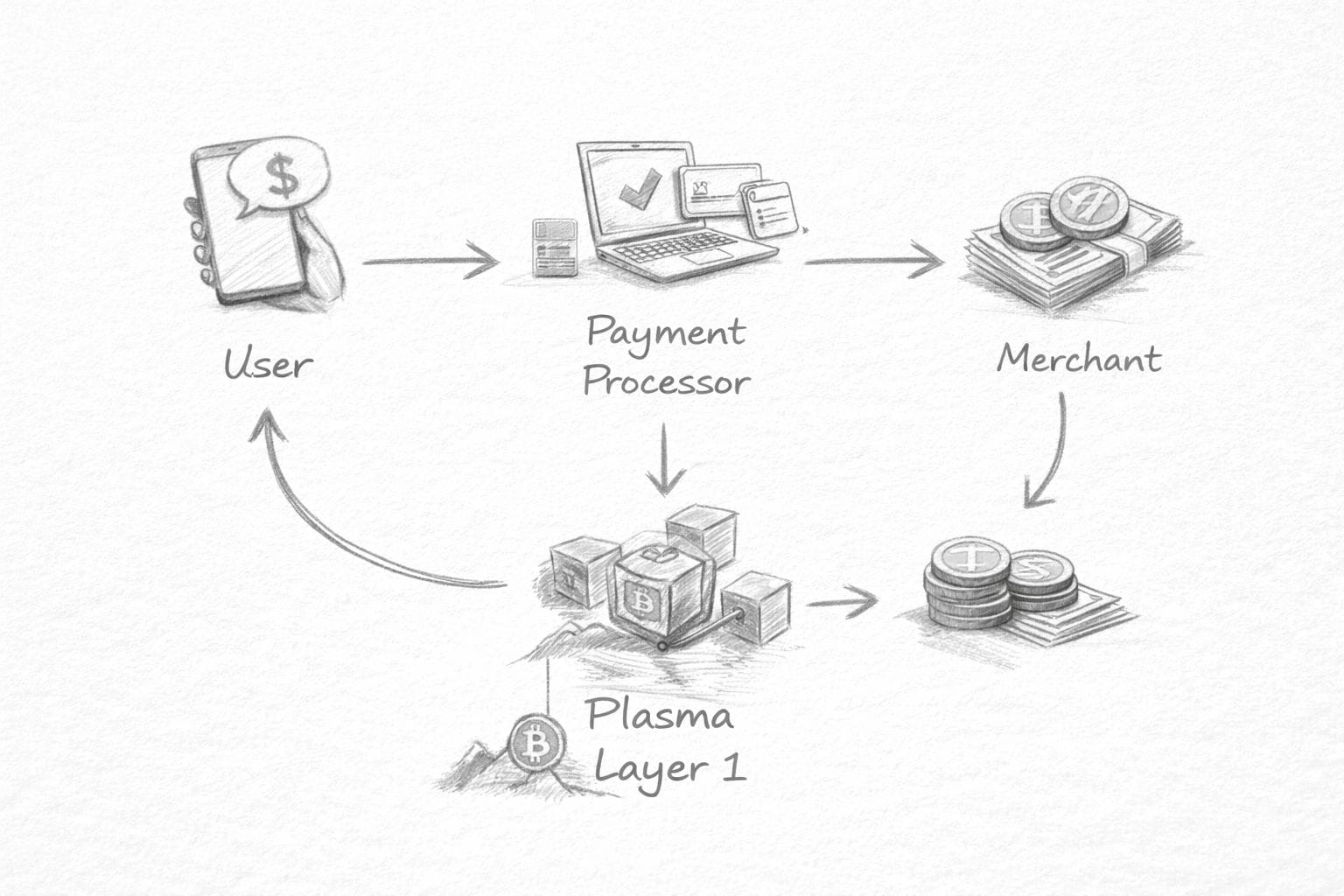
Plasma targets both retail users in high stablecoin-adoption regions and institutions in payments and finance. These groups are often treated as opposites.
In practice, they want the same things:
predictable settlement
minimal friction
systems that don’t demand attention
Retail users don’t want to learn gas mechanics. Institutions don’t want operational surprises. Plasma’s design quietly serves both.
The Risk of Being Quiet
There is a risk to Plasma’s approach.
Quiet systems don’t generate hype. They don’t dominate timelines. They don’t create dramatic moments.
Crypto often rewards the opposite.
But settlement infrastructure has never been about excitement. It’s about repetition doing the same thing correctly, over and over again, without demanding attention.
If Plasma succeeds, it won’t be because people talk about it constantly. It will be because they stop talking about it at all.
Final Thought
The most interesting thing about Plasma isn’t how fast it is or how advanced it is.
It’s how little it asks from you.
No preparation.
No hovering.
No explanation.
Stablecoins finally start feeling ordinary.
And in crypto, that quiet ordinariness might be the deepest kind of progress.

