
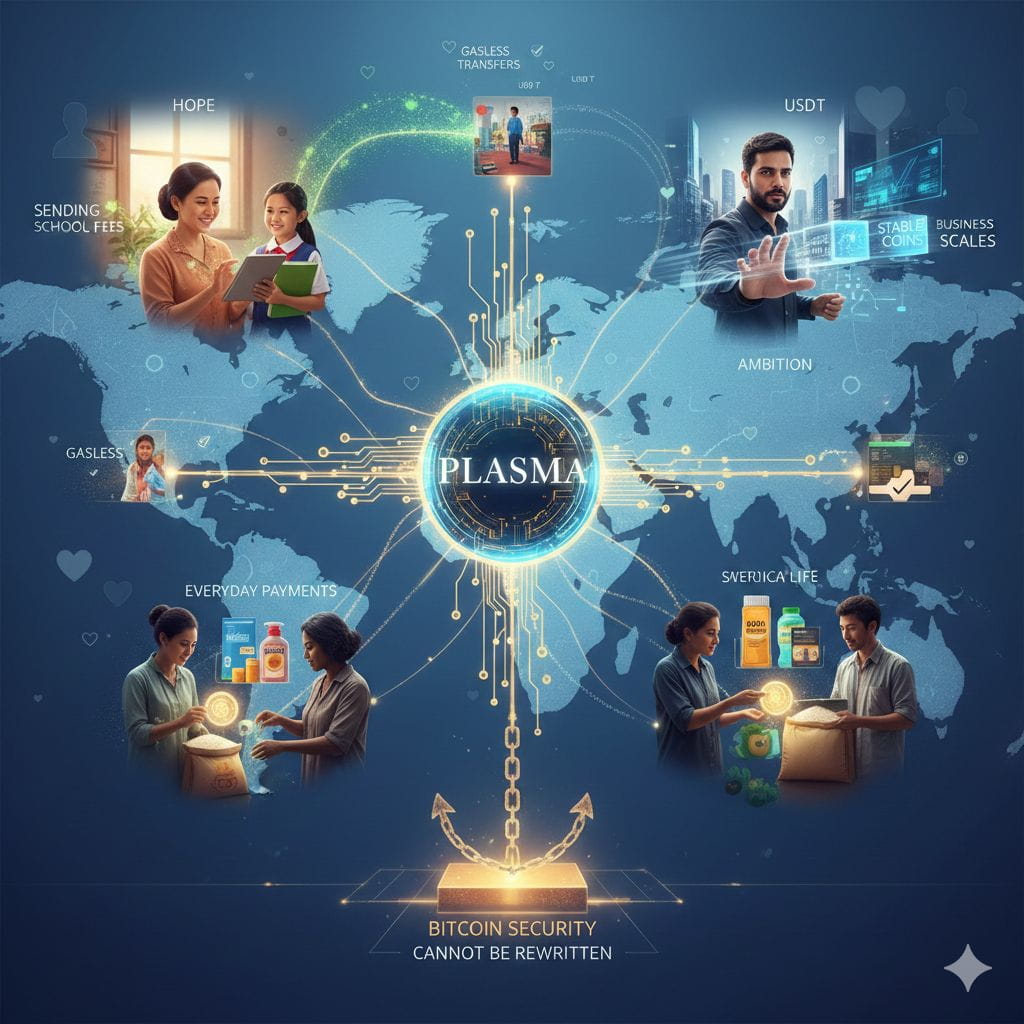
 From the first moment anyone imagined money moving across the world without borders, without endless fees eating away at every transaction, without middlemen deciding who is allowed and who is blocked, there was a quiet human longing behind it — a yearning for fairness, dignity, and connection. Plasma is born from that longing, not as a lifeless protocol but as a living response to the hurt and hope that billions of people feel when sending value to loved ones, running businesses, or trying simply to participate in the modern economy. Imagine a mother halfway across the world, trying to send her child school fees without losing precious dollars to outrageous costs, or an entrepreneur hoping their stable coins will move with the speed of their ambition instead of in fits and starts — Plasma holds that hope in its design. The purpose of Plasma pulses with humanity: to make stablecoins feel like they were always meant to be instruments of everyday life, as natural and fluid as breathing, so that when someone sends USD T, they feel relief and confidence instead of stress and uncertainty.
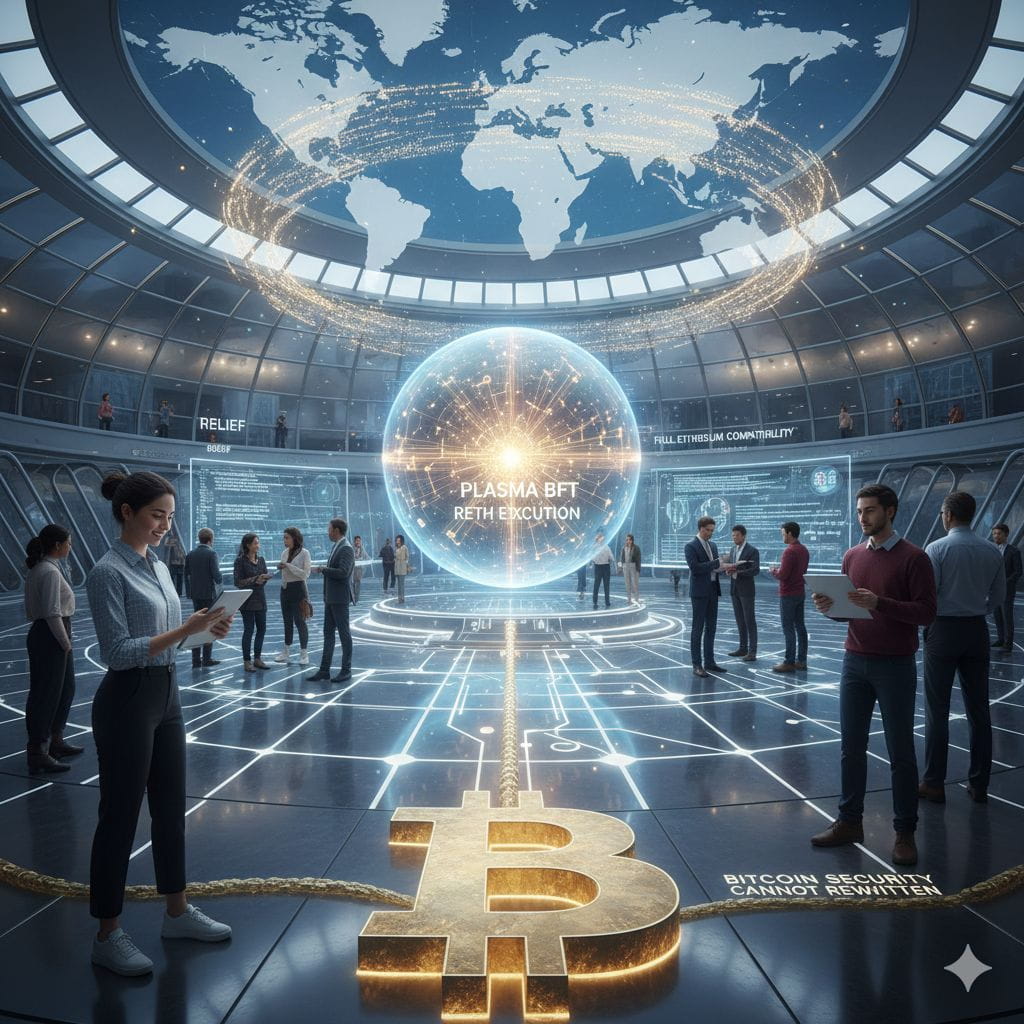
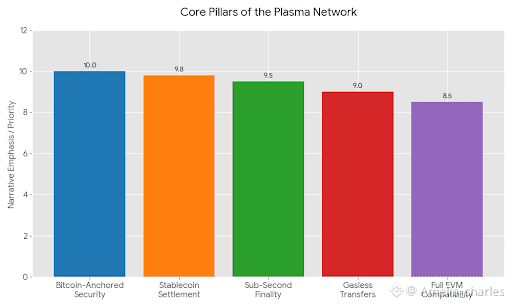
The journey that led to Plasma is a story of dreams tempered by reality, of builders who watched early blockchains lift our expectations only to find those same systems slow, expensive, and impractical for real people trying to pay for rice, rent, or medicine. They saw how existing networks treated stable value like an afterthought and wondered what it would take to build a world where stablecoins are at the very heart of settlement. Plasma’s creators answered that question by designing a Layer 1 network that combines the familiar power of full Ethereum compatibility with an execution environment called Reth that feels like home to developers while giving users something entirely new: the feeling that money moves with the certainty of a heartbeat. They crafted a consensus engine known as Plasma BFT that finalizes transactions in sub second time, so every transfer feels instant and real, so you don’t have to wait and worry if your payment will go through. At the core of this design is a belief that speed should never come at the cost of trust, and that trust should never be a privilege only afforded to the wealthy or well connected.
What makes Plasma feel truly human is not just its engineering but its heartfelt commitment to stability, neutrality, and freedom. Its architecture anchors to Bitcoin security in a way that whispers reassurance into every transaction: the ledger that records value is tethered to the most battle tested decentralized network in history, giving users the emotional comfort that their money cannot be rewritten or controlled by shadows behind closed doors. This commitment to censorship resistance is not a technical boast but a guarantee, a promise that when someone presses send on a stablecoin payment, they are seen, respected, and honored by the technology. Plasma does not ask users to pay high fees in unpredictable tokens just to move money; instead it reimagines gas so that stablecoins themselves can be used to pay for fees, even offering gasless transfers for assets like USD T, easing the emotional burden many feel when technology becomes more complicated than the lives it is meant to improve.
 When Plasma launched its mainnet beta the world felt it — not as a dry moment in a timeline but as a collective exhale from a community hungry for real progress. Within days billions of dollars in stablecoin liquidity flowed onto the chain, not because of hype but because people saw the possibility of a future where money is not a source of friction but a source of freedom. Every deposit, every transfer, every application built on Plasma carries the weight of human stories: of families separated by distance but connected by dollars that finally move with compassion, of businesses that can scale without fear of crippling fees, of innovators who can build new financial experiences that honor users instead of exploiting them.
And yet Plasma’s path is not naive to risk. The technical innovations and novel consensus mechanisms carry challenges that must be stewarded with care and humility. The process of decentralizing the network and its validators is ongoing, reflecting a conscious pace that privileges safety over reckless expansion. There are pressures from other chains, regulatory uncertainty, and the ever present emotional roller coaster that comes with building something new and transformative. These risks are not shadows to hide from but parts of the human story of creation, the tension between fear and hope that every pioneer faces.
 Looking forward Plasma carries a promise that feels almost tender in its depth: a world where sending stable value is as simple as speaking a sentence, where people feel relief instead of anxiety when they think about payments, where institutions and everyday users alike can participate in a financial system that respects their time, their money, and their dignity. In Plasma the code is not cold and remote but knitted with the emotions of people who have been burned by old systems and are ready to believe again. It is a testament to the idea that technology at its best does not just solve problems but heals the everyday experiences of exclusion, cost, and delay, offering instead a future that feels alive with possibility and deeply in tune with the human heart