A couple of days ago, I went to the bank to handle a cross-border remittance. The teller reviewed my information for half an hour and finally told me, 'System maintenance, come back tomorrow.'
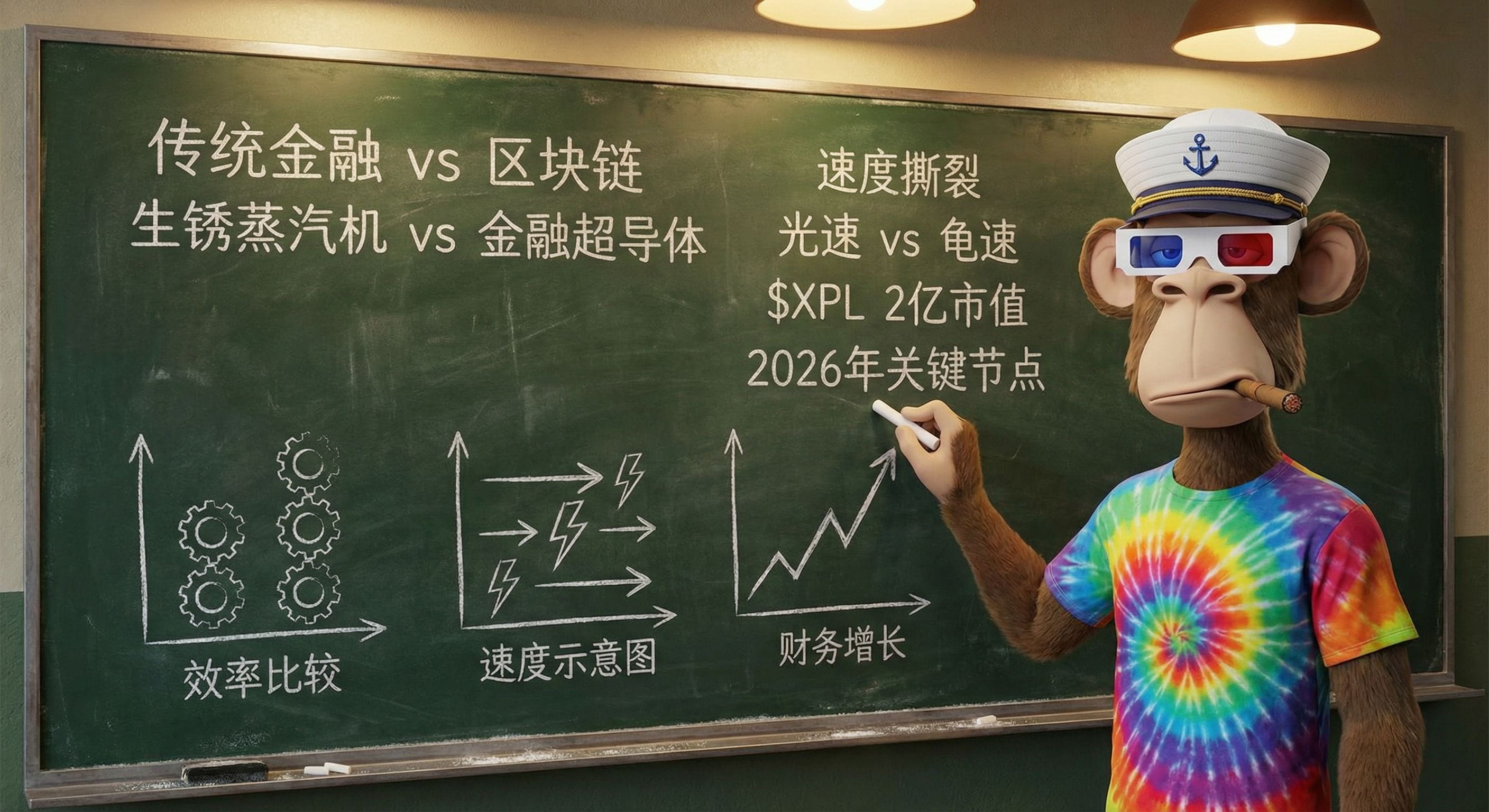
In that moment, I stood in the lobby, looking at the electronic screen displaying the exchange rates above me, and suddenly felt that the entire traditional financial system was like a rusty steam engine.
It's running idle, consuming energy, and charging me a $50 fee.
With this physiological disgust, I went home and opened the on-chain data of @Plasma ; what I saw was another extreme scene.
This is simply a financial superconductor.
Look at the things it recently integrated: NEAR Intents allow for large settlements with one click, CoW Swap helps you block MEV, syrupUSDT and Aave provide an almost frictionless earning environment.
Here, the flow of funds is without resistance. Money goes in, and it can immediately find the pool with the highest returns (TVL 1.1 billion+), or quickly rotate through Fluid. This is a perfect physical model operating in a vacuum.
————————————
But the problem lies exactly here.
When this 'superconducting machine' tries to connect to the real world, it hits a wall.
Although Rain cards and ConfirmoPay have been integrated, theoretically covering 150 million merchants, the reality is that the merchants' cash registers are insulators.
Even if Plasma reduces Gas to 0, merchants still have to face the extremely complex frictions of taxes, compliance, and reconciliation.
On-chain efficiency is at the speed of light, while off-chain habits are at a turtle's pace.
This creates an extremely awkward speed tear.
The current Plasma is like a Bolt trapped in a cage. Its efficiency on-chain has been maximized (the second largest lending scale globally), but its penetration off-chain can only be ground down little by little.
For investors, this is both a risk and a source of huge odds.
The current market value (over 200 million) is actually discounting this 'tear sensation'. The market assumes it is just an efficient DeFi parking lot.
///
But if by 2026, the 'insulating layer' in the real world is worn down even a little bit.
For example, if a compliance channel in a certain area is opened up, or merchants start to switch sides to save 2% on card fees.
Then the energy released by this superconducting machine will instantly break through the current valuation model.
What we are actually betting on is not whether Plasma will be better, but whether the real world will compromise for 'efficiency'.