

If we place $KGEN into a more realistic coordinate system, it resembles a company that has already survived the cold start and has reached the 'sustainable operation' stage, rather than a token that has just launched and is waiting for narrative relay. The most counterintuitive aspect of KGeN is not the complexity of its technology, but the path it has chosen, which is rarely seen in Web3: first generating revenue, and then using tokens to capture value. In other words, it is not selling a future vision; it is gradually mapping an already proven cash flow onto the blockchain.
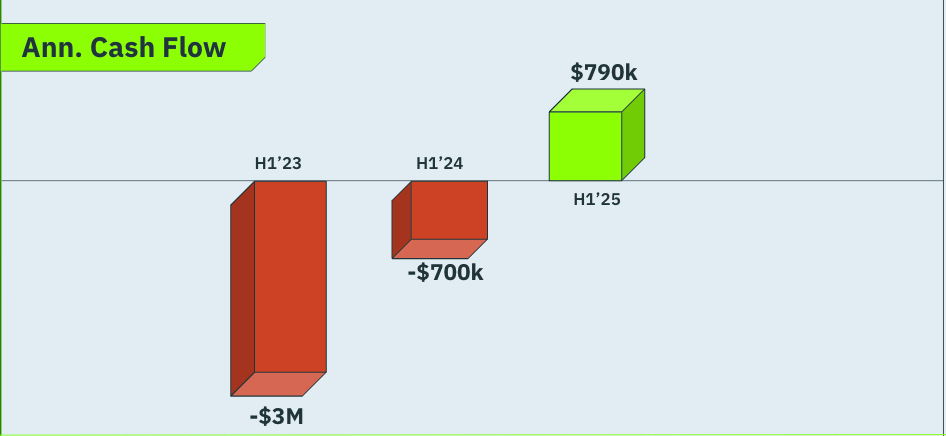
Understanding KGeN's first priority is not to read the white paper, nor to look at community sentiment, but to examine a metric that is almost 'too scarce to blend in' within Web3: ARR. The annual recurring revenue (ARR) disclosed by KGeN exceeds 80 million dollars. This figure may not be exaggerated in traditional startups, but it is extremely rare in the crypto context. More crucially, it emphasizes that this data is not driven by one-time collaborations, subsidies, or short-term activities, but rather by recurring revenue contributed by paying customers. From an investment research perspective, the value of this detail far exceeds any narrative packaging: it signifies that KGeN has at least achieved the most fundamental business validation—people are willing to pay for its services over the long term, rather than just participating once at emotional peaks.
This also explains why KGeN's business is often misinterpreted by many. Most Web3 growth tools eventually boil down to words like 'traffic', 'distribution', and 'growth', but what KGeN is really selling is not exposure, nor is it paid traffic channels, but something scarcer and more aligned with corporate budget logic: trusted real human participation. It organizes 'people' as a verifiable resource and provides 'callable' real behavioral capabilities. The KGeN system discloses coverage of approximately 48.9 million verified users, who are not anonymous addresses or bot accounts, but real individuals labeled with identity, skills, and behavioral characteristics. For businesses, this means they are not buying clicks, but rather 'auditable participation results': a group of verifiable people who can be incentivized, recalled, and continuously operated, ultimately forming a loyalty and repeat purchase growth model.
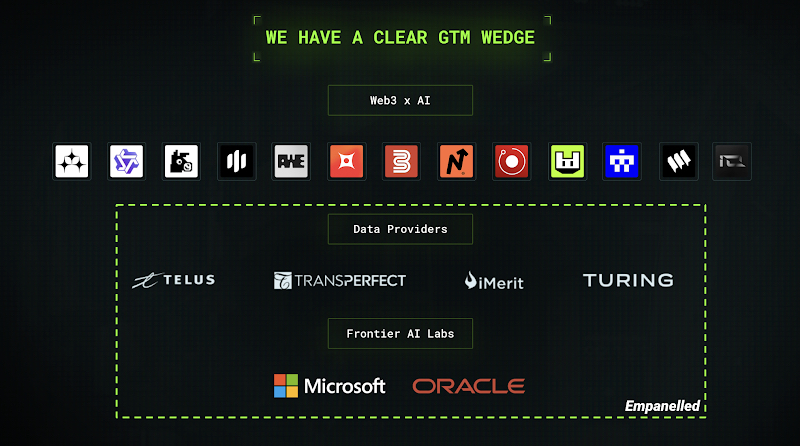
When you understand this, you can also understand the part of the KGeN system that is easiest to underestimate: KAI. KAI does not chase 'AI narrative hype' like many projects; it is more about solving a long-standing problem that has not been standardized: how to scale high-quality human feedback. The advancement of AI models relies on computing power, data, and feedback, but what is truly difficult to scale and process is 'human signals'. RLHF (Reinforcement Learning from Human Feedback), TTS voice data, multilingual labeling and evaluation all come back to the same thing: you need enough, sufficiently real, and manageable human participants who can continuously and stably deliver quality. KGeN's advantage lies precisely here: it is not a temporary assembly of outsourced human power, but transforms dispersed human participation into 'feedback capability' that companies can procure long-term, productizing and streamlining this process to ultimately form a sustainable B2B revenue stream.
Back to the token layer, $KGEN's logic should not be simply categorized as a 'narrative token'. Structurally, it is not designed as a central narrative token that rushes to the front based on emotions; it resembles a value-bearing tool standing at the back end of the business: the token is situated in the protocol revenue and incentive flow path, connecting two types of real demand—one is the user acquisition budget (UA) of game developers, and the other is the enterprise revenue brought by AI data services. In other words, token demand does not entirely come from secondary market sentiment, but is directly related to business scale. You may not like the style of this project, but it is hard to deny that this structure is easier to verify than 'just relying on storytelling': whether revenue can expand, whether customers can be retained, and whether AI business can continue to scale will all be reflected in the links.
Of course, to be frank, this path is not without resistance. First, whether AI-related revenue can continue to scale will be influenced by customer concentration, delivery quality, competitive landscape, and macro budget cycles; second, whether market valuations have already reflected growth expectations is a test that all projects with 'cash flow narratives' must face; furthermore, the faster the business expands, the higher the organizational costs, and a slowdown in growth and fluctuations in profit margins may occur. None of these variables can be hedged in advance by any grand narrative; in the end, it all comes down to data and time.
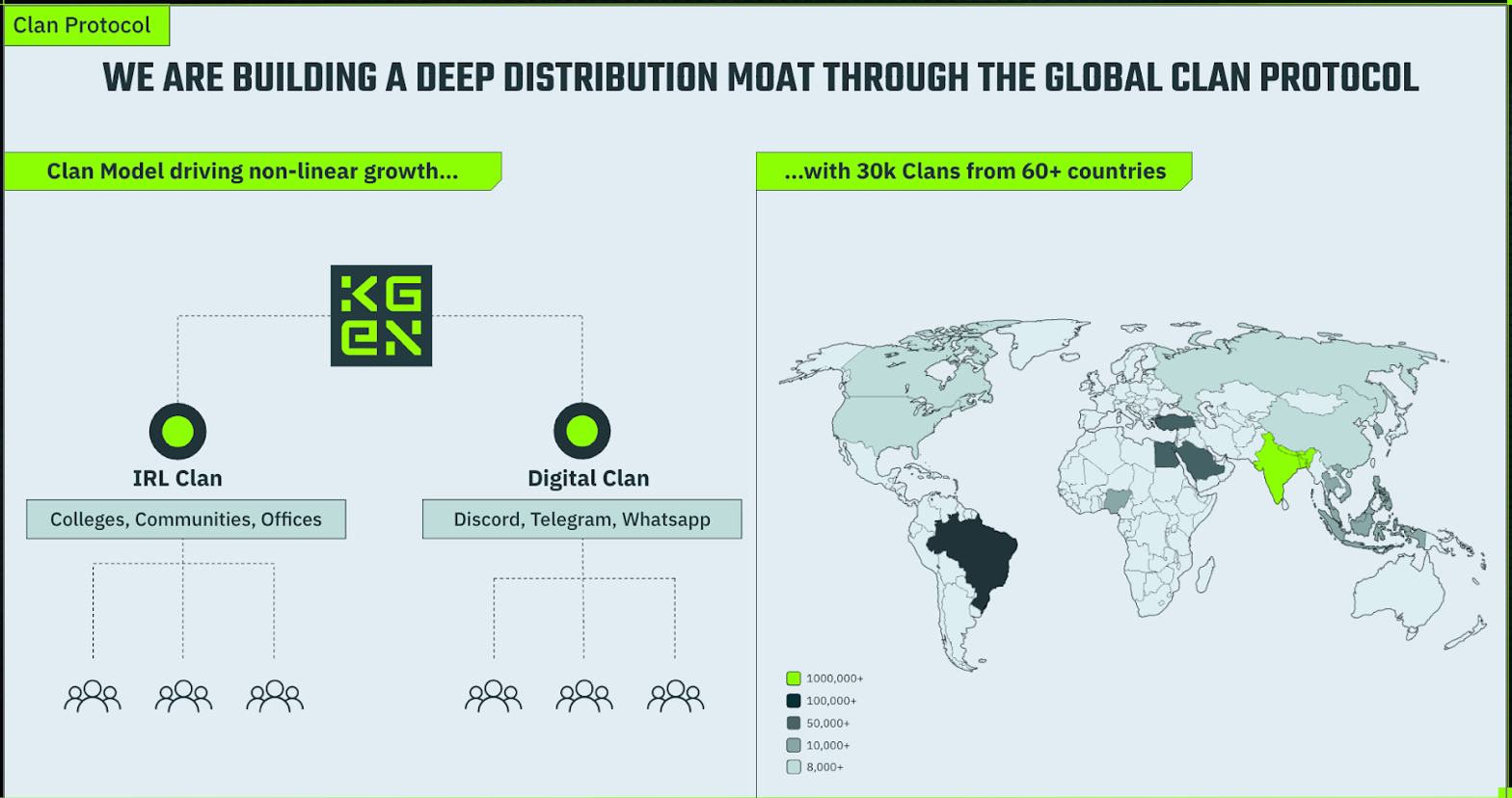
But it is precisely because of this that KGeN's uniqueness becomes more apparent: it has provided the market with a set of sustainable and verifiable metrics. You do not need to believe its story; you just need to continuously look at its accounts: whether ARR is growing, whether the number of paying customers is expanding, whether KAI business has become a second growth curve, and whether the network of verified users continues to expand and maintain quality. For a market long entangled in 'empty narratives', projects that can tell their stories with data rather than slogans are already few and far between.
Finally, I want to conclude with a sentence: Understanding $KGEN's order should be 'first look at revenue, then look at narrative'. Because narratives can be orchestrated, hype can be manufactured, but sustainable payments and recurring revenue are hard to fake. If KGeN can ultimately succeed, it will not be because it told a tighter narrative, but because it sustained its business endurance longer, more steadily, and more verifiably. @KGeN_IO
