

If you've seen the Mac mini being sold out, geeks starting to showcase 'AI farms', or someone seriously discussing 'whether to allocate a separate budget for AI', then you are basically on the edge of the storm brought by Clawdbot.
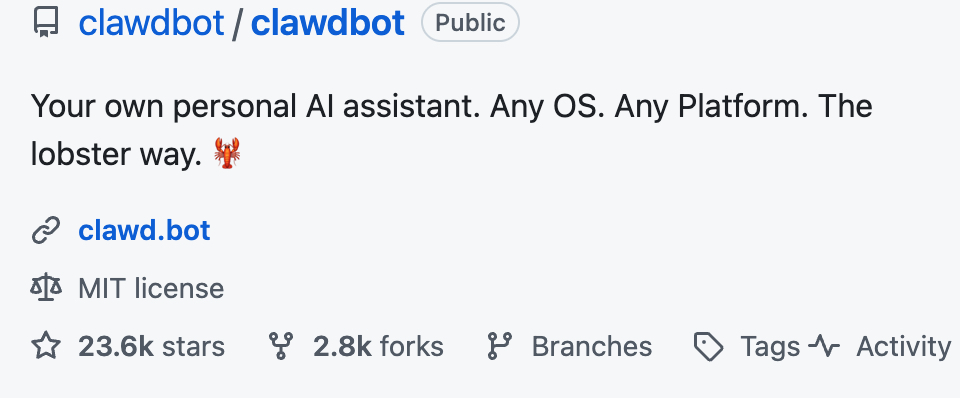
The rise of Clawdbot is not because it is much smarter than ChatGPT, but because it has brought to the forefront something that has long been avoided: AI is no longer a tool, but an executing entity.
This may sound like nonsense, but the difference is significant. All past AIs were essentially 'waiting for people': waiting for you to open a webpage, waiting for you to type commands, waiting for you to copy and paste, waiting for you to confirm. Efficiency has improved, but people have always been tied to the process. Clawdbot, on the other hand, is completely different; it is online by default, continuously running, has permissions, and remembers all your preferences and historical decisions. When you're not there, it is; when you forget, it doesn't forget.
What truly caused a stir in Silicon Valley is not its ability to write code, gather data, or run scripts, but that it began to act like a 'partner that never clocks out.' Many developers felt uneasy for the first time when they discovered it could incorporate small matters mentioned casually two weeks ago into long-term memory and actively call upon them in subsequent tasks. This is not prompt engineering; this is 'behavior continuity.'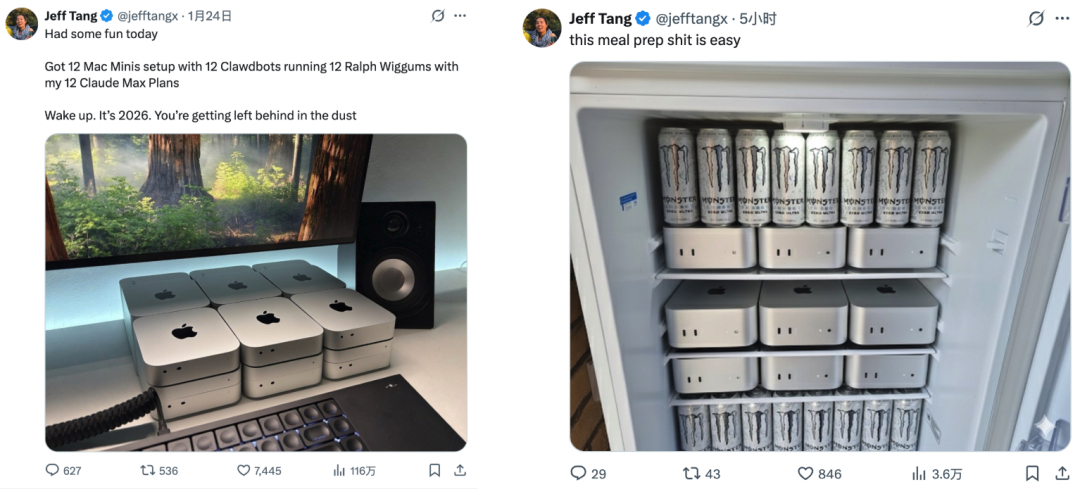
Ironically, such a thing does not run in the cloud. All of Clawdbot's memories, skills, and preferences are files on your local machine. It does not 'lend' itself to you like traditional SaaS, but you own it completely. This concept is extremely familiar to people in the crypto space: local, verifiable, transferable, with no platform lock-in. Many people even joke that this is an 'AI that is more Web3 than 90% of Web3 projects.'
Also, precisely because of this 'personal node' attribute, the Mac mini has suddenly been sold out. Not because Apple did something right, but because for the first time, there is something that makes ordinary people willing to pay for 'execution authority.' This is almost identical to the logic when mining machines sold out: when productivity is first decentralized to individuals, hardware always suffers first.
What is truly concerning is the cost structure. A few dozen dollars a month for a 7×24 hour, unemotional, unproductive, and non-job-hopping 'digital executor.' This means that jobs heavily reliant on 'people to run processes' now face structural replacement risks for the first time. It's not about being replaced by AI writing code, but rather being taken over by AI in executing the workflow.
This is also why Clawdbot makes many SaaS, automation platforms, and outsourcing tools feel uneasy. It's not about enhancing functions, but about the premise of existence: if a local AI can write scripts, adjust APIs, and run cron jobs by itself, then the significance of a subscription-based intermediary will be rapidly compressed.
From a broader perspective, Clawdbot is just a signal. The core of the signal is not about how powerful AI is, but about the execution authority beginning to detach from human real-time supervision. When the execution authority is released, the world will naturally differentiate into two types of roles: those responsible for decision-making and those replaced by decisions.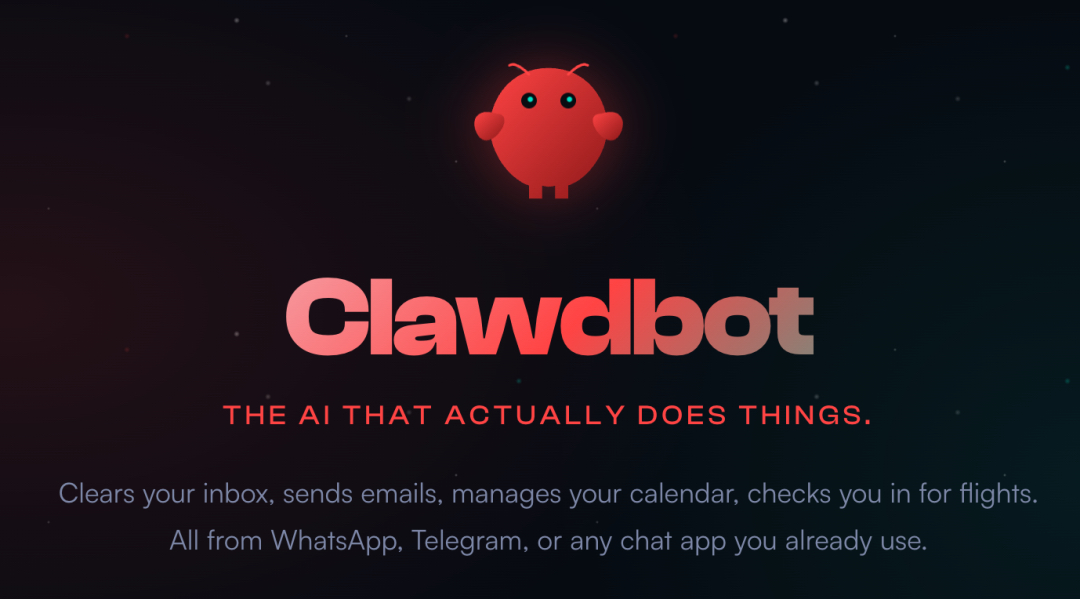
By the way, if you come from the crypto space, there's an unavoidable question here: when AI starts running tasks for the long term, scheduling resources, assessing risks, and even reviewing profits by itself, what does it use for settlement? What does it use for accounting? What does it use for cross-system payments? You will find that this question is much more realistic than 'how many model parameters are there.'
Clawdbot has not dominated the world; it is still very early. But it has made everyone realize for the first time: humans do not necessarily have to stay at the execution layer.
And once this matter is established, many old orders will collapse faster than expected.
This is not a tool upgrade; it's a role change.