
Ethereum ETF welcomes capital inflow
On January 26, after a period of adjustment, Ethereum rebounded, with the U.S. spot Ethereum ETF recording a net inflow of $117 million. Among them, Fidelity Fund performed the best, with capital inflow reaching $137 million that day, ending a previous four-day streak of outflows. Meanwhile, BlackRock Fund experienced a net outflow that day. This divergence indicates that institutional investors are being more selective in their positions rather than going all in. This has also led traders to start paying attention: are institutions rebuilding their positions or making short-term asset adjustments?#ETH
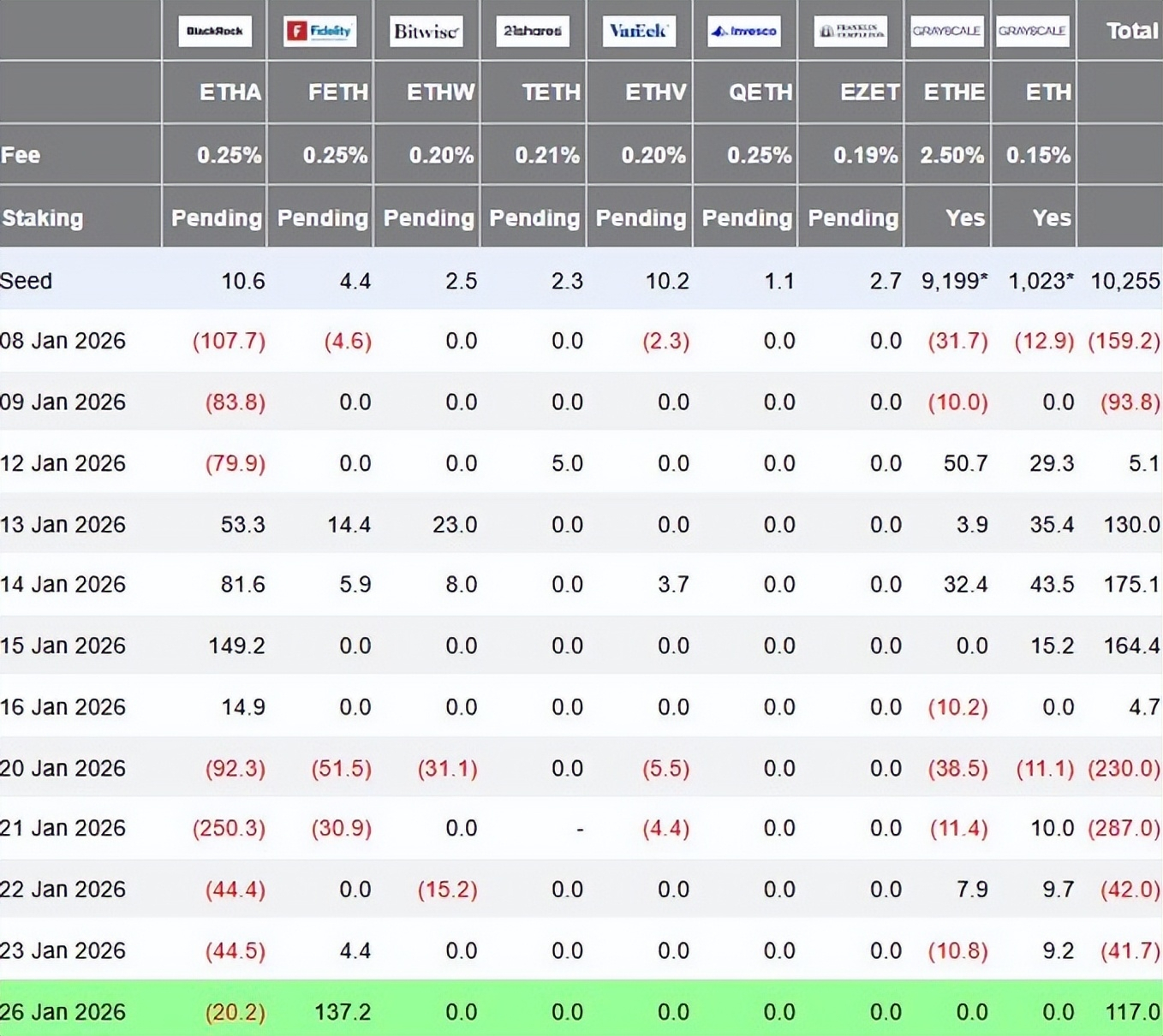
Although the inflow of funds itself does not guarantee an immediate price increase, it at least shows that there is financial support at the market bottom, and bulls still have opportunities.
Network transaction fees have dropped to historical lows
According to Glassnode data, on January 27, Ethereum's total transaction fees dropped to the lowest level since May 2017. The significant decrease in fees enhances the network's scalability and security, while also lowering user transaction costs. This is very beneficial for the development of the ecosystem and lays a foundation for future growth.
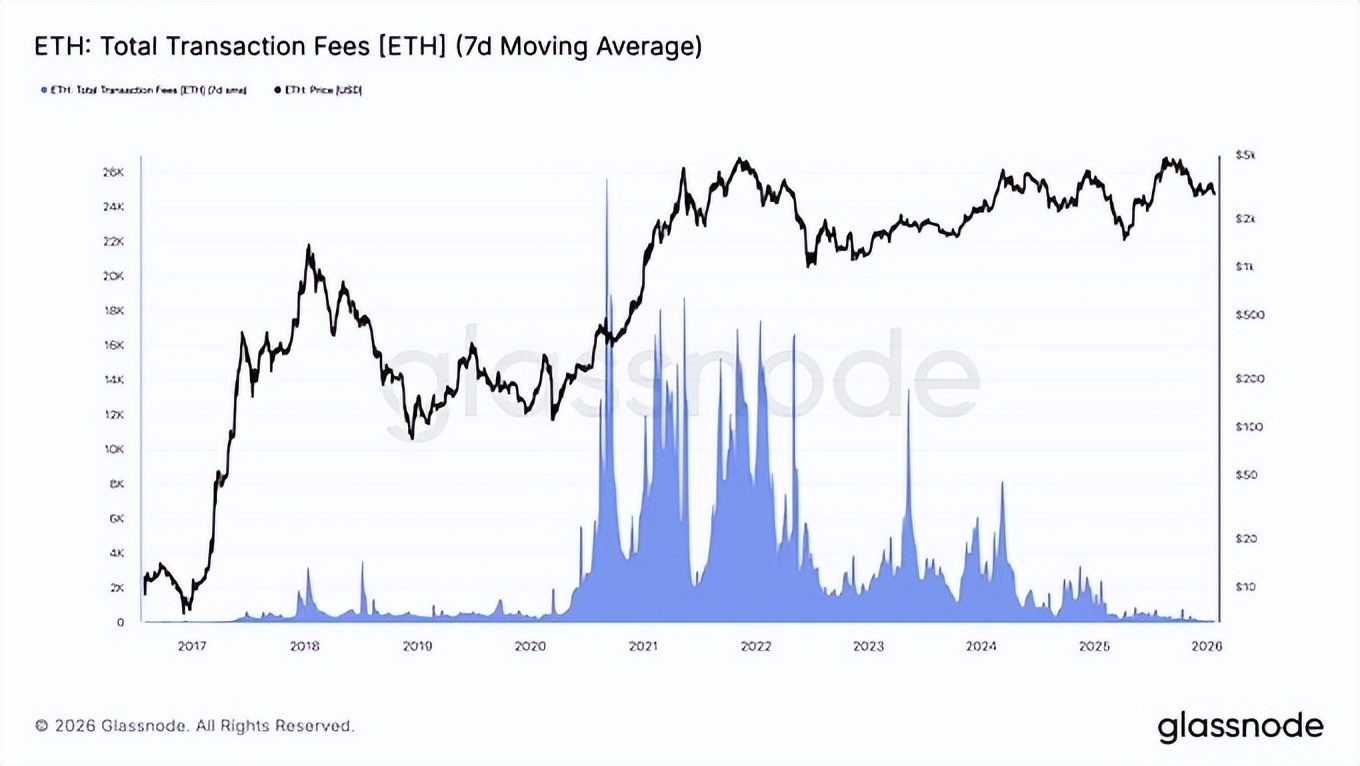
However, it is worth noting that while low fees can improve ecological health, it does not necessarily mean that prices will immediately surge in the short term. The real test still lies in how to maintain long-term explosive growth, which is somewhat similar to the expansion periods of 2017 and 2021, when transaction fees also experienced similar lows.
Key support zones emerge
During the price correction phase, a clear liquidity accumulation zone has formed around $2,900 and $2,850. Large buy orders in these areas have attracted big whales into the market, providing solid support. In other words, as long as the price holds within these ranges, bulls have the opportunity to regain momentum.
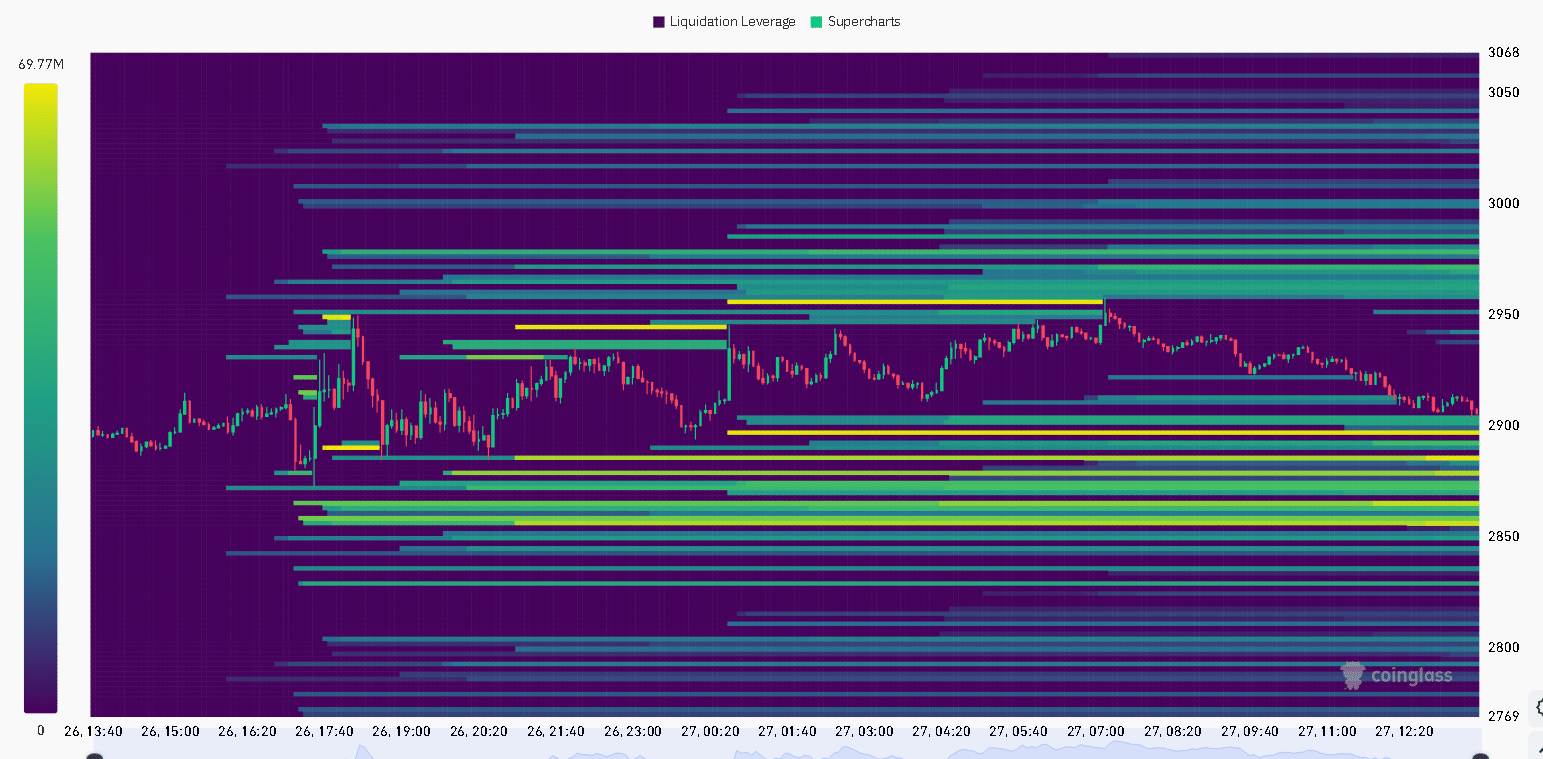
However, if the price breaks below these key areas, it may trigger a chain reaction: market makers chasing liquidity could further push prices down, leading to a deeper correction. This also reminds traders to be cautious during operations and to pay attention to the maintenance of the support zone.
Short-term targets and key price points
As of the time of writing, Ethereum is trading at approximately $2,908. The current key target is to regain and break through the $3,000 mark. If successfully broken, the next potential upward range is in the resistance area around $3,200 to $3,400.
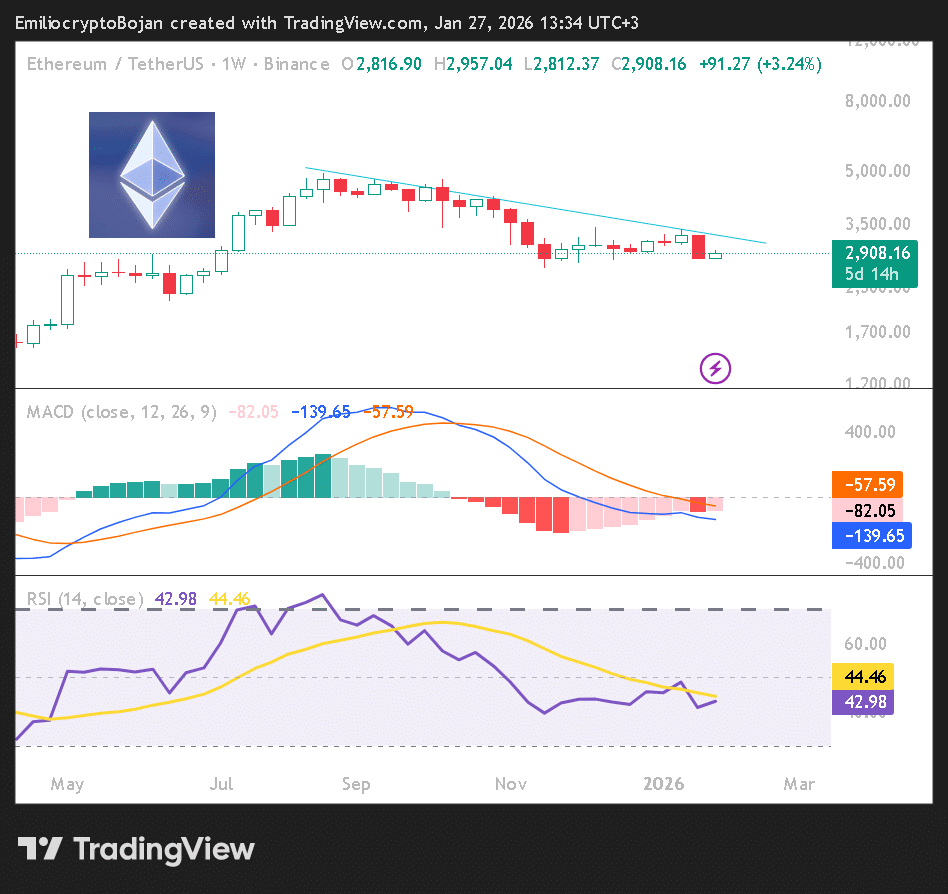
However, from a technical indicator perspective, momentum appears slightly weak. The MACD indicates that buying pressure is not strong enough, and the RSI hovers around 40, suggesting that the market lacks the strength for significant pushes. In other words, whether Ethereum can break through $3,000 will directly determine the direction of short-term trends.
Summary
The ETF inflow on January 26 shows that Ethereum still has institutional interest. Fidelity absorbed most of the funds, while BlackRock saw outflows, reflecting a selective accumulation strategy by institutions.
At the same time, online transaction fees have dropped to a multi-year low, enhancing scalability and ecological health. In terms of price, a solid support zone has formed around $2,900 and $2,850, which will be key for bulls to maintain their momentum.

In the short term, breaking through $3,000 is of utmost importance. If it can stabilize above this level, Ethereum is expected to challenge the resistance area between $3,200 and $3,400. However, if it fails to break through, the price may retreat to the support area. For investors, observing key support and ETF fund flows will be the core reference for judging the next trend.